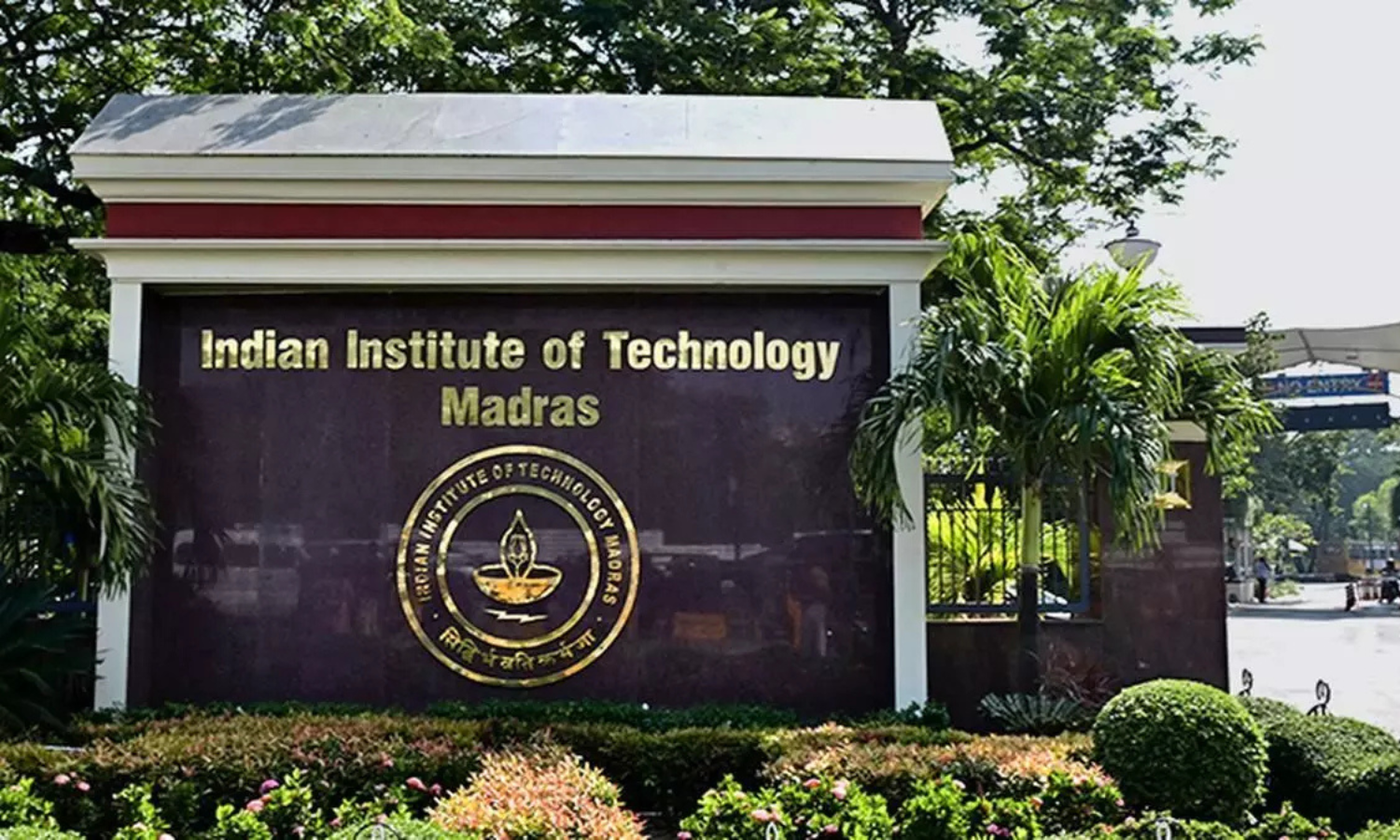
Chennai:India should end over-reliance on large, resource-intensive artificial intelligence models and develop smaller, specialised and multilingual systems suited to its public needs and infrastructure constraints, researchers at the IIT-Madras have said.
The Wadhwani School of Data Science and Artificial Intelligence (WSAI) and the Centre for Responsible AI (CeRAI) have proposed a Responsible Frugal AI Framework in a white paper, calling for AI systems that deliver maximum public value with minimum computational, energy and financial resources.
Titled ‘A Frugal AI Framework for India’ from CeRAI, the paper was released by IIT-Madras director V. Kamakoti at the industry conclave on AI governance 2026.
Combining frugal engineering with responsible AI principles, the framework argues that India need not replicate the capital-intensive frontier-model race led by countries such as the US and China, but can develop an approach rooted in its engineering capabilities and digital public infrastructure.
“AI does not have to know everything to be useful. It has to know the right things, deeply, for the task at hand,” Prof. Kamakoti said, stressing the need for AI that is useful, affordable and sustainable.
The researchers argue that bigger models are not necessarily better and recommend identifying the smallest sufficient AI model or technique for each task. Organisations should first establish whether AI is necessary at all, or whether simpler alternatives such as rules-based systems, retrieval-based approaches and conventional machine learning can deliver the desired results.
“An important recommendation in our paper is for India to move away from the assumption that larger AI models are necessarily better,” said Dr Gokul S. Krishnan, research director, CeRAI.
The paper also calls for shared AI infrastructure and common technology platforms, or ‘public AI rails’, to prevent government departments and institutions from developing expensive and duplicative systems independently.
Prof. Balaraman Ravindran, head of CeRAI and WSAI, said India could pursue an AI development model based on frugal innovation rather than replicating the resource-intensive approaches adopted elsewhere.
The framework identifies AI sovereignty as the ability to independently design, deploy, operate, inspect, maintain and adapt AI systems, rather than merely owning large models. It also emphasises multilingual and vernacular-first systems tested under Indian conditions, including variations in internet connectivity, device capabilities and power availability.
The researchers have cautioned against deploying generative AI simply because it is available, recommending its use only where generating new content is essential. Public AI systems should instead be evaluated on utility per unit of resource, real-world performance, resource consumption, accountability and social value, rather than model size or benchmark scores alone.
Disclaimer : This story is auto aggregated by a computer programme and has not been created or edited by DOWNTHENEWS. Publisher: deccanchronicle.com