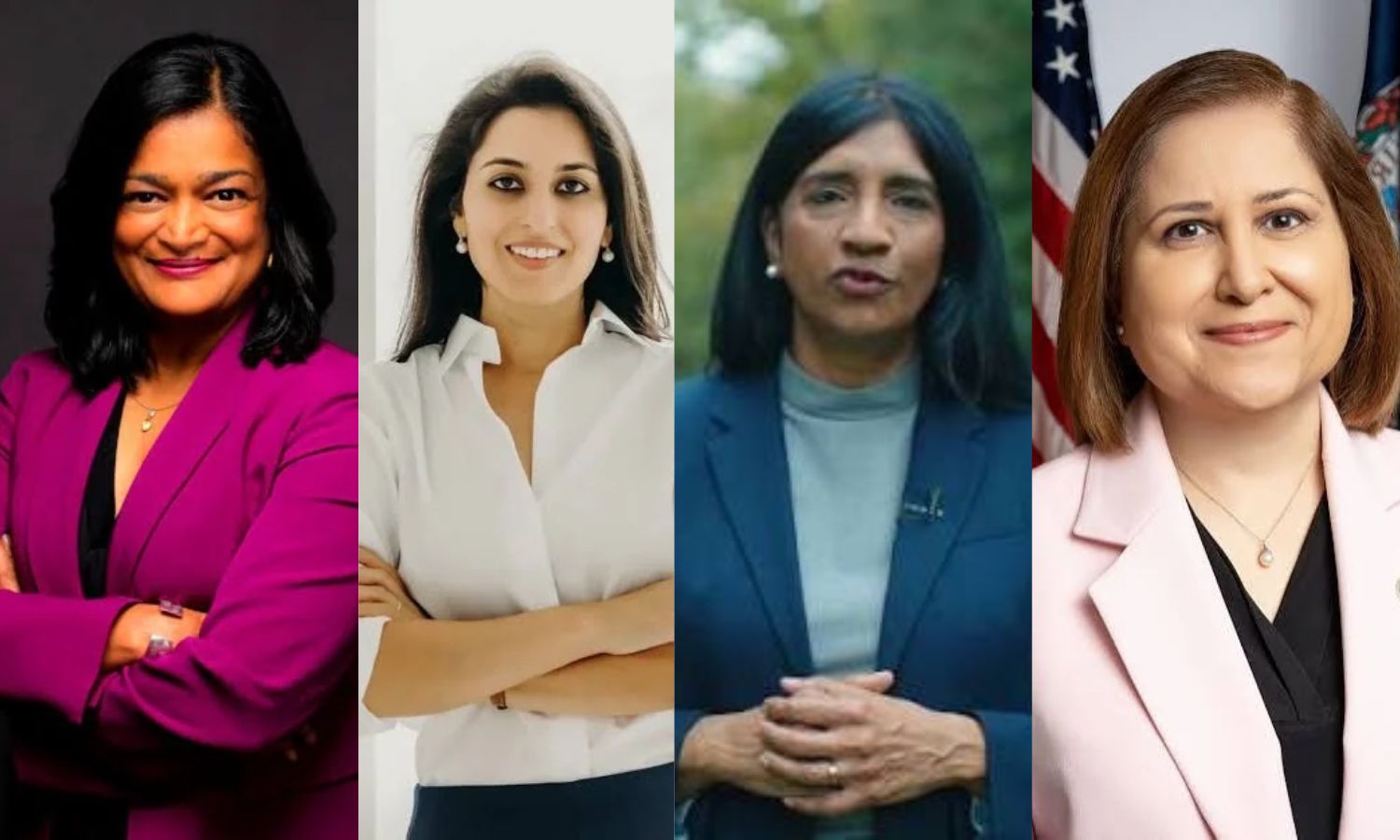
Today, the defining feature of women’s political participation in the United States is velocity. What took decades to build is now accelerating cycle by cycle, turning isolated milestones into structural momentum. Women have registered and cast ballots at higher rates than men in every single election since 1980. And following the 2026 midterm elections, they will hold more seats in the US Congress (159 members) and more state governorships (17) than at any point in America’s history.
For generations, voters appeared comfortable electing women to legislative bodies, where power is shared among hundreds of lawmakers, while remaining hesitant to hand women chief executive authority. That hesitation is collapsing. Starting in 2027, at least 17 women will serve as state governors. This means women will govern over one-third of all US states simultaneously. Georgia, Minnesota, Ohio and Tennessee elected their first female governors in 2026, alongside historic firsts for Keisha Lance Bottoms in Georgia (the first Black woman governor in US history) and Deb Haaland in New Mexico (the first Native American woman governor). It reveals a generational and cultural realignment that will define the 2028 general election. The age, educational attainment and political ideology of the women winning office also tell their own story.
Study the timeline of women’s congressional representation. It took 76 years after the first woman entered Congress for female membership to climb from one seat to 54 seats during the famous 1992 “Year of the Woman”. In contrast, in just the eight years between the 2018 midterms and the 2026 midterms, women added roughly 50 more seats to Congress while simultaneously breaking open statehouses across the country. In the record-shattering 2026 midterms, 590 women ran for the US House and 3,824 ran for state legislatures.
Next, for decades, political power in Washington was synonymous with seniority, with women often entering politics later in life after raising families or completing second careers. Now, a younger cohort is rapidly breaking through. In the 2026 midterms, 29-year-old Ethiopian-born attorney Melat Kiros defeated a 15-term incumbent in Colorado’s Democratic primary and won the general election, becoming the first Generation Z woman elected to the US Congress. Ms Kiros’ victory is representative of a broader youth surge: according to Future Caucus, 117 Gen Z candidates filed to run for Congress in 2026, backed by an electorate where roughly 70% of voters under 30 — and an overwhelming majority of young women — backed Democratic candidates.
The women winning office today also represent one of the most highly educated cohorts in American political history. They bring advanced credentials in public health, medicine, doctoral research, public policy and municipal management. Leaders like Ms Kiros (a lawyer and doctoral student) and Ohio governor-elect Amy Acton (a physician and former state health director) appeal strongly to suburban and college-educated voters.
Politically, the women entering office and those voting them in are moving the ideological centre of gravity in the US. Within the Democratic Party, where roughly four out of every five women in the incoming 120th Congress sit, there is a visible dual movement: pragmatic, crisis-tested moderates winning statewide executive mansions, alongside unapologetic progressives and democratic socialists winning urban House districts on platforms of Medicare for All, universal childcare and major foreign policy reform. Conversely, Republican women suffered net losses in Congress in 2026 with the exception of Tennessee’s Marsha Blackburn. So what’s behind all this? Political analysts point to a convergence of economic pressure, moral outrage and cultural backlash.
First is the “kitchen table” economy. In 2026 exit polls, inflation, tariff-driven price hikes and healthcare affordability ranked as the top concerns for American voters. Because women disproportionately manage household budgets, elder care and childcare expenses, economic strain has acted as a powerful catalyst.
Second, reproductive freedom remains an enduring mobilising force. Four years after the overturning of Roe v. Wade, post-election polling by Impact Research found that 53% of battleground voters said abortion directly influenced their vote, with voters passing constitutional abortion protections in states like Nevada, Virginia and Missouri.
Third, global crises and demands for accountability have reshaped the electorate, particularly among younger and college-educated women. Analysts at the Council on Foreign Relations noted that foreign affairs broke through in the 2026 midterms, driven by relentless television and social media coverage of civilian suffering, most notably the devastating images of children in Gaza, alongside anxieties over unwanted conflict in the Middle East.
Anger over Big Tech’s impunity on its tools being used for sexual abuse and unresolved scandals like the Jeffrey Epstein files, too, triggered high turnout among women and younger voters.
Finally, sociologists view the rapid rise of women in office as a direct cultural pushback against what critics characterise as “strongman” or hyper-masculine politics. In the 2026 midterms, The New York Times voter trend estimates showed women backing Democratic candidates by a 61% to 38% margin, rejecting combative politics in favour of leaders projecting empathy, institutional stability and collaborative problem-solving.
Now, because this transformation is moving at such speed, its consequences will ripple directly into the 2028 presidential general election and the decade ahead. In 2028, women will enter the presidential arena not as historic novelties, but as battle-tested executives. Also, as Gen Z and millennial women enter Congress and statehouses, long-standing debates over childcare, housing affordability, healthcare and US military intervention will face sharper, more urgent scrutiny from lawmakers. The story of women in US politics is thus no longer about waiting generations for the next milestone. The pipeline is open, the pace is accelerating and the next wave of leaders is already taking office.
For New Delhi, the surge of women in the November 2026 US midterms is not just an American domestic story. Indian-origin women now hold an unprecedented footprint across every tier of US governance. Two Indian-origin women will sit in the US House of Representatives in 2027. They are six-term Washington Congresswoman Pramila Jayapal and newly elected Florida Representative Pia Dandiya, alongside two serving Indian-origin lieutenant governors, Aruna Miller (re-elected in Maryland) and Ghazala Hashmi (Virginia).
Of the 30 Indian-American candidates who won state legislative seats this November, 15 are women. These include Arizona Senate president Priya Sundareshan, Illinois Senator Nabeela Syed, New York Senator Lisa Kaul, Vermont Senator Kesha Ram Hinsdale, Washington Senator Manka Dhingra, Illinois Representative Saba Haider and Texas Representative Pooja Sethi. At the municipal level, Kerala-born Nithya Raman captured the high-profile Los Angeles mayoral race.
Behind these winners sits a rapidly growing, overwhelmingly Democratic electorate. A total of 62% of the more than five-million-strong Indian-American community backed Democratic congressional candidates in 2026, compared to just 19% supporting Republicans, driven largely by concerns over H-1B visa restrictions, immigration policies and anti-Indian rhetoric. New Delhi can no longer afford to treat vocal Indian-origin lawmakers like Ms Jayapal as peripheral critics. Diplomatic cold-shouldering such as refusing meetings over policy disagreements fails when those leaders hold institutional sway over US trade, visas and legislative oversight.
Furthermore, Indian political leaders and government leaders can no longer be patronising towards young, educated women in India. The psychological ripple effect on India’s Gen Z will be profound. Watching Indian-origin women win big mandates, lead major cities and challenge political authority without deference will reshape how young Indians view power and fuel demand for genuine, unfiltered female leadership at home.
Ruchira Gupta is associate professor, NYU, and founder of Indian NGO, Apne Aap Women Worldwide. She is the co-author of As if Women Matter with Gloria Steinem, and has authored two more books. #RuchiraGupta (X).
Disclaimer : This story is auto aggregated by a computer programme and has not been created or edited by DOWNTHENEWS. Publisher: deccanchronicle.com