
It’s difficult to overstate the popularity of The Hunger Games franchise. Created by Suzanne Collins, its five books and six films have captivated fans, many of whom were won over by renegade heroine Katniss Everdeen.
The films, which began rolling out in 2012, deftly combine harrowing battle scenes with careful reflections on social inequality, proving that (despite Twilight and Harry Potter coming to an end) the YA genre was still alive and kicking. The first five films collectively grossed nearly $5 billion worldwide, making it the second highest-grossing film series based on young adult books in the US (behind Harry Potter).
This week, the latest Hunger Games film Sunrise on the Reaping landed in cinemas. It doesn’t star fan-favourite Katniss, nor her cynical mentor Haymitch Abernathy as we know him (aka Woody Harrelson). Instead, it tracks a teen Haymitch as he’s gradually torn down by the dictatorial Capitol.
How does this film stack up against the rest?
6. The Hunger Games: Mockingjay Part 1 (2014)
What is The Hunger Games without the Games? This was the first film without an arena showdown, replacing bloodshed with long, meandering discussions about political revolution.
Directed by Francis Lawrence, this film follows Katniss’ reluctant transformation into the symbol of the districts’ uprising against the domineering Capitol. Hunkered down in the forgotten District 13, Katniss and her fellow rebels attempt to get other districts on side, while also fighting to rescue a captured Peeta.
Despite being the worst book in the original trilogy, it was inexplicably split into two films. The first thus felt more like hours of exhausting exposition rather than a fully realised narrative. Without the actual Games, it became more meditative – not necessarily a selling point for an action movie.
5. The Hunger Games: Mockingjay Part 2 (2015)
Though not a masterpiece, this film finally freed Katniss from the dreary bunkers. The revolution was officially in full swing, with Katniss and her rebel squad infiltrating a booby-trapped Capitol to assassinate President Snow. Whereas Part 1 largely lacked action, Part 2 gave viewers a taste of the Games through the rigged, arena-style traps splayed throughout the streets.
Peeta also returned, even if he was brainwashed by the Capitol, delivering genuinely heartfelt (and heart-wrenching) scenes between him and Katniss, one of Gen Z’s all-time favourite YA couples.
Though much of the film felt rushed and disjointed (Katniss’ sister’s death felt bizarrely overlooked), its ending held up thanks to a twist that saw Katniss uncover a political power struggle within her own revolution. It was an impactful reminder that power, even within forces of good, can corrupt.
4. The Hunger Games: The Ballad of Songbirds and Snakes (2023)
This film was too heavy on the singing and too light on character development. Set 64 years before the original trilogy, it follows an 18-year-old Coriolanus Snow who’s assigned to mentor the defiant District 12 tribute Lucy Gray Baird in the 10th Hunger Games. It essentially tracks Snow’s transformation into the tyrannical leader of Panem.
Discovering how well-known characters became who they are in the original trilogy was intriguing. Snow goes from being a ruthless villain in viewers’ eyes to a nuanced, perhaps occasionally misunderstood anti-hero. However, his ultimate transformation is quick and jarring.
The Games themselves, though designed by the eccentrically evil Dr Volumnia Gaul (played by the incomparable Viola Davis), lacked the shock factor of earlier iterations, taking place in a bombed-out arena. We want Wolf Mutts and killer butterflies, not concrete.
3. The Hunger Games: Sunrise on the Reaping (2026)
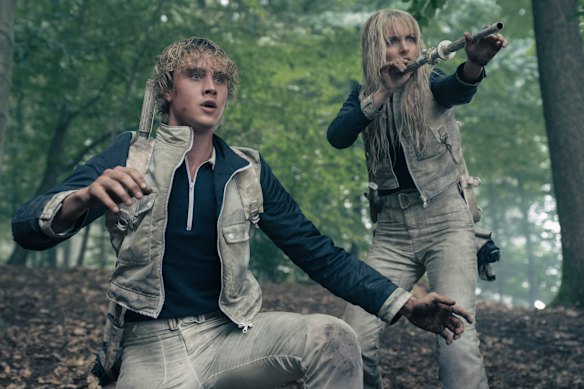
Haymitch Abernathy, Katniss’ wry alcoholic mentor (played by Woody Harrelson in the first four films), has long been a fan favourite. His origin story was bound to generate excitement. Set 24 years before Katniss’ saga, a 16-year-old Haymitch (played by rising Sydney star Joseph Zada) is pulled into the 50th Hunger Games, which involves four tributes from each district. Leaving his beloved girlfriend at home, he finds himself at the centre of a doomed plot to sabotage the Capitol’s arena.
Though incredibly grim, this film maintains a genuine sense of humanity throughout. By the credits, there’s no questioning Haymitch’s future despair – it’s a story of a man, once full of hope, beaten and tortured into discontent. Against the backdrop of real-world war and strife, many likely painfully relate to Haymitch’s tragic story.
2. The Hunger Games (2012)
Gary Ross’ first (and only) Hunger Games adaptation quickly became a global phenomenon, making Jennifer Lawrence a household name and seemingly encouraging every girl under 16 to pick up archery.
It introduces Katniss, a teenager who volunteers to take her sister’s place in an annual government-mandated fight-to-the-death against 23 other children. Katniss, long a renegade, pushes against the Capitol’s rules, inadvertently sowing the seeds of revolution.
The first film holds no punches, showcasing a dark, gritty Games that effectively depicts the horror of children’s bloodshed. Ross’ use of handheld cameras and tight close-ups elevates the production, making viewers feel as if they’re inside the arena. The countdown to the beginning of the Games still, to this day, is one of the most tense moments in the franchise.
The cast was stacked (Stanley Tucci as the Games’ flamboyant talk show host Caesar Flickerman is inspired), but it was J Law who stole the show. Her Katniss was the perfect balance of grace, frustration, rebelliousness and intelligence. This was a heroine teen girls across the globe could fully get behind. She’s also the reason side-braids came into vogue in the 2010s.
1. The Hunger Games: Catching Fire (2013)
It’s rare that a sequel proves better than the first. But The Hunger Games, like a fine wine, improved with age. Katniss and Peeta are forced back into the arena for an anniversary all-victors Games in an attempt by the Capitol to crush the districts’ simmering uprising.
Bigger budget, bigger set designs, more stars, and higher stakes – this film was an emotional roller-coaster from start to finish, becoming the highest-grossing film in the franchise (more than $1.2 billion globally). From secret alliances and invisible force fields to the arena’s time-based rollout of horrors, Catching Fire, like the arena, truly ran like clockwork.
The first five Hunger Games films are available to stream on Stan*, and the first four are available on SBS. Sunrise on the Reaping is in cinemas now.
 Nell Geraets is a Culture reporter at The Age and The Sydney Morning Herald.Connect via X or email.
From our partners
Disclaimer : This story is auto aggregated by a computer programme and has not been created or edited by DOWNTHENEWS. Publisher: www.smh.com.au