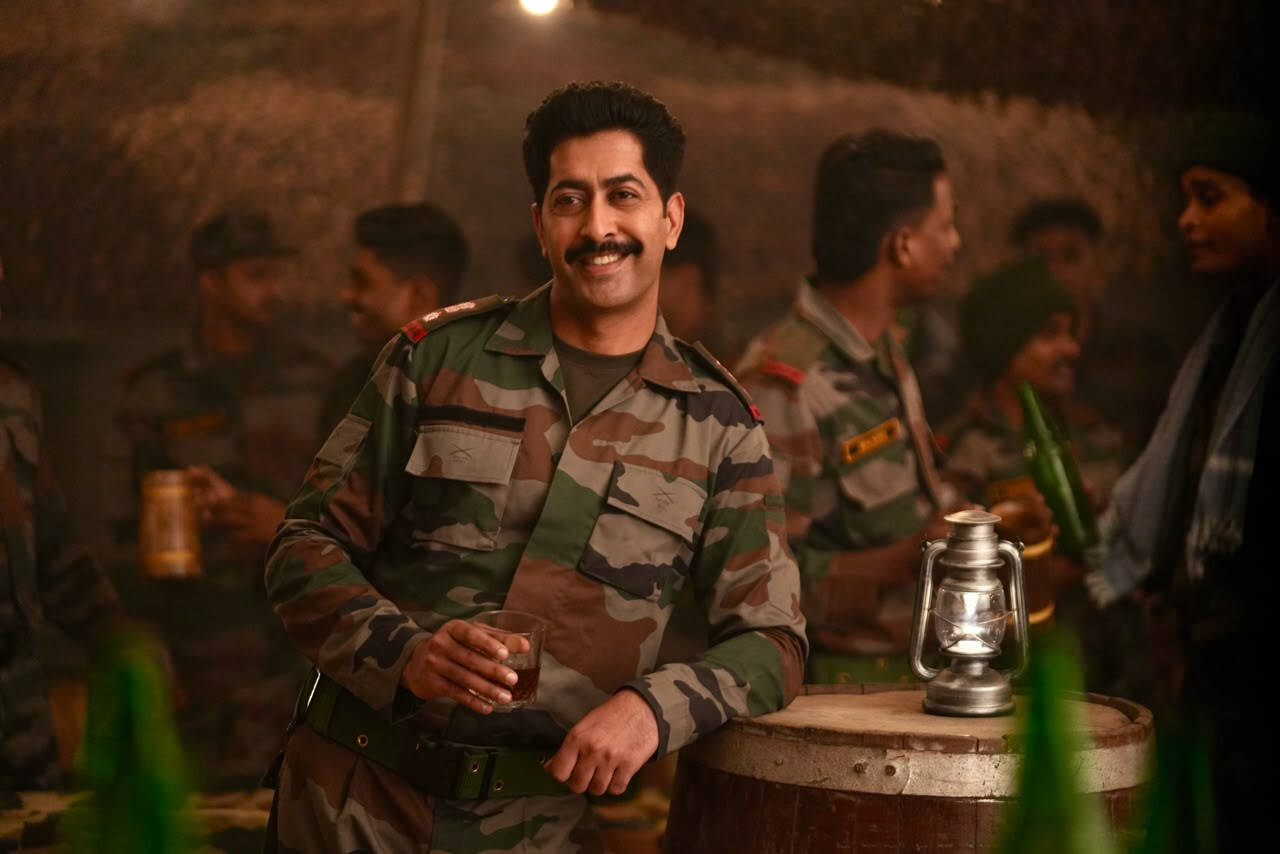
A boy from a middle-class family in Bhopal, Ankur Bhatia grew up imitating Salman Khan, never imagining that he would one day share the screen with his idol. Years later, that dream has become a reality. In Apoorva Lakhia’s Maatrubhumi, Bhatia plays a soldier alongside Salman. He says the film goes beyond celebrating the bravery of soldiers to explore the emotional core of their lives and the resilience of the families they leave behind.
How did Maatrubhumi come your way, and what was your first reaction when you were offered the role?
Apoorva Lakhia is the director who gave me my first break, and he has always been a mentor to me. I knew he was writing Maatrubhumi, and it took him a while to put the script together. Last year, I got a call from him. He told me that the film was being made, Salman Khan was playing the lead, and he wanted me to play a soldier in it. It was a very pleasant surprise because it felt like he trusted me enough to offer me the part without an audition. And the film featured Mr Salman Khan. What more could I ask for? It was like a dream come true.
What do you think will make Maatrubhumi stand out when audiences have already seen several films celebrating the bravery of the Indian Army?
I feel that when a soldier is posted somewhere, the family back home also has a difficult life. They have to manage the household, look after the children and deal with personal challenges, illnesses and even losses, while their loved one continues to serve the country. Maatrubhumi explores the emotional aspect of a soldier’s life as well. It is not just about patriotism; it is about the people and relationships behind a soldier’s journey. And that is something I feel everyone will connect with.
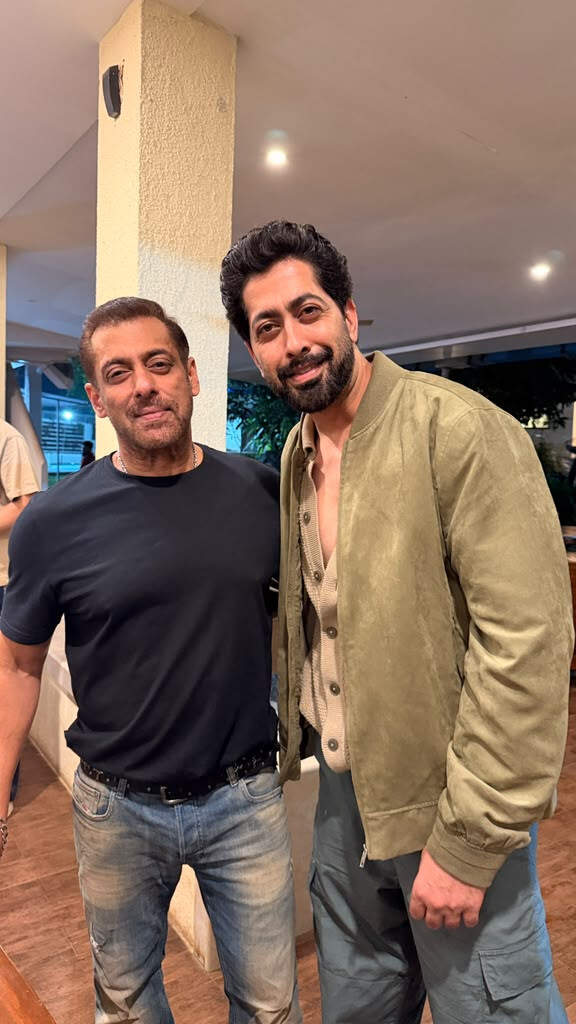
This is your first time sharing screen space with Salman Khan. What was your first interaction with him like?
I have been a huge Salman Khan fan since childhood. I grew up in a middle-class family in Bhopal, and, like many kids, I would dress up like him, dance to his songs and imitate his mannerisms. I had always dreamt of becoming an actor, but back then, even that seemed like a distant possibility, let alone sharing screen space with a legend like Salman Khan.
When I finally came to Mumbai to pursue acting, I remember meeting someone who knew Salman Khan. After several requests, he took me to his house. Unfortunately, Salman sir wasn’t home, and I was so disappointed. I decided to write him a letter expressing how much I admired him and how much I wanted to meet him. It was quite embarrassing, but I dropped the letter at his house, hoping it would somehow reach him. I never heard back.
A couple of years later, I happened to see him at a Diwali party. Something inside me told me not to approach him just as a fan and to wait for the right moment. And then, last year, I was cast in Maatrubhumi alongside the very man I had grown up idolising.
Salman has entertained audiences across genres for decades. What has been your takeaway from observing his performances closely?
Sharing screen space with him and watching him work every day was a learning experience. When you talk about action, he is an action superstar. We trained extensively, but when you actually see him perform, you realise how effortlessly and perfectly he does it. No matter how tired he is, he makes sure to go to the gym and warm up.
Action takes a toll on your body, especially when you are shooting in Ladakh, in freezing temperatures, at high altitudes and with low oxygen levels. You are constantly testing your physical limits. He didn’t just sustain himself in those conditions; he was just killing it out there.
Even when it comes to dancing, he picks up choreography very quickly and enjoys every bit of what he does. He shares his food, sits with everyone and doesn’t get caught up in the usual perks of stardom. I have hardly seen him go to his vanity van. He is incredibly approachable and normal in the way he interacts with people. For me, every day on the set was a training ground.
Maatrubhumi was shot in challenging conditions, particularly in Ladakh. Is there a particular day or experience from the sets that you remember vividly?
I think the first day of my shoot was the toughest. We trained for almost a month and a half in Bombay. I had never been to Ladakh before, so I probably took the challenges a little lightly. We were told about the low oxygen levels and were asked to walk for an hour every morning and night to prepare ourselves.
On the first day, it was freezing cold, and we had to perform action sequences there. I kid you not, we could barely last two or three minutes initially. It was unbearable because we were running out of oxygen. It might sound dramatic, but it genuinely felt as though someone was strangling you.
Over the years, you have shared screen space with some of the finest female actors in the industry, including Aishwarya Rai Bachchan, Shraddha Kapoor and Sushmita Sen. What have these collaborations taught you about your craft?
Interestingly, many of my early opportunities were alongside women. My first film had Priyanka Chopra, the second had Aishwarya Rai, the third had Shraddha Kapoor, and then I worked with Sushmita Sen. I have always admired the amount of hard work and dedication they bring to their craft, and especially how generous they are.
Since I hadn’t attended an acting school or received formal training, I learned a lot by observing them. When I played Aishwarya Rai’s husband in my first film, Sarbjit, I was a complete newcomer. She never made me feel that way. There was no sense of superiority or any indication that I was inexperienced. That taught me very early in my career that there is no place for ego. As an actor, you have to be giving.
I have worked with Sushmita Sen on Aarya and Taali, and I have seen the amount of hard work she puts into her performances and the affection she has for her co-actors. During Haseena Parkar, Shraddha Kapoor was equally accommodating. I have enormous respect for all these women.
And now I am working with Salman Khan, who is also the epitome of generosity. It reinforces the same lesson I learnt early in my career: great actors are also giving people.
Exclusive: Apoorva Lakhia Credits Salman Khan As Maatrubhumi Overcomes 1.5 Years Of Hurdles
Disclaimer : This story is auto aggregated by a computer programme and has not been created or edited by DOWNTHENEWS. Publisher: filmfare.com