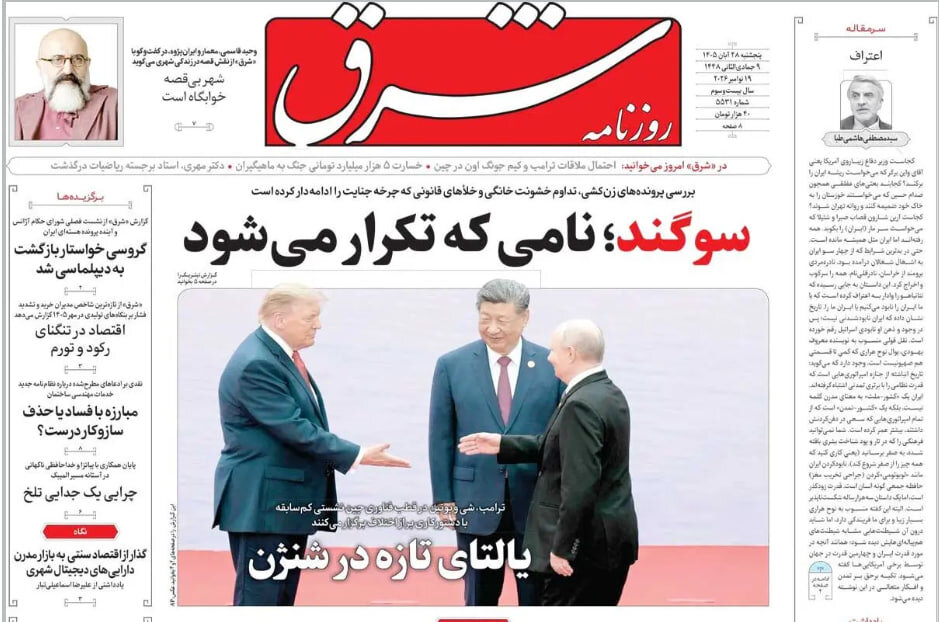
Shargh examined growing tensions between Iran and the US and the possibility of renewed military action. Trump has repeatedly threatened in recent weeks to initiate another phase of a high-intensity confrontation with Iran. With diplomatic efforts stalled and neither side showing willingness to retreat from key demands, tensions continue to rise.
Yet Shargh argued that none of Trump’s available options is particularly favorable. Any military attack on Iran could provoke retaliatory measures against US allies in the region, particularly Arab states that cooperate closely with Washington. If Trump chooses to step back without a formal ceasefire or broader political settlement, Iran could emerge with greater influence over the Strait of Hormuz, strengthening its leverage in one of the world’s most strategically important maritime corridors.
Etemad: Step-by-step understanding is the best option
As developments in the Middle East continue to shape the international diplomatic agenda, Iran has once again become a major subject of discussion in world capitals. In this context, Etemad interviewed political analyst Mashallah Shamsolvaezin about negotiations, US pressure tactics, and the geopolitical realities affecting Iran’s relations with both Eastern and Western powers. He argued that the current international order lacks the conditions necessary for a comprehensive agreement. He also dismissed the idea that major Eastern powers such as Russia and China could effectively serve as guarantors of a broad settlement. Instead, he advocated a gradual and issue-based approach. Under such a framework, Tehran and Washington would reach agreements on specific matters and implement them in stages. For example, they could negotiate arrangements related to the Strait of Hormuz, sanctions relief, or the release of frozen assets. Once each commitment is fulfilled, both sides could proceed to the next stage. In his view, incremental progress offers a more realistic path than attempts to secure an all-encompassing agreement.
Javan: Dangerous gamble
Javan focused on the calculations guiding both Iran and the United States. Referring to a Reuters assessment, the newspaper noted that nearly nine months into the current US-Iran confrontation, both governments appear to believe that time is on their side. This belief has helped create a stalemate that neither side can easily escape. The paper described the situation as a dangerous gamble. Trump has chosen to increase pressure on Iran rather than launch another round of major airstrikes or offer significant concessions. According to the analysis, he believes further bombing would be unlikely to change the overall outcome and could instead trigger Iranian retaliation against energy facilities in the Persian Gulf. As a result, Washington is placing greater emphasis on maritime restrictions and economic pressure. The expectation is that sustained pressure may eventually force Tehran to make compromises, particularly regarding its nuclear activities. Javan suggested that this strategy reflects a judgment that economic and strategic pressure may be more effective than further military escalation.
Khorasan: New equation on the southern front
Khorasan discussed what it called a new strategic equation in Iran’s southern theater. According to the newspaper, the policy involves targeting aircraft and drones that escort vessels accused of violating restrictions near the Strait of Hormuz. The paper presented this approach as part of a broader strategy designed to increase pressure on maritime activity in the area. The analysis also pointed to a wider doctrine focused on operations at sea. Future confrontations could involve more effective maritime strikes and warned that naval forces deployed in the region may face greater challenges if tensions continue. The newspaper further highlighted the reported interception of a US military drone by Iranian air defenses, describing the development as evidence of improved defensive capabilities. Such incidents indicate that southern waters may become a focal point of any future conflict and could play a decisive role in shaping the next phase of regional tensions.
Sazandegi: A meaningful summit
Sazandegi evaluated the Nov. 19 meeting of the leaders of the US, China, and Russia in Shenzhen. The newspaper argued that the gathering should be viewed as part of a broader trend rather than an isolated event. It noted that Chinese President Xi Jinping had previously hosted separate visits by Trump and Russian President Vladimir Putin, developments that may signal wider changes in international politics. The global system may be moving toward a framework in which China, Russia, and the US exercise disproportionate influence over major international issues, while Europe and other middle powers gradually play a smaller role. The article also cited former US deputy secretary of state Kurt Campbell, who pointed to expanding military and security cooperation between China and Russia, including support for Iran. In his view, even without a concrete agreement, the Shenzhen summit could enhance the international standing of Beijing and Moscow while raising concerns among Washington’s traditional allies.
Disclaimer : This story is auto aggregated by a computer programme and has not been created or edited by DOWNTHENEWS. Publisher: tehrantimes.com