“Memories of when the skies were grey
And yes, also when the sun was bright
No, no regrets for the passing day
But some thoughts bring on emotional blight?”
— From Cull Key Kahani by Bachchoo
King Charles III, Head of the Commonwealth (for now?) with his Queen Camilla, visited three states of the Caribbean. Addressing their people, he expressed deep sorrow for the involvement of Britain in the slave trade of earlier centuries, the transfer of captive populations to work on the plantations of these islands and in Guyana. He acknowledged that it was a shameful period of British history but avoided saying anything about his contemporary Britain paying ‘reparations’.
Charles implied that this question of reparations, which is a frequently debated subject in these and other territories with populations descended from slaves, and in certain circles in Britain, was a matter for the elected governments of the UK — and not answerable within the powers of its monarch.
The question of reparations is a vexed one (not angry, but complicated to resolve). To whom would the reparations be paid? The generations subjected to the cruelty of slavery are long gone. And yes, their descendants in the territories, the inheritors of the conditions prevalent in the era of slavery may suffer some of the consequences of having been subject to that history. One may say the same of the descendants of the peasantry and the working classes of Dickensian Britain!
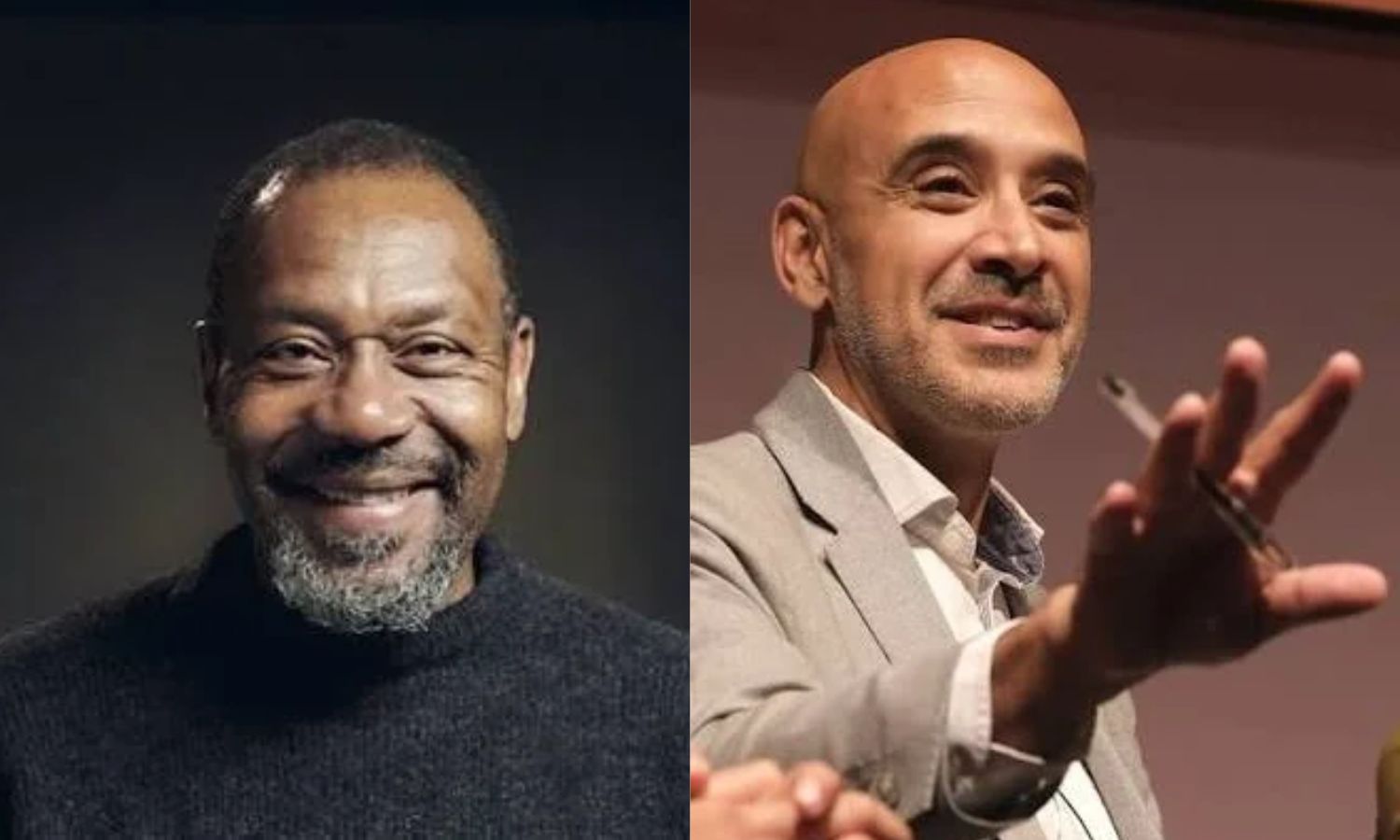
Now, addressing this question of reparations, the British black comedian Lenny Henry, in collaboration with the writer and TV personality Marcus Ryder, has published a controversial book entitled The Big Payback: The Case for Reparations for Slavery and How They Would Work.
The book suggests several ways in which the British treasury can implement these ‘reparations’. Henry, famous for funny but awful stereotypes of British black and African characters — variously known as Algernon Razzmattaz, Theophillus P. Wildebeest, Trevor McDoughnut — and Ryder calculate that Britain owes £18 trillion in reparations.
How they came to this sum is, to me, a mystery.
I can, of course, in these circumstances, refer you, gentle reader, to their earlier book The Fascinating Sands of Dover Beach, in which they describe standing on the white cliffs of Dover, looking down on the beach and expertly calculating the number of grains of sand on it.
Yes, OK, there’s no such book, but I’m sure you get the point and the absurdity of putting a figure on what the UK owes in reparations — to whom?
Obviously, Henry and Ryder have taken it upon themselves to suggest an answer to the above query. To whom will this money go? One of their suggestions, as careless as the rest, is that the money should be distributed amongst the black population of Britain, most of whom are immigrants, or descendants of immigrants, from the lands of the Caribbean and Africa which would have inherited poverty from the history of slavery. Fair enough?
Let’s do the sums. The black population of Britain amounts to between 2.5 million and 3 million. Let’s take the larger figure. My desk calculator tells me that each person would receive £6 million. So as soon as the distribution takes place, Algernon Razzmatazz, Theophillus P. Wildebeest, Trevor McDoughnut and naturally the tribal African character in a grass skirt with marked body paint, with the favourite, constant punctuation in his speech of the word “Katanga” whom Lenny Henry portrayed on TV, will be millionaires six times over.
Gosh! Unfortunately, India wasn’t a source of slaves — though Indians were indentured — and one may, in our happy world, be able to change gender, but there’s no way I can become racially black or ex-West Indian.
Deprivation, thy initials are F.D.
My late friend, the Trinidadian philosopher C.L.R. James whose biography I have written (and is available on Amazon!) — [How many Fuckleberry Hinng times have I told you, you can’t advertise your rubbish here? — Ed.] had a very amoralistic, dialectical materialist view of history. He always maintained that slavery, with all its inhuman cruelty was the phase in history which brought African tribals into the Western world and, therefore, into the Western intellectual tradition.
The cruellest manifestation of his belief was when I was, at his behest in his rooms, serving claret to three visiting American black activists, who talked in sentimental terms about the historical outrage of slavery. C.L.R. shut his eyes for a few seconds.
“I know, and I’ve shed my tears over slavery,” he said, “but you know what slavery did in
the material world? It forced the Europeans to build larger ships.”
The Americans, outraged, walked out. I asked him why he’d said that. He said “because it’s true and I’m fed up of victimisation history!”
And then there was the occasion when I was chairing a packed meeting at which C.L.R. was speaking about American women writers.
When the presentation was over, I asked for questions and after one or two, a black gentleman with a head band stood up and asked what C.L.R. thought of the provisional offer of two acres of land and a donkey as reparations for slavery.
I thought I’d rule the question out of order, but C.L.R. forestalled my objection and said “I would certainly accept the two acres, but you can please keep the donkey!”
Disclaimer : This story is auto aggregated by a computer programme and has not been created or edited by DOWNTHENEWS. Publisher: deccanchronicle.com