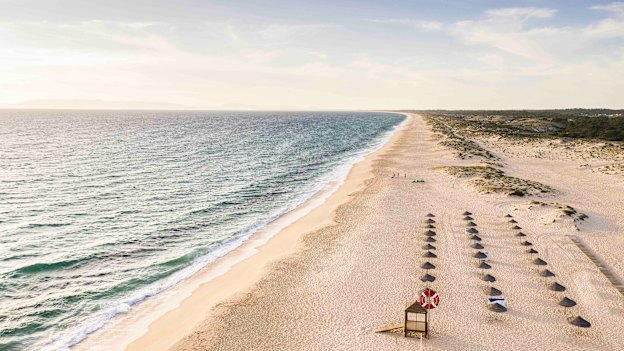
Inaccessibility was once baked into the very essence of Comporta. Until the late 1990s, when a highway linking Lisbon to the Portuguese beach town was completed, getting there meant spending hours snaking through sleepy towns on dusty, single-lane roads, or driving to Setubal to board a car ferry.
Some 30 years later, arriving in the coastal enclave isn’t exactly seamless. Against my better judgment, I haven’t hired a car, owing to an irrational fear of driving on the wrong side of the road. Public transport options from Lisbon are limited and not particularly practical, and Ubers are hard to come by.
“Everybody’s going to the beach today!” my taxi driver laughs, as we inch through a snarl of traffic near the turn-off for the Algarve. Eventually, the motorway gives way to quieter roads, the landscape flattening into an expanse of golden-green rice paddies and windswept umbrella pines. Storks perch on electricity poles, sandy tracks disappear into the trees and the occasional whitewashed fisherman’s cottage breaks the spell of unspoilt landscape.
I squint my eyes as the taxi meter ticks upwards, now in triple figures. But in hindsight, it’s a small price to pay. Comporta, the catch-all term for a small village and wider collection of hamlets scattered along the Alentejo coast, is one of those rare places that feels like a discovery. It’s uniquely itself in a world of copy-and-paste luxury, and I want to tell everybody and nobody about its particular magic.
Here, the beaches seem to go on forever. There are 60 kilometres of wild Atlantic coastline fringed by sweeping dunes, with waves to satisfy a surf-spoiled Australian and always enough room to spread out a towel. Then there are the boho-chic boutiques, beach-club restaurants where the glamour is worn lightly, and secluded private houses that keep the party going after the last tables are cleared.
For years, Comporta was the secret summer refuge for old-money Portuguese families and an international design crowd, including Christian Louboutin and Philippe Starck. Word inevitably spread, and today its discreet appeal has reached a wider audience, especially in the height of summer. But restrictions banning construction within 500 metres of the shoreline, a certain rustic quality and the mosquitoes give it a raw and remote feel.
Sign up for the Traveller Deals newsletter
Get exclusive travel deals delivered straight to your inbox. Sign up now.
Conventional travel wisdom holds that the more difficult a destination is to reach, the less desirable it becomes. Convenience is sold as a luxury, ease of access as a virtue. But that logic may be turning on its head as perennial hotspots – Rome, Tokyo, the French Riviera, among others – buckle under the weight of their own popularity.
In their place, a more elusive kind of destination has emerged, often several connections removed from the well-trodden travel circuit. Getting there might involve a couple of flights or a bone-rattling drive along unsealed roads, with no major train station waiting at the other end. Let alone a cruise ship port.
And even once there, the practicalities of daily life can require a little ingenuity. “We have visitors in my shop who say to us, ‘Where do I see all the beautiful Comporta houses?’” says Cathrine Austad, owner of fashion boutique Lavanda, who moved to Comporta from Norway in the early 2000s. “I explain to them, listen, you need to take a car, and you have to drive around the rice fields, and that road will eventually bring you to the houses.”
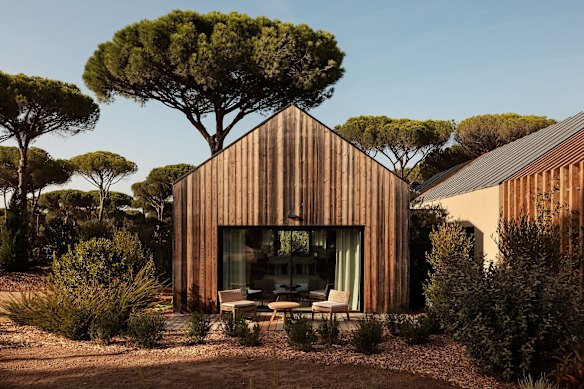
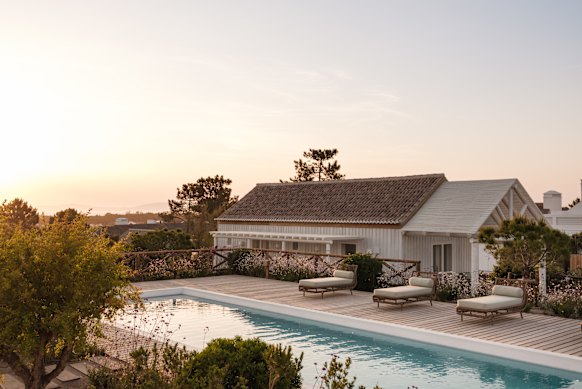
Hiring a car during my stay would have been wise because Comporta is beautifully dispersed, lacking the easy walkability of a major city or resort town. The beaches, villages and restaurants are scattered across the countryside and ride-shares seem non-existent. Thankfully, the delightful staff at our accommodation, the just-opened Atlantic Club Comporta, offer us buggy rides to the beach. And in mid-September, with the fiercest days of summer behind us, it’s cool enough to walk to dinner.
Plum Sykes, British journalist and novelist, has mused on the merits of stepping just off the beaten track. In an age of ever-flashier travellers – who “do things like wearing diamond bracelet stacks while paddling in the ocean, swanning about on mega-yachts that are custom-painted matt black, or arriving in heels for lunch at the beach,” she wrote on Substack – a little friction in the journey can act as a natural filter.
“The solution is to vacation in impossible-to-get-to spots that are too mountainous to land a jet, too windy to helicopter into and whose coves are so tiny and shallow that they can’t possibly accommodate a tech titan’s ugly boat,” she continues. “Anywhere with tarmac-ed roads, convenient airports, fully equipped hospitals or deep ports – Sardinia, St. Tropez, Southampton – are not an option, obvs.”
Last summer Sykes travelled to Antiparos, a tiny island off mainland Greece in the Aegean Sea. Getting there is no small undertaking: a flight to Mykonos, a taxi to the harbour, a ferry to Paros, a small boat to Antiparos, a taxi to the hotel or villa. That’s 14 hours from London without delays, which there inevitably are.
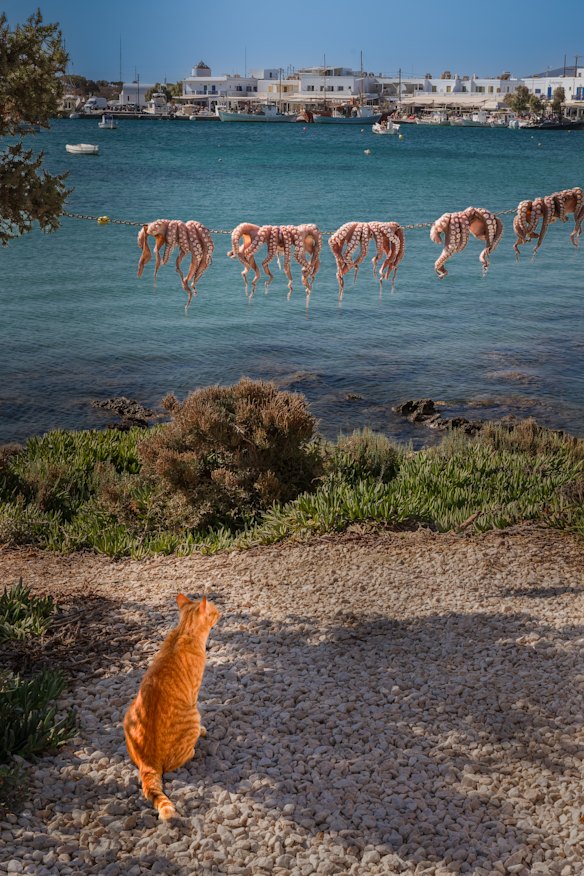
And yet, the journey has its own rewards: a low-stakes adventure, a story worth recounting over dinner, perhaps a chance encounter with a stranger or a snippet of gossip overheard on the ferry.
That final, extra ferry crossing has also helped Antiparos retain some of the character its neighbours have lost. Even in high summer, when its population swells with fashionable Athenians and jetset regulars, life still revolves around a single whitewashed village – a maze of blue doors and bougainvillea – and a handful of tavernas overlooking the glassy shallows.
It’s the kind of place where you’re as likely to find yourself seated next to old men playing backgammon as Tom Hanks and Rita Wilson, who built a villa on the island, or Barack Obama, Bruce Springsteen, Madonna or Matthew McConaughey, who’ve all reportedly visited.
Remote in this context doesn’t mean roughing it, and while Antiparos has escaped the sunbed-and-Champagne excess of Mykonos, it leans into its own brand of laid-back luxury. At The Rooster, set at the end of an unassuming dirt track, high-design honeyed-stone villas sit alongside a healing spa and open-air bar, while little-sister hotel The Beach House has eight charmingly retro suites just footsteps from the sand.
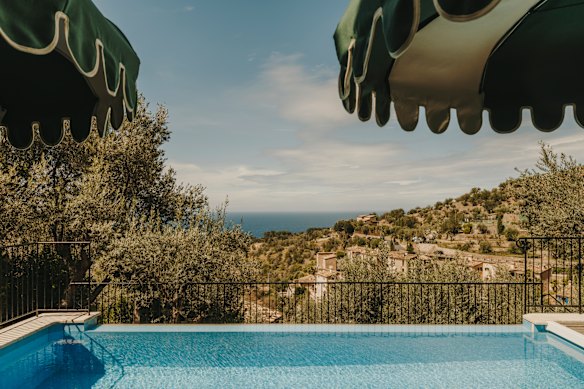
On Mallorca, the Spanish Balearic island that welcomes 13 million visitors a year and falls squarely into the easier-to-reach camp, hoteliers are finding creative ways to build a sense of remoteness into their offering. La Residencia, a Belmond Hotel, will soon unveil Cala Residencia, a secluded cove with direct access to the Balearic Sea, which guests can only reach via a guided hike through the UNESCO-listed Serra de Tramuntana mountain range.
As with most shifts in taste, there’s something bigger at play here. We’ve all become exceptionally good at engineering friction out of our lives. Dinner arrives at the door, directions appear on demand and almost anything can be arranged with a few taps.
Enter – mind the overused suffix – friction-maxxing. The cultural trend makes a case for intentionally introducing inconvenience into our days to help rebuild a tolerance for discomfort. A bumpy drive or arduous hike do much the same thing, and make the first glimpse of what lies beyond all the sweeter.
It’s why, on a recent trip, I found myself reconsidering Cap Ferret. This sliver of France’s Atlantic coast had long appealed with its oyster shacks, pine forests and comparisons to the Hamptons or Cape Cod. But getting there had always struck me as a bit of a faff.
Unlike the French Riviera, where you can arrive by train from Italy and make your way along the coast with relative ease, Cap Ferret means flying into Bordeaux, which has a more limited direct flight network than somewhere like Nice, then navigating a series of buses or a taxi and a shuttle boat.
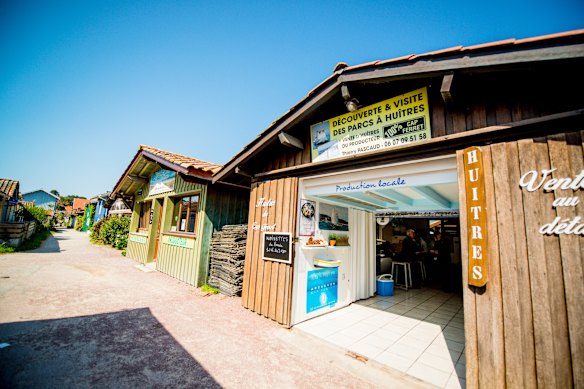
And yet, the very faff I’d been so reluctant to entertain is intrinsic to what sets Cap Ferret apart. There are crowds in summer, certainly, but most are French – the kind of Parisians who leave their jewellery and, often, shoes at home – with barely an Australian or American accent to be heard. Philippe Starck just co-created a boutique hotel, Villa Colette, a vision of faded pinks and soft lemon inspired by a seaside home; apparently the designer has a nose for quietly luxurious hideaways.
Studies and surveys are starting to capture this appetite for the less obvious. In Skyscanner’s Travel Trends 2027, Bishkek, Kyrgyzstan – not especially remote, but just inconvenient enough to deter the less committed traveller – emerged as Australia’s biggest breakout destination, recording a search increase of 877 per cent year-on-year. Across the board, the report pointed to a rising interest in authentic off-the-beaten-path adventures.
The question is, as these previously under-the-radar destinations “trend”, will they retain what made them so compelling in the first place? And is the relative difficulty of access enough to protect them from their own popularity?
Niue is one of the world’s smallest countries, a self-governing island nation in Polynesia’s South Pacific Ocean. Getting there requires travelling to Auckland and catching a connecting flight; strategically, these are limited to just two a week.
“At any one time there are only 450 tourists on the island,” says Hayden Porter, who lived on Niue for three years while heading up the tourism board. “You feel like you’ve got the whole place to yourself, and while it’s a small country, it’s a big island – about four times the size of Rarotonga – and there’s a lot to do. There’s this unwritten rule that if there’s a car at one of the sea tracks [which lead to hidden coves], you just go to the next one and come back to that one before you leave. You have your own private little beaches and swimming lagoons.”
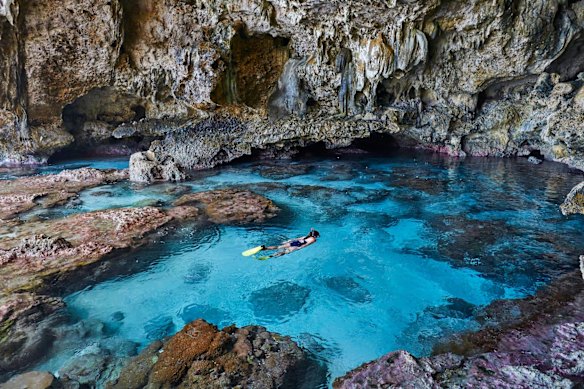
Geographical and logistical isolation have preserved much of what makes Niue extraordinary: crystal-clear waters, thriving coral reefs and abundant marine life. Humpback whales and spinner dolphins are among the locals that swimmers and divers share the sea with.
“One of the only complaints we get, is that during whale season, the whale calls keep people awake, you can hear them from your room!” says Porter.
Even Niue’s bees have benefited from the relative remoteness; they’re believed to be one of the Earth’s last-known disease-free colonies, producing some of the purest honey.
For now, keeping tourism in check is a delicate balancing act. Expedition ships carrying fewer than 200 passengers are permitted, but large cruise ships are kept at bay. The occasional superyacht passes through, along with the odd private jet bringing in High-Net-Worth visitors.
The island, Porter says, has found an unlikely following among New Zealand’s listed-company CEOs, who come solo, once a year, for three-day stints of solitude and digital downtime.
“Tourism’s thriving now, but at a really sustainable level,” he says. “Visitors notice that there are not a ton of other tourists on the island. It could easily be a destination with so many more people, but because of the limited flights and the small population [around 1800 full-time residents], everything has to be carefully managed not to break it.
“And if it’s broken, you haven’t got a product 20 years from now. Unfortunately, we’ve seen that in other island destinations, where tourism’s gone berserk and next thing there’s sewage in the reef and all sorts of things that the infrastructure can’t handle. So we manage it very tightly to ensure that the locals are able to cope with it and have maximum benefit. That they still lead their lives in a respectful way, and that we’re not overdoing it.”
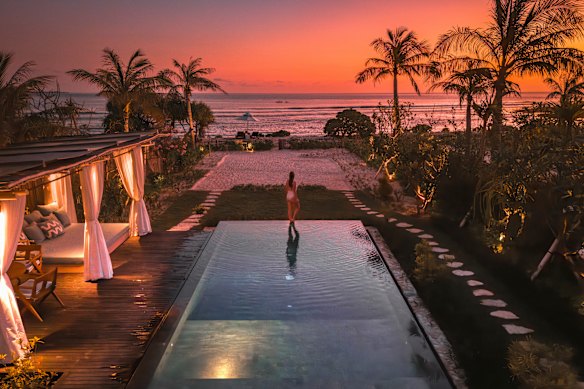
Maybe everybody needs to find their own far-flung or pleasingly impractical corner of the world, so we don’t all end up in the same one. Mine would be Comporta, where the absence of an easy option sometimes leads to a more interesting one.
On our final night, my friend and I realise we might be stranded in the town, which isn’t entirely displeasing, save for international flights to catch. No taxis, no buses, fast-dwindling options. But a few locals we’ve befriended during our stay hear about our predicament and band together to drive us to the ferry terminal at Cais Sul ferry terminal at Troia. They farewell us at the port as the sun disappears into the sea, like the closing scene of a wistful indie summer film. In the end, I’m glad I didn’t hire a car.
WORTH THE EFFORT
NIHI ROTE & HOSPITALITY ACADEMY, ROTE, INDONESIA
Having established a reputation for barefoot luxury and beach horse rides on Sumba, NIHI has expanded to Rote, the southernmost major island of Indonesia. The new 21-villa resort is designed to feel connected to the island rather than removed from it, with a non-profit hospitality academy at its heart. James McBride, co-founder and CEO of NIHI hotels likens it to “Fiji or Goa 20 years ago”. From about $1200 a night, three-night minimum. See nihi.com/rote
UXUA CASA HOTEL & SPA, TRANCOSO, BRAZIL
In 2009, former Diesel creative director Wilbert Das helped put the Brazilian fishing village of Trancoso on the luxury travel map with the opening of a bohemian boutique hotel. A few years later, B shot her Blue music video in the village, and her sister Solange honeymooned at UXUA. But for centuries, Trancoso was only accessible to its Indigenous population. Getting there means flying to Porto Seguro, about 90 minutes from Rio, followed by a long car trip winding inland through coffee and banana plantations, or a ferry crossing then a drive bouncing along coastal dirt roads. Thankfully paradise – and a cool creative scene – awaits. From about $550 a night, two-night minimum. See uxua.com
SUBLIME, COMPORTA, PORTUGAL
Sublime has long been the place to stay in Comporta, and now there’s more of it. Its latest addition, Sublime Sand, sits across the road from the original property, with 43 villas designed by Lisbon-based architects Fragmentos. Think private pools, generous living spaces and room to cater to a crowd, such is the spirit of Comporta living. From about $550 a night. See sublimehotels.pt
UGA HALLOOWELLA, SRI LANKA
The journey to Uga Halloowella in Sri Lanka’s central highlands is part of the experience – a sinuous drive through tea plantations and misty valleys, either via private car or tuktuk. Set 1444 metres above sea level, the former 19th-century plantation bungalow has been reimagined as a six-suite retreat with a spectacular infinity pool. The Pekoe Trail runs almost past the front door, winding through working tea estates where life carries on much as it did before the arrival of boutique hotels. From about $1500 a night, two-night minimum, all-inclusive. See ugaresorts.com/halloowella
Disclaimer : This story is auto aggregated by a computer programme and has not been created or edited by DOWNTHENEWS. Publisher: www.smh.com.au