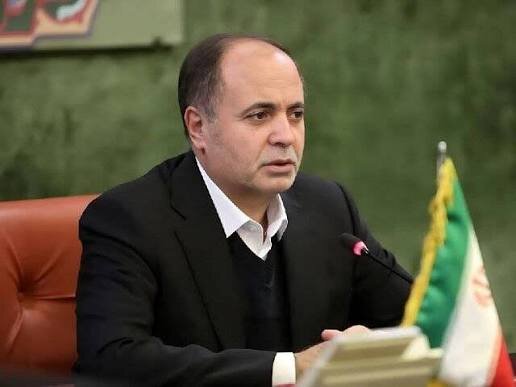
TEHRAN- This summary reviews the televised remarks of Iran’s Minister of Agriculture, Gholamreza Nouri Ghezeljeh, who presented a detailed account of the agriculture sector’s performance during the past year and the first quarter of the current year.
The minister’s central message was that the sector has demonstrated considerable resilience in the face of wartime conditions, economic restrictions, sanctions, and global market pressures. According to him, agriculture recorded a 2.3 percent growth in value added last year and in the first quarter of this year, created approximately 70,000 new jobs, and exported nearly 3 billion dollars’ worth of agricultural products in the first seven months of the year.
These figures were presented as evidence that the sector has continued to function and grow despite difficult circumstances, and that the country’s food security has not been seriously disrupted. The minister also discussed fisheries, poultry, wheat and flour pricing, bread subsidies, importers’ foreign-currency claims, energy constraints, market regulation for Ramadan and Nowruz, and the implementation of the cropping pattern. The overall picture is one of a sector that has been forced to adapt quickly to external shocks while trying to balance producer incentives, consumer prices, fiscal constraints, and food security.
The minister began by emphasizing that the agriculture sector has been able to overcome difficult economic and wartime conditions. He reported a 2.3 percent growth in value added last year and in the first quarter of the current year, along with the creation of about 70,000 new jobs. He attributed part of this resilience to diverse economic capacities, extensive communication with neighboring countries, and deep ties among nations. He acknowledged that recent developments had affected export and import costs and the final price of goods for traders, but argued that the goals pursued by enemies to weaken Iran had not been achieved. A major theme in his remarks was the role of public trust. He said that from the beginning of the 12-day war, people were assured that agricultural goods and food would continue to be supplied. This confidence, he argued, prevented panic buying, long queues, and store shortages, allowing markets, production, and supply chains to remain stable. He praised the people as the most important component of a strong Iran and as the support of the armed forces and government servants.
The minister then reviewed several sub-sectors. In fisheries, he reported a 35 percent increase in fish catch from distant waters and open seas, despite continued insecurity in the Persian Gulf and the Strait of Hormuz. This, he said, greatly reduced the dependence of processing factories on imported tuna. He also reported a 35 percent increase in shrimp production and farming, describing these achievements as proof of the country’s production capacity and the ability of operators to continue working under difficult conditions. In poultry, he said producers continued activity despite high risks and threats to energy infrastructure. The country reached self-sufficiency in chicken meat and shifted from being an importer to an exporter. At the beginning of the year, 242 tons of chicken meat were imported, but later nearly 10,000 tons were exported. He presented this as a significant turnaround. On trade, he said that in the first seven months of the year, nearly 3.5 million tons of agricultural products worth about 3 billion dollars were exported. He stressed that this level of export under war, sanctions, and economic restrictions demonstrated the high production and export capacity of Iran’s agriculture sector. He concluded this part by saying that Iran stands powerfully by relying on resilience, resistance, and the companionship of the people and various state institutions.
The minister also addressed reserves and production planning. He said stocks of essential goods and animal feed had increased even compared with previous years and peace conditions, and that planned programs had raised the level of reserves. He announced the start of a plan to produce and supply chicken meat at an optimal economic weight and age. The aim is to reduce waste, save animal feed, and increase the productivity of poultry units. He explained that chickens after about 40 to 42 days of age spend more energy and feed on fat production rather than protein, and longer rearing also requires certain drugs and vaccines for the final growth period. The new plan therefore seeks to increase productivity, reduce input consumption, improve public health, and provide more protein for consumers, while also helping the economic performance of poultry units. He also introduced a “sized chicken” plan with a standard weight of about 1.5 kilograms. He asked the public to welcome this product, arguing that it would help stabilize prices faster and increase production volume. He added that planning for Ramadan and Nowruz would adjust chick placement according to this production model so that per capita consumption and total supply would not be disrupted.
The second major theme was market regulation, pricing, and subsidies, especially for wheat, flour, and bread. The minister stated clearly that there had been no change in the price of wheat and flour for subsidized bakeries. He explained that under Article 67 of the executive regulations of the budget law for the year 1405, wheat and flour needed by guilds and industry must be supplied at cost price. As a result, supply to various industries has gradually been removed from the subsidized rate.
On wheat procurement, the minister said the guaranteed purchase price for the current crop year had not yet been finalized, but views within the Pricing Council were converging and he hoped the rate would be announced in the coming days. He explained that the delay was intended to protect farmers’ interests and that all production costs, including the effects of liberalizing some input prices, were being considered so that wheat farmers could sell at a real price and fair profit. He assured farmers that their interests were being taken into account.
The minister also addressed the foreign-currency claims of importers of essential goods. These claims accumulated in 1401 and 1402 because foreign currency allocation was incomplete. Initially about 5.5 billion dollars, they were reduced after foreign pricing corrections and currency reforms. He estimated the remaining claims at about 4 to 4.5 billion euros, and after accounting for importers’ debts to the government, the net claims were about three billion euros. He said the government’s economic team was pursuing ways to secure resources, and the Central Bank was to begin payments with priority for small traders once foreign-currency resources were available. However, he said the exact timing was not yet known. On energy, he noted that agriculture consumes less than five percent of the country’s energy but is vital for food security. Producers were asked to save energy, and alternative fuel arrangements, including diesel through the Ministry of Oil, had been made for units at risk of gas cuts. He asked the public to conserve energy so that food production would not be disrupted in the coming months.
Finally, the minister discussed market regulation for Ramadan and Nowruz. He said the experience of the past two years would be used to supply needed products abundantly and at appropriate prices. He noted that food inflation last month was 2.2 percent, the lowest among commodity groups, and that the past four months showed relative stability in essential goods. He said about 85 percent of needed products are produced domestically and 15 percent imported, with import needs sufficiently provided. He reported increases in fruit and horticultural production of nearly 11 percent and red meat production of about 2.5 percent, as well as growth in white meat and eggs. He acknowledged that global essential goods prices had risen by about 23 percent and that transport and trade route difficulties had raised costs, but he expressed hope that current measures would reduce these pressures. He also said the cropping pattern was followed on about 93 to 94 percent of cultivated area, credited farmers for their cooperation, and explained that fertilizer subsidies would be returned to farmers’ accounts after purchases were verified. He concluded by reaffirming the government’s commitment to supplying the nation’s food under any conditions, relying on domestic production capacity and public cooperation, especially before Ramadan and Nowruz.
MA
Disclaimer : This story is auto aggregated by a computer programme and has not been created or edited by DOWNTHENEWS. Publisher: tehrantimes.com