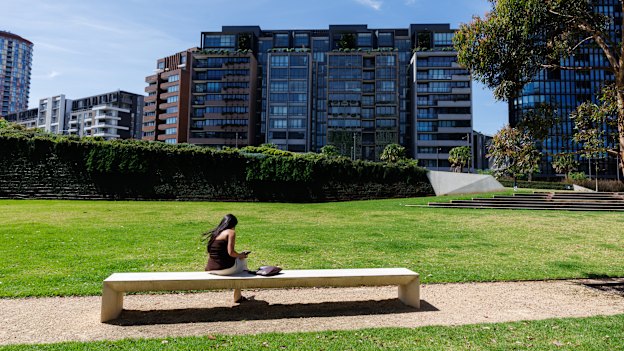
A thriving multicultural community can now be found in an area that once housed factories manufacturing everything from dyes to glass.
In 2023 we moved into my husband’s grandparents’ old home on the “Zetland Estate” built in the late 19th century. As a First Nations family, we believe that place is a storyteller in itself. And the story of the Zetland-Waterloo-Green Square area is embedded in our DNA.
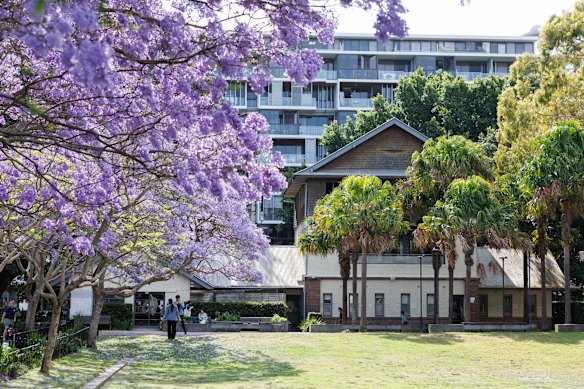
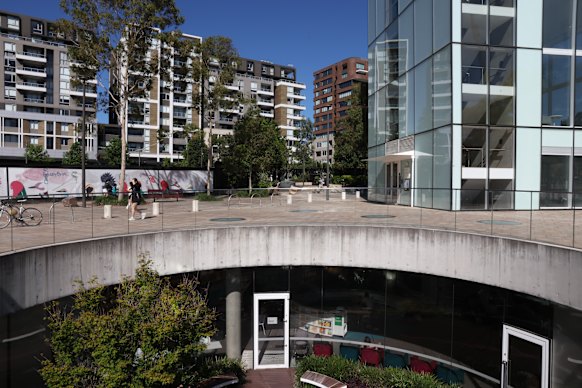
Zetland is about 4km south-east of the CBD and is in the middle of some of the most historic and vibrant development in South Sydney – Waterloo-Zetland-Green Square. Once an industrial, working-class area, in the past decade it has undergone a total transformation. Where once stood factories manufacturing everything from dyes to glass alongside working-class houses, it is now home to a thriving multicultural community. This development comes complete with a Maserati dealership where Wing Kee’s family shop stood (and which I misheard for many years as Winkies) along with luxury boutiques with eye‑watering prices.
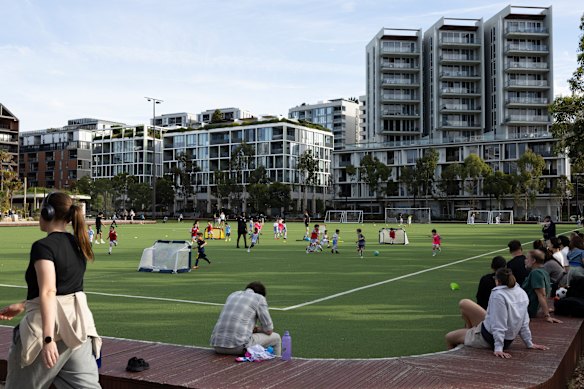
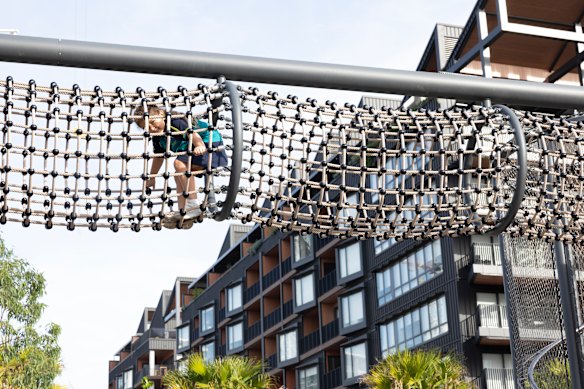
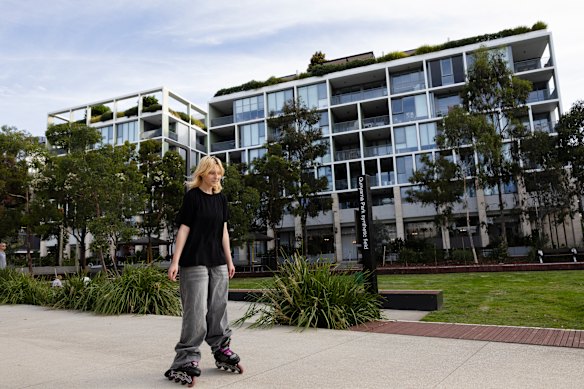
The area is full of medium-density housing, and many of these echo the terraces of the past. In the streets off the major thoroughfares of Bourke Street, O’Dea Avenue and Joynton Avenue, the apartments have been built to access green space. Those spaces, once part of the Victoria Park Racecourse, occupy land bounded by Joynton Avenue, Epsom Road, Dowling Street and O’Dea Avenue. Tote Park on Joynton Avenue holds the old totaliser building which has been repurposed as a community centre.
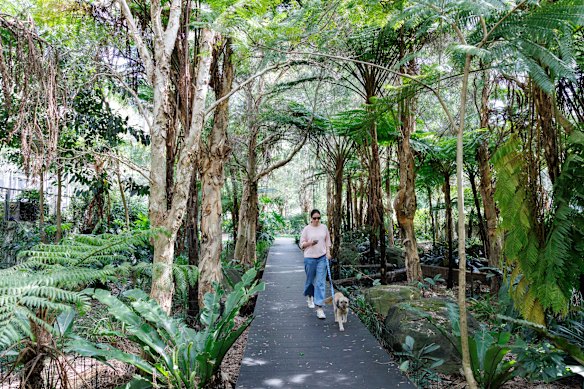
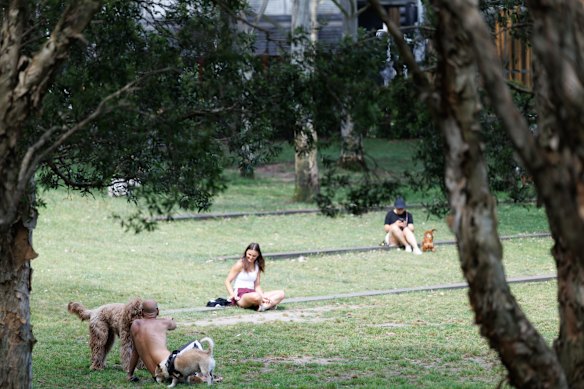
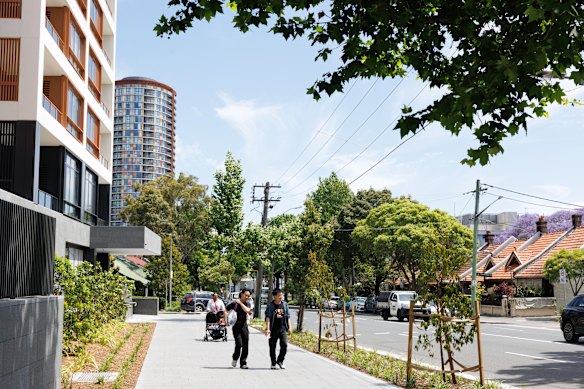
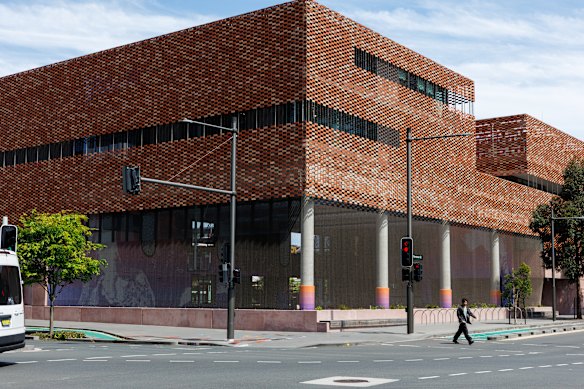
The area feels like it has been curated to ensure community. It’s safe. There are people around at all hours of day and night, coming, going, walking their paw babies or just grabbing a feed at one of the many restaurants. The coffee is good and pretty much on every corner. You can’t beat The Social Society on the way to Green Square Station. It not only has great coffee but extraordinary fresh homemade muffins each morning – local tip, you need to get there early as the batches are small and go quickly. Or wander a bit further up the road to Haven Coffee. Grab a coffee and brekkie and spend some time whiling away the morning and watching the world go by. Above the library sits Cafe Noun. At sunset, Cafe Noun activates the Green Square Plaza (once the wool scour and eastern suburbs incinerator) with outdoor seating, live music and salsa or bachata dancing nights – and you can get a coffee after 3pm!
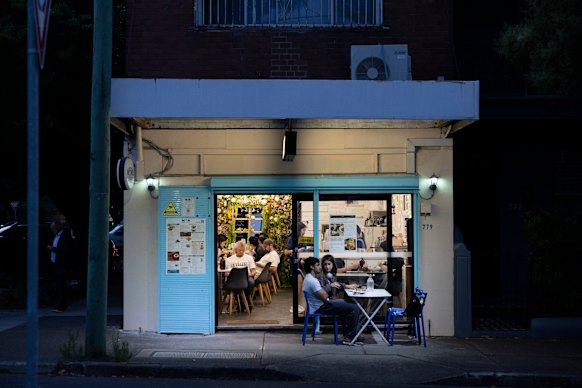
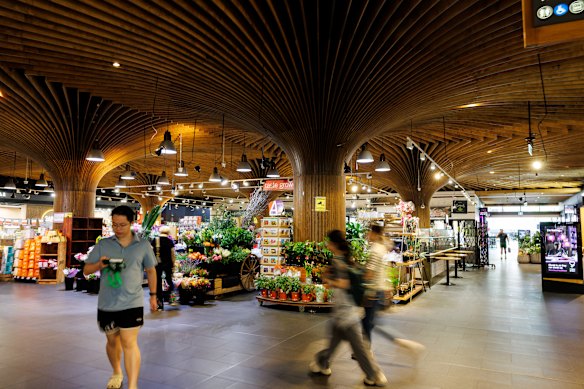
Food choices are plentiful but you can’t go past Mon Thai where you can grab a feed of authentic, tasty northern Thai street food, and it boasts a healthy 4.7-star review! I’m also a bit obsessed with the new Top Impression Bakery. I’ve never had so much carb-laden goodness so close. Try the tiramisu danish for a sweet experience.
Access is great. The train, metro or bus is a short walk away or if you’re energetic, a Lime bike will get you to Surry Hills in five minutes. If you’re feeling really energetic a walk will get you to Hyde Park in 25 minutes.
The area wasn’t always vibrant. It was an industrial hub with labour-intensive industries like the putrid boil-down works in Botany Road, the Waterloo rubbish incinerator where the eastern suburbs refuse would be taken, the ACI glass factory.
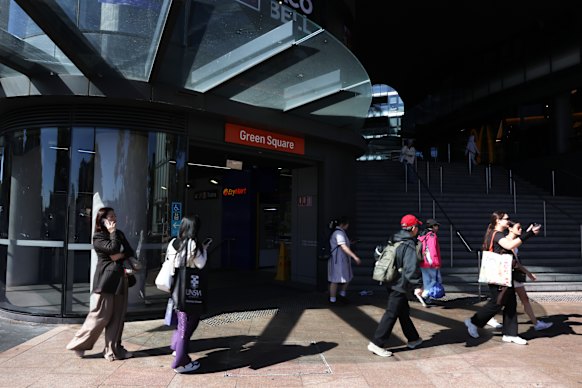
The area has a deep and rich Indigenous history. The land was described by the settler-colonisers as being swampy and poor and not good for settlement. For the Dharug and Dharawal it was a land that was rich in wildlife and food. The Waterloo wetlands extended through to Botany Bay. In the mid-20th century, the area became a magnet for the Aboriginal community leaving country towns and missions to work in the industries.
My in-laws moved here from the lost suburb of Lauriston Park which was absorbed by the Sydney airport. My husband’s nanna, Alice, used to regale me with tales of watching aviator Charles Kingsford-Smith land. Alice’s family were Wodiwodi from the south coast area; they bought their house in 1939. Her grandmother had been removed to the Parramatta Catholic Girls Orphanage and then moved to Waterloo.
My mother-in-law went to school at Waterloo Public School, now known as Yudi Gunyi School. This beautiful old building is a testament to the architecture of the late 19th century when schools, prisons and mental asylums were similar and designed to contain and control their “clientele”.
I can hear the voice of my husband’s grandfather reminding me of the mighty Rabbitohs – our South Sydney Rugby League club. Fred retrained as a masseuse and was the Rabbitohs’ strapper during the heydays of the 1960s-1980s. The players lived and worked in the area. The name “Rabbitohs” was initially pejorative – some of the players worked as rabbit sellers (rabbit-ohs) and would sell them door to door. Wearing their club guernseys to work, they would often turn up to games covered in bits of rabbit, thus earning the taunts of the opposition. During the ’60s and ’70s you could pretty much guarantee that one of your local garbos was on the team. Loyalty to the Rabbitohs is ingrained in the area, and it would be a very brave or foolhardy person in Zetland/Waterloo who supports another team.
If there is one gripe I have about the area, it is the distinct lack of all-day parking. I also think there is a special place reserved in hell for those people who put their trailers, caravans and boats in those parks. The reality is that there isn’t really a need for a car when you are in such proximity to everything.
The fire station is now a mosque and every year the Imam lets us know when Ramadan and Eid occur and asks if there are any issues with noise or parking to let him know – there never is.
The houses may have had to breathe-in for units and there are some very questionable luxury stores and vehicles – but the Zetland, Waterloo and Green Square space will always be community.
Joanne Kamira is an academic at Macquarie University researching Maori in Australia.
Disclaimer : This story is auto aggregated by a computer programme and has not been created or edited by DOWNTHENEWS. Publisher: www.smh.com.au