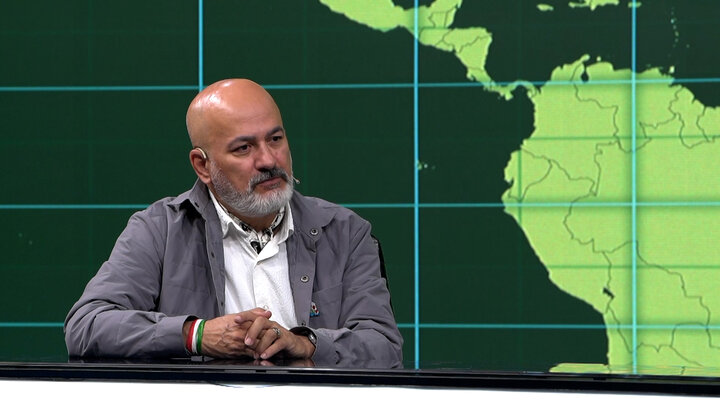
TEHRAN – The environmental impact of the US-Israeli war against Iran could extend well beyond the end of the fighting, raising concerns over pollution, water supplies and damage to wildlife and marine ecosystems across the region.
In an exclusive interview with the Tehran Times, Mohammad Darvish, a prominent environmentalist and desert researcher, says fires at oil facilities, damage to protected habitats and the loss of vessels carrying hazardous materials could have consequences far beyond Iran’s borders. Contaminants entering the Persian Gulf could threaten marine life and food chains in neighboring countries, while smoke and airborne particles may travel hundreds or even thousands of kilometers. He warns that the lack of comprehensive scientific investigations has left the scale and duration of the damage unclear.
Darvish also discusses the shortcomings of international mechanisms for protecting ecosystems during war and the challenges of documenting environmental damage and pursuing accountability. He argues that renewable energy and shared environmental resources could help Iran and its neighbors strengthen energy security, deepen regional cooperation and build a path toward peace.
Here is the full transcript of the interview:
What are the most significant environmental consequences of the recent wars against Iran, particularly those that may not yet be visible?
War is among the most destructive human activities. Its consequences extend across the short, medium and long term, affecting human beings and all other living organisms in the affected territories.
More than 80 years after World War II, the consequences of the atomic bombings of Hiroshima and Nagasaki are still discussed, including their effects on subsequent generations. More than seven decades after the Vietnam War, the consequences of Agent Orange, which the United States used during the conflict, remain evident in contaminated soil and water and in the health of subsequent generations. Animals have also suffered, with some born with severe disabilities.
These experiences led the United Nations and other international institutions to develop conventions and protocols intended to prevent such conduct during warfare and to classify certain actions as war crimes. Yet we witnessed serious violations of these principles during Israel’s war against Palestinians in Gaza and, unfortunately, during the 12-day and 39-day wars imposed on Iran.
One of the most consequential examples was the bombing of oil depots in Tehran’s neighborhoods such as Shahran and Soohanak. These attacks occurred when weather forecasts indicated that rain would fall in Tehran the following day.
The fires and resulting pollution contributed to what became known as black rain and acid rain. These are extremely dangerous environmental phenomena, particularly when they result from human activity on such a scale.
To this day, no detailed report has established what proportion of the runoff from that rainfall entered the reservoirs of the Latian, Mamloo and Karaj dams, or what effects it had on aquatic organisms living in those reservoirs. We have not yet been able to determine the full extent of the contamination.
There were also explosions involving oil facilities and vessels in the Persian Gulf and the Sea of Oman. According to official figures, at least 200 vessels sank. Some were carrying chemicals and hazardous materials, and we still do not know what happened to all their cargoes.
My colleagues at the Department of Environment tried to dispatch researchers from its Marine Environment Division to investigate the situation firsthand. However, American ships warned them not to approach, saying they would regard them as suicide boats. As a result, we have been unable to establish the full extent of the damage through reliable, documented investigations.
The Persian Gulf has 17 coral islands, which are among the world’s most valuable ecosystems. They support phytoplankton and zooplankton, forming the foundation of the food chain for marine organisms. These ecosystems have been seriously affected.
We should also remember that dead zones have been developing in the Persian Gulf since 2015. These marine deserts have formed around desalination facilities in Qatar, the United Arab Emirates and Bahrain. Although water is present, pollution has accumulated to such an extent that living organisms cannot survive in some areas.
Following the wars, the concentration of pollutants may have increased as vessels accumulated in the region and discharged ballast water. The boundaries of these dead zones may also have expanded. Such areas cannot be restored in one, two or even five years. Their environmental consequences can be long-lasting.
According to the Department of Environment, 23 protected areas have been damaged by the bombings. Environmental protection facilities, ranger stations and research centers along the coasts of the Persian Gulf and the Sea of Oman have also suffered serious damage.
Mangrove habitats, including the Hara and Chandal forests, have also been affected. These are among the world’s important protected mangrove ecosystems.
We are also seeing reports of marine animal carcasses washing ashore along the Persian Gulf. One such case was recently reported on Kish Island. These incidents illustrate how complex the environmental situation has become.
The ROPME Convention, which brings together countries bordering the Persian Gulf and the Sea of Oman to monitor and rehabilitate their shared marine ecosystems, should play an important role. In practice, however, it has not been able to fulfil its responsibilities.
The United Nations must become more seriously involved and ensure that environmental protection protocols are not circumvented on security or military grounds.
Do these international protocols lack enforcement mechanisms, or are the mechanisms simply not being used?
They are supposed to have enforcement mechanisms. UN member states have signed agreements prohibiting the use of chemical weapons in warfare. They have also undertaken not to use weapons of mass destruction, including the type of weapon reportedly used in Lamerd. Military operations should also avoid causing disproportionate harm to civilians.
What happened in Tehran on 14 Esfand 1404 (March 5, 2026), in my view, falls into this category. The United States and Israel are UN member states and have accepted these commitments, yet they have violated them.
Several Israeli leaders have been convicted as war criminals at The Hague, yet they continue to travel freely with American backing. This undermines the credibility of international institutions and raises serious questions about their ability to enforce their own principles.
How did you personally experience the recent wars? Which moments affected you most?
I remained in Tehran throughout the conflict. We have many potted plants at home, and I was concerned about their survival, too. So I stayed.
I sometimes approached areas that had been targeted to observe what was happening. On one occasion, I witnessed a scene that gave me hope.
An area had been bombed, and people were understandably anxious and distressed. I noticed a woman looking worriedly at a tree. At first, I thought something had struck it. When she saw my curiosity, she explained that a bird had been injured. Its wing was covered in blood, and it was perched in the tree. She was worried about its suffering and asked whether I could help rescue it.
A society whose people remain concerned about the life of another creature, even in such circumstances, deserves admiration. It can emerge from a crisis with its dignity intact.
I was reminded of a poem by Sohrab Sepehri:
“Let us not muddy the water.
Perhaps this flowing water
is making its way to the foot of a poplar
to wash away someone’s sorrow.
A dove is drinking from it.
Let us not muddy the water.”
Ahmad Shamlou once criticized Sepehri, questioning this kind of mystical romanticism. Young people were being lined up against walls and executed, he argued, and he could not understand such preoccupations.
Sepehri’s response was that if we could raise a generation that cared about a dove drinking water or a poplar tree, that generation would never allow innocent young people to be killed.
A generation that respects the life of a tree or a bird will certainly place even greater value on human life and the well-being of others.
We also witnessed many encouraging acts of solidarity. Owners of tourist accommodation facilities offered to host fellow citizens displaced by the war free of charge.
At a petrol station, I saw someone whose bank card was not working and who could not pay for fuel. Another customer stepped forward and offered his own card. He did not even appear concerned about whether he would get his money back. We saw many examples of this kind of generosity.
On another occasion, I went to buy eggs and noticed that the shopkeeper was taking an unusually long time. He explained that egg prices had increased that day, but the eggs I had selected belonged to the previous day’s stock. He was separating them manually so that I would be charged the earlier price.
I found it remarkable that he cared so much about this distinction under wartime conditions.
We also launched a campaign to save an endangered fish species, Aphanius, in the downstream reaches of the Zayandeh-Rud River. We needed to raise money. Because the Internet access had been cut off, we used the Bale messaging application.
Some people questioned our priorities, asking why we were concerned about Aphanius when people were struggling to save their own lives.
But we raised the money we needed. I consider this an important indicator of social development.
These experiences showed me that concern for the environment and other living creatures does not disappear in times of crisis. In fact, it can become an important expression of social solidarity.
Environmental systems do not follow political borders. To what extent could the consequences of the war against Iran affect neighboring countries and other regions?
Some of these developments will certainly extend beyond Iran’s borders. We have many historical examples.
During the US-led war against Iraq, the Mesopotamian ecosystem suffered severe damage. Military vehicles crossed dried wetlands, contributing to serious soil erosion.
Dust-generating areas that emerged following major development projects in Turkey also affected Iran for years. These sources contributed to dust storms that became known as Arab dust storms and affected 25 Iranian provinces.
Saddam Hussein also constructed a canal known as Saddam’s Canal or the Third River, partly to prevent Iranian forces from advancing. He altered the course of the Tigris and Euphrates rivers. This contributed to the drying of large parts of the Hoor al-Azim wetlands, turning them into sources of dust storms. These wetlands, known in the region by names including Hoor al-Azim, Hoor al-Hawizeh and Hoor al-Hammar, generated dust that crossed into Iran.
This is an example of how interconnected ecosystems are. Environmental changes in one location can have consequences thousands of kilometers away.
We have also seen how declining water flows in the Tigris and Euphrates basins have affected agriculture and livelihoods. After water allocations fell to about one-third of their previous levels, four million farmers in Syria and Iraq lost their livelihoods, according to the figures I have cited. Many moved to the outskirts of cities. Poverty and insecurity increased, creating conditions that armed groups such as ISIS and al-Qaeda could exploit for recruitment.
The consequences of environmental degradation can therefore extend into social and political instability.
The same risks exist in the Persian Gulf and the Sea of Oman. Marine organisms caught in contaminated waters are not consumed only in Iran. People in the UAE, Kuwait, Saudi Arabia and other countries also depend on these waters for food. Some products are exported to Asia and Europe.
If pollutants enter the marine food chain, the consequences could extend to international markets. We still lack accurate information about the scale of this risk.
Air pollution is another concern. Prevailing winds generally move from west to east, meaning smoke and pollutants released in Iran can travel thousands of kilometers. The large plumes of smoke produced by fires in Tehran could therefore affect areas far beyond the country.
I have seen a report indicating that some of these plumes reached the Hindu Kush mountains in Afghanistan. This deserves serious investigation.
There is also concern about the effect of soot deposited on snow. When black particles settle on snow, they darken its surface and increase the rate at which it absorbs heat, accelerating melting. This can reduce the amount of freshwater retained until summer and contribute to flooding during March and April.
We need comprehensive research into these consequences. I hope that, once the war ends, environmental scientists, water specialists and ecologists will have the opportunity to investigate the full extent of the damage.
What response have international environmental organizations and activists shown to the environmental damage caused by the war? Have you personally tried to raise awareness?
We expected much more. We hoped independent public figures and environmental organizations would respond more forcefully.
Many government-affiliated institutions in Western countries, some of which were directly or indirectly involved in the conflict, did not respond. But we also expected more from independent organizations and environmental activists.
I raised this issue during a heated discussion with environmental activists in Sweden, including people involved in establishing the Swedish Green Party.
I explained that Iran was already facing serious difficulties because of sanctions, which had also obstructed environmental initiatives. These included water recycling, preventing leachate and industrial wastewater from entering surface and groundwater resources, and developing renewable energy, particularly solar and wind power.
Even solar panels we had purchased from China were stranded aboard ships in the Indian Ocean, and, according to my understanding, US restrictions were preventing their delivery to Iran.
If we expand renewable energy instead of relying heavily on thermal and gas-fired power plants, hydroelectric dams and nuclear power plants, we can reduce greenhouse gas emissions, consume less water and help address climate change. We would also reduce natural gas consumption.
I told the Swedish activists that if they genuinely cared about the environment and global warming, they should call on the United Nations to exempt Iran from sanctions affecting environmental activities.
The discussions were heated, but they eventually issued a statement calling on the United Nations to work toward removing Iran from the scope of environmental sanctions, citing the country’s environmental initiatives.
Have the solar panels and other equipment eventually reached Iran?
No. An independent environmental organization in Sweden has called on the United Nations to work toward exempting Iran from these sanctions, but the equipment has not arrived.
The same groups that once demonstrated outside the US and Israeli embassies, calling for Iran to be bombed, are now asking for Iran to be exempted from environmental sanctions.
Despite the wars and sanctions, we have managed to exceed 6,200 megawatts of combined solar and wind power capacity. Solar power generation capacity has increased by more than 300 percent over the past year.
If sanctions had not prevented timely imports of solar panels, we could already have exceeded 15,000 megawatts. That would have made a meaningful contribution to reducing greenhouse gas emissions.
You have emphasized the importance of renewable energy even in the wartime. How can the expansion of solar power improve Iran’s energy security?
If we had been speaking at this time last year, our combined solar and wind power capacity would have been around 2,000 megawatts. Today, it exceeds 6,200 megawatts.
The president also raised these issues at the COP31 summit in Antalya recently. He argued that exempting Iran from environmental sanctions would enable the country to fulfil its responsibilities in helping reduce the threat of global warming.
Our media should pay greater attention to these developments. Journalists should visit solar power plants and report on their progress.
Many installations are now being built on school rooftops. The government’s plan is to equip educational institutions across the country with solar power systems.
Just two days ago, I visited Qaen in South Khorasan province and saw a boys’ technical school with a 20-kilowatt solar power plant on its roof.
Iran has approximately 107,000 educational institutions. If 100,000 of them each had a 10-kilowatt installation, the total capacity would be equivalent to ten power plants the size of the Bushehr nuclear power plant.
The important difference is that this electricity would be generated across the country rather than concentrated in a few large facilities. This would strengthen energy security through a decentralized electricity network.
Throughout the war, we were concerned that electricity infrastructure and thermal power plants might be targeted, potentially causing widespread blackouts. A distributed network of solar installations across thousands of schools would be much more difficult to disable in a single attack.
In that regard, an domestic organization working on renewable energy has undertaken to provide solar power plants for 12,000 schools. I also visited Semnan, where school-building charities and private-sector groups were participating in these initiatives.
These are encouraging developments. The war has accelerated interest in investing in Iran’s energy future.
What steps have you and your colleagues taken to document the environmental destruction and establish a basis for seeking compensation from those responsible?
In my view, the first step is to establish responsibility for the war and determine who initiated the military action and the resulting destruction.
Environmental activists in Iran have sent two letters to the United Nations. One concerns damage to cultural heritage, including qanats and historic buildings in Tehran, Khorramabad and Isfahan.
The second addresses the environmental consequences of the war. We outlined the damage to 23 protected areas, the effects on marine ecosystems, dangerous levels of air pollution and the possibility that black rain could contaminate water and soil resources.
We submitted these letters and our requests to the United Nations.
However, as long as the veto system remains in place and the United Nations is unable to act decisively, I have little hope that a strong statement condemning the actions of the United States and Israel will be issued.
Nevertheless, one positive development has been the support Iran has received from sections of international public opinion.
A friend of mine currently undertaking a research fellowship in Uzbekistan told me that people who recognize him approach him to express their support for Iran.
My son, who works in artificial intelligence, was also severely affected by the Internet shutdown. His professional and personal life were disrupted, and he was close to becoming depressed. Eventually, he traveled to Armenia and Turkey to continue working with Internet access.
He later told me that people in many countries supported Iran. He recalled visiting a café in Istanbul, where the staff paid for his coffee after learning that he was Iranian.
These experiences are significant.
You have often described the environment as a potential foundation for regional development and peace. How can environmental cooperation help improve relations between Iran and its neighbors?
I recently met officials from the Afghan Embassy in Tehran. I told them that they have the right to withhold water from us, whether from the Hari Rud River and the Friendship Dam or from the Chah-Nimeh reservoirs in Zabol and the Hamoun wetlands.
My Afghan counterpart was surprised that an Iranian was acknowledging their right to make such decisions.
I explained that I understood Afghanistan had its own water shortages and difficulties. But I also knew that its people experienced electricity outages averaging 15 hours a day.
Our eastern border has enormous potential for generating electricity from wind power. We have historical evidence of this potential in the 120-day windmills of Nashtifan, which are expected to be registered with UNESCO.
These windmills demonstrate that people in this region understood how to harness wind energy thousands of years ago. Instead of allowing wind to become a source of destruction through shifting sand dunes and the burial of homes, they used it to power mills and grind wheat.
Today, we could install wind turbines in Khaf, Nashtifan and along the eastern border and supply electricity to Afghanistan. In return, we could seek cooperation over our water allocation from the Friendship Dam.
The Afghan official told me that although China and India had offered to establish solar and wind power plants in Afghanistan, his country’s preference was to cooperate with its Muslim neighbors. He was receptive to the proposal and gave us permission to enter Afghanistan and assess the opportunities.
This illustrates how environmental cooperation can strengthen relations between countries and create sustainable wealth.
Who can impose sanctions on the sun?
If we had invested in solar energy earlier and installed panels on the rooftops of homes and schools throughout the country, how much greater would our bargaining power have been?
Many of our problems can be addressed through sensible environmental policies and sustainable development.
The same principle applies to Iraq. During a visit to Baghdad last year, I saw that electricity was being cut off 17 times a day. Iraq also has unresolved water issues involving the Hoor al-Hawizeh and Hoor al-Azim wetlands, for which we have a water allocation of 2.5 billion cubic meters.
If we supply Iraq with electricity and export our surplus power, we could strengthen cooperation over water allocations and wetland protection.
Iran has the potential to generate 140,000 megawatts of electricity from solar energy alone and 30,000 megawatts from wind power.
If we make use of these resources, we could also reduce the burning of southern reed beds and the smoke that reaches Ahvaz, improving air quality for residents.
The environment is an opportunity for development, a better quality of life, sustainable wealth creation and regional cooperation.
You have written a book about the relationship between the environment and peace. What is the central argument of your book?
My book is titled Iranian Peace. Its central argument is that societies improve people’s quality of life when they give priority to environmental protection.
A society in which people enjoy a better quality of life is more inclined toward negotiation, less likely to resort to violence and generally experiences lower levels of depression.
There is an international measure called the Happy Planet Index, or HPI, which examines well-being in relation to environmental sustainability and other factors. It challenges the assumption that economic wealth alone determines how successfully a society lives.
Countries such as Guatemala, the Dominican Republic, Costa Rica and Bhutan have performed well in discussions of happiness and quality of life despite not being among the world’s wealthiest countries.
Iran also has communities that demonstrate the relationship between environmental resources and social well-being.
One example is Fereydunshahr in Isfahan province. According to information I have received, no murder has been recorded there for 411 years. The city has abundant water resources, beautiful views of the Zagros Mountains, extensive oak forests and approximately 150 bird species.
Although Isfahan province faces serious water shortages, Fereydunshahr is located near the headwaters of the Zayandeh-Rud and Dez rivers.
When you visit people’s homes, you often find that at least one wall is occupied by a library. The residents value dialogue, tolerance and kindness.
During a recent visit, the governor told me about a resident who wanted a divorce because of marital problems but registered it in another city to protect Fereydunshahr’s reputation.
That is how strongly some residents identify with their community and its social image.
Fereydunshahr is not the only example. Gezir in Hormozgan province and Dizbad Bala in Khorasan Razavi province are also communities that demonstrate the importance of social harmony.
We should introduce these places to Iranian children in simple language. They are examples of the values we should encourage: tolerance, respect for nature and peaceful coexistence.
Finally, what is ecological economics, which you have been working on for so long, and how could it help address Iran’s environmental and economic challenges?
Ecological economics argues that development must be compatible with the ecological capacities of the country.
Iran is located in the world’s arid belt, between latitudes 25 and 40 degrees north. Our average annual precipitation is one-third of the global average, and has now fallen to one-quarter. Evaporation rates are twice the global average. It also takes approximately 800 years for one centimeter of soil to form, twice the global average, according to the figures I have cited.
The per capita green space available to Iranians is 0.17 hectares, compared with a global average of 0.8 hectares.
Under these conditions, it is irrational to build an economy that depends heavily on rainfall and water consumption.
We should instead develop economic activities that generate wealth without exhausting our water resources.
Water should be valued primarily for its ecological importance, rather than treated simply as an economic commodity.
Ecological economics offers a different approach: do not consume the land; generate wealth from its natural beauty.
AM
Disclaimer : This story is auto aggregated by a computer programme and has not been created or edited by DOWNTHENEWS. Publisher: tehrantimes.com