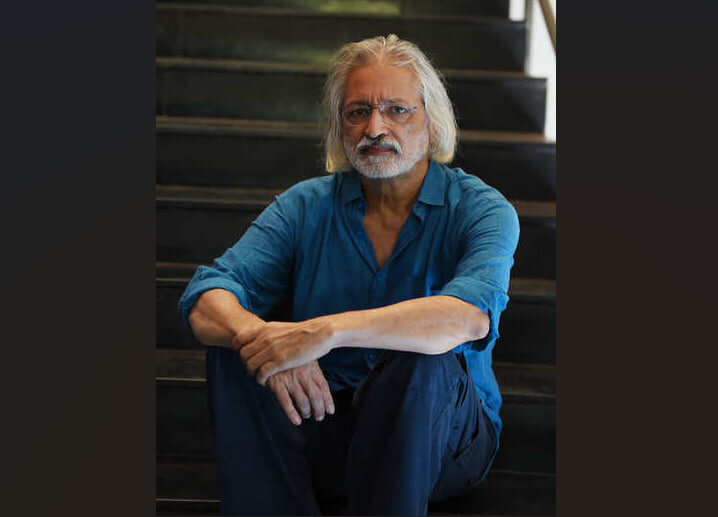
TEHRAN – Indian documentary filmmaker Anand Patwardhan has voiced support for the Iranian people following the Israeli and US military attacks on Iran, emphasizing the importance of justice, international solidarity and resistance to war.
In an interview with the Tehran Times, Patwardhan, who also signed an appeal published in Le Monde in support of the Iranian people, discussed the connections between the struggles of Palestinians and Iranians, the dangers of nuclear weapons, the role of media in shaping public perceptions of conflict, and the importance of telling the stories of ordinary people affected by war.
Drawing on more than five decades of filmmaking, he also discussed the need to challenge the global arms industry and preserve a sense of shared humanity across national and political divisions.
Below is the full text of the interview:
You recently signed an appeal published in Le Monde in support of the Iranian people. What motivated you to sign it, and what message do you want the world to hear?
I was horrified by the fact that Israel began the war and the United States joined it, murdering your leader and 160 schoolgirls in the very first hour of the war.
Following the horror, I was deeply disappointed that my government was not as supportive of the Iranian people as it should have been. Iran has always stood by India, and we should have reciprocated on humanitarian grounds alone, apart from the fact that it was clear who the aggressor was.
But sadly, because we have good relations with Israel and the United States, our government pretended to be neutral. That is disappointing for citizens like me who believe in world peace and also in international justice.
You also spoke out in support of Palestine in 2023, and now you are supporting the Iranian people. What connects these two positions for you?
Justice. The idea is that the weakest in the world need international support because they have been brutalized. What was happening in Palestine was genocide.
We could not pretend that we did not know. Unlike Nazi Germany, where Germans later claimed they had not known what was happening, we cannot make that argument because it is constantly on television.
Of course, it is not easily available on our mainstream channels in India. We turn to Al Jazeera, Democracy Now or other such sources to get the real news. The genocide is known to everyone and is still happening albeit on a smaller scale.
I recently watched your documentary War and Peace, and the sections in which civilians describe their experiences of hearing explosions and living through the consequences of conflict were particularly powerful. You explored nuclear rivalry in South Asia in this film. What lessons do that experience offer for understanding the nuclear controversy surrounding Iran?
That is a complicated question because I personally believe no country in the world should possess nuclear weapons.
The only country that has ever used nuclear weapons against human beings is the United States, which dropped atomic bombs on Hiroshima and Nagasaki. The world has been very lucky that this has not happened again. It is a miracle that it has not, given the enormous number of nuclear weapons that exist around the world today.
When India conducted nuclear tests in 1998, I opposed this even though it was a popular “patriotic” move. Pakistan immediately replied with its own nuclear tests and a nuclear race began in our region. Nuclear weapons destabilize the world; they do not make it safer. When you possess nuclear weapons, you attract the attention of other nuclear-armed countries, which begin to see you as a potential enemy. I do not think India became more secure by acquiring nuclear weapons. Genuine security can only come by developing friendly ties with our neighbours.
Iran’s situation is not exactly the same, however, and I cannot equate the two cases. One could argue that Iran’s potential ability to develop nuclear weapons makes it more difficult for the United States and Israel to target it in the way they have been doing.
On the other hand, one could also argue that if it were absolutely clear that Iran was not going to develop nuclear weapons, there would be no justification for the war at all. The nuclear issue was the only justification presented for it.
Personally, I believe the world needs to disarm.
That should have happened in 1945 as soon as nuclear weapons were discovered.
There were attempts in that direction. As my film War and Peace explored, Albert Einstein who had helped develop the theory behind the atom bomb later opposed its use. Other Jewish scientists on the Manhattan project that made the bomb had feared that Hitler’s Germany was also developing this weapon. But by 1945 Germany had already surrendered and the war in Europe was over and Japan was almost defeated.
At that point, the world should have said no to nuclear weapons. But USA still wanted to test their newly developed Atom bomb so Japan became their new target. Scientists like Joseph Rotblatt resigned from the Manhattan Project. Dozens of other scientists like Leo Szilard wrote a letter to President Roosevelt to stop the bomb. That letter never reached Roosevelt before he died and Hiroshima and Nagasaki thus became the tragic sites where first a Plutonium and then a Uranium bomb were tested on human beings.
Perhaps it is still not too late to fight for a nuclear free world. A start could be made if Iran says that if Israel agrees to destroy its nuclear weapons capability, Iran will follow immediately. If such a dream scenario ever plays out, it will build momentum for a total world moratorium on nuclear weapons.
You mentioned the use of atomic bombs against Japan. Some of the politicians interviewed in War and Peace also share their perspectives on the nuclear issue. However, what I find particularly important in your films is the emphasis on ordinary people’s experiences rather than those of political leaders. Why is it so important to tell the story of war through the experiences of those who actually suffer its consequences?
Your question already contains the answer.
It is obvious. The people who suffer are the ones who should speak about it.
My own understanding of nuclear weapons was also deepened by the experiences of the ‘Hibakusha’, the survivors of the atomic bombings of Hiroshima and Nagasaki. After India and Pakistan conducted their nuclear tests, these survivors travelled to both countries. The few survivors who still alive today have made it their mission to visit every country that tests nuclear weapons and explain how terrible these weapons are.
In documentaries such as Father, Son and Holy War and In the Name of God, you examined how ordinary people become involved in conflicts. How are public perceptions of war shaped by media narratives today, particularly regarding Iran and Palestine? Earlier, you mentioned that you often have to rely on alternative media, such as Al Jazeera, to understand what is happening.
India historically was a great friend of Palestine. Mahatma Gandhi was one of few world leaders who opposed the creation of Israel on the grounds that it meant displacing Arabs from their homeland. But today’s Indian government is not happy when people protest in support of Palestine.
Authorities often crack down on these demonstrations. Nevertheless, we have continued to organize protests and to speak out wherever possible.
Our government is closely aligned with the United States and Israel, particularly Israel. The media too has also changed considerably. India used to have a much more robust democracy 15 or 20 years ago. Today, the major media outlets largely follow the government’s position.
As a result, it is rare to find good reporting and coverage of what is happening. We have to search widely and gather information from every source available to us.
As an artist who has experienced considerable censorship, you argued in a 2025 interview with Scroll that, despite powerful censorship and propaganda, public perceptions of conflicts and the people suffering from them can still change. Do you see this happening today with regard to Gaza and Iran?
Yes. There are some newspapers and many internet platforms that report on these issues.
We also speak out on social media as well as through whatever other channels are available to us.
There is a movement in support of Palestine, and protests also took place against the war on Iran when it began.
So, these things are happening.
At the same time, it is not a popular position to take.
In your documentary The World Is Family, you explore the idea of universal human solidarity. Do you think we can preserve this sense of shared humanity in a world increasingly divided by war, nationalism and political conflict?
Yes. Almost all my films, in one way or another, communicate the idea that the world should be seen as a family. In fact, my latest film is called Vasudhaiva Kutumbakam/The World Is Family. It is an ancient Sanskrit saying meaning that the world is one family. If we genuinely saw the world this way, wars would become extremely difficult to justify and wage.
In particular, Iran and India have very strong historical and ethnic connections. DNA research also shows significant links between the populations of the two countries. We should therefore be as upset about the killing of Iranians as we would be about the killing of our own people.
I am not saying that we should care more because of an ethnic connection. I believe we should be equally concerned about the suffering of our fellow human beings everywhere.
Are you currently working on any projects, or planning future films? Will the current international situation influence the direction of your future work?
In a sense, I have been doing almost the same thing for more than 50 years. I have made different films, but the fundamental reason I make films has always been the same: to increase humanity, or at least to make people understand what humanity means.
The world today is controlled by the arms industry.
The people who manufacture weapons are the ones driving this system. Weapons are not manufactured everywhere in the world; production is concentrated in only a few places. Only a handful of countries are also responsible for much of the international arms trade.
All those who manufacture and distribute weapons for profit are the real enemies of the world.
We need to look at this problem holistically and consider how we can end wars, not just in one country but everywhere. We must address the profiteering that accompanies every conflict.
Every time weapons are used in Palestine, for example, the share prices of companies manufacturing those weapons go up.
That is the reality of today’s economic system.
Finally, what message would you like to send directly to the Iranian people? Is there anything you would like to add that we have not covered in our questions?
I think Iran has shown the world something important: even when confronted by high tech military superpowers such as the United States and Israel, a country that is much weaker in terms of power can stand up and resist.
Iran is not a small country geographically, but it is much weaker in terms of power. Its ability to stand and resist is a powerful message for the whole world.
But as a well-wisher of Iran I believe its messaging to the world at large should be wiser and more effective. You already hold the moral high ground in this war. This should not be dissipated by allowing your detractors to point out that any form of internal dissent is not being tolerated. A single news item of a protester killed or a prisoner executed does more damage to Iran than a fleet of cruise missiles.
I believe the death penalty should be abolished everywhere in the world. Humanity should not be something we talk about only when attacked. It should also be demonstrated when we are in positions of power and there are weaker sections of society that we have control over.
The outside world often has a particular image of Iran, associating it with the Islamic Republic, the Revolutionary Guard and all these other things. I do not think that image is accurate at all. Some of my friends who have visited Iran have told me that the reality is quite different from what they had imagined.
I’d show how Jews have lived peacefully in Iran for centuries, how half of the urban populations wear no Hijab, how even the religious message of Karbala is one of sorrow where martyrs are remembered to invoke the horrors of war and not to stoke revenge.
I think presenting an image of a modern Iran ready for internal and external dialogue would be a very powerful message to the world.
Disclaimer : This story is auto aggregated by a computer programme and has not been created or edited by DOWNTHENEWS. Publisher: tehrantimes.com