In golf, we are always trying to simplify the message for our students. We want golfers to feel like athletes, create fluid motion and avoid getting bogged down by too many swing thoughts. But in our effort to simplify the game, I believe we’ve sometimes overlooked an important reality: The driver and irons, particularly wedges, require vastly different approaches.
In many ways, they are polar opposites.
Think about how quickly those demands can change. In less than five minutes, a golfer can go from trying to maximize every ounce of speed with the driver to facing a 95-yard wedge shot that requires precision, control and a completely different level of intent. We see it with players like Rory McIlroy all the time. He might absolutely pulverize a drive, only to have to shift gears and execute a delicate wedge shot on the very same hole — which can be a very difficult proposition, even for the best players in the world.
<figure class="youtube-facade" data-content="
“>
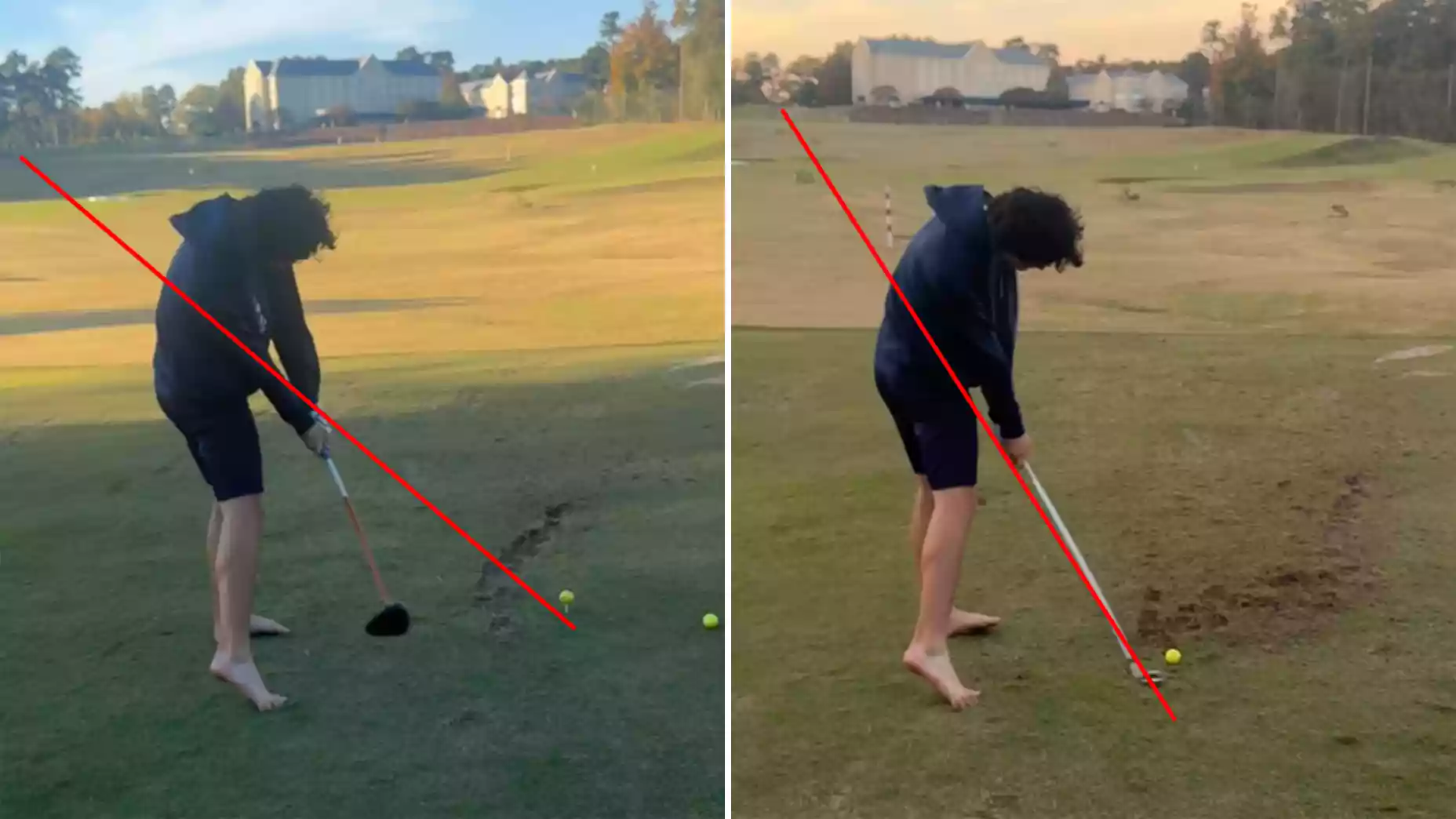
I was reminded of this recently during an evening range session with my 13-year-old nephew. He’s an athletic kid who generates over 105 mph of clubhead speed, but he only plays golf about half the year. Nevertheless, he’s a pretty solid player thanks to his solid athleticism.
As we hit some range balls together recently, what started as a late-afternoon range session turned into an impromptu golf lesson that offered a great example of the differences between the driver and wedge swings.
My nephew’s move is athletic and explosive, featuring a powerful pivot and extremely fast arm speed. With the driver, he was approaching 106 mph of clubhead speed. For a teenager his size, that’s an impressive amount of speed, generated in a remarkably athletic manner. He was using the ground aggressively, applying pressure through his feet and generating tremendous speed through the handle. His intention was simple: hit the ball as hard as he possibly could.
But that same swing wasn’t going to work with a wedge.
To hit the wedge effectively, we made a few adjustments. Rather than relying on a massive pressure shift, an aggressive arm swing and a powerful pivot that allowed the club to drop well under plane, he needed to organize his motion differently. We focused on keeping his torso and rib cage, arms and shoulders working more in unison. We also worked on delivering the club closer to shaft plane on the downswing rather than allowing it to drop excessively underneath, as he could with the driver.
The point is that these shots have different objectives, and achieving those objectives requires different intentions and different skills. Golfers don’t just need to change clubs throughout a round. They need to be able to change swing techniques, sometimes from one shot to the next. Learning when and how to make that adjustment is an important part of becoming a better player — and it’s something you should remember next time you are out practicing.
Disclaimer : This story is auto aggregated by a computer programme and has not been created or edited by DOWNTHENEWS. Publisher: golf.com