Kate Cray
At the start of 2025, Ben Pages found himself feeling burned out and, in his words, “like I had lost my North.” He needed a chance to clear his mind and break out of his routine — so he booked a room at a local Catholic monastery.
While there, he spent his days in silence — working out, walking around the snowy garden, and peering through a door at the city life beyond the monastery’s walls. He read the Bible. He napped. He tried to guess what time it was. (He’d chosen to go without a phone or watch.)
At first his inner monologue overwhelmed him. “I had never realised how auditory I am,” he wrote in his journal on the first day. But as his stay continued, the voices in his head quieted. Eventually, he reached “this beautiful, blissful state,” he said. “It was like I had hit ‘inbox zero,’ and I could hear my being, what’s really underneath all these thoughts.”
For Pages, a 35-year-old mindset coach in the Czech Republic, the experience was sacred, but not necessarily religious. Although he’d sought out a monastic retreat, he doesn’t identify as Catholic or as a member of any organized religion, and he’s not sure he believes in God.
‘A wider array of spiritual resources’
Sign up for the Traveller newsletter
The latest travel news, tips and inspiration delivered to your inbox. Sign up now.
Even as rates of Christian belief have fallen across the United States and much of Europe, travel that is inspired by or related to Christianity has been booming. This growth is driven, in large part, by people like Pages.
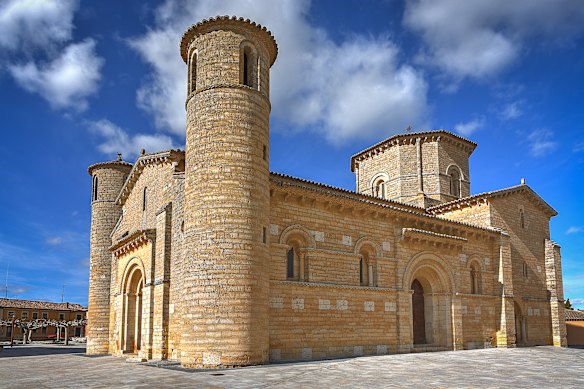
Take the Camino de Santiago, a network of pilgrimage routes that ends at a cathedral in Spain, which Pages also travelled. In 2025, an estimated 1.5 million people walked some part of the route, and more than 530,000 received official certificates for completing a significant portion of it, more than double the number from 2015. According to one survey, fewer than half of pilgrims said their motivations were solely religious, and nearly one-fifth said they weren’t religious at all.
Excitement about the Camino among members of all faith groups, as well as the unaffiliated, has spread to various forms of Christian tourism. Pilgrimage routes around the United Kingdom are more popular than ever, and more people are trying out the Via Francigena, a medieval route from Canterbury to Rome.
Those less keen on walking are dousing themselves in holy water at healing sites, like the Sanctuary of Our Lady of Lourdes, in France, and staying at convents and monasteries, which have become destinations unto themselves. After a video on TikTok about one girl’s convent vacation went viral, many convents now have waiting lists. Brother Luis Cortez, the guest-master at the Abbey of Our Lady of New Clairvaux in Vina, California, said that its rooms book out months in advance during the spring and fall.
For those who conceive of religion as a commitment to a set of beliefs, the proliferation of nonbelievers booking monastery stays and walking pilgrimages might seem surprising. But ways people choose to interact with faith have always been much broader than their adherence to a single creed, said Elizabeth Drescher, a professor of religious studies at Santa Clara University.
Especially now. As formal churchgoing is dropping, people are instead “engaging a wider array of spiritual resources” and creating a new type of what Drescher calls “liminal religiosity.” In practice, this might look like going on a pilgrimage while using the time to reflect on questions in your own life rather than pondering the Immaculate Conception. Or visiting a monastery and appreciating “the beautiful surroundings, the community, the singing and the sense of reverence,” without wanting to convert, said Brian Smith, a former priest and the author of “Reaching the Religiously Disaffiliated.”
In the process, visitors are transforming these experiences from rare acts of worship, taken on by the most intense devotees, to practices that can offer small doses of spirituality to people of all beliefs. After all, many people could benefit from a period of silence to calm their thoughts, or a conversation with a nun or monk about what they believe. Long-distance walking “elevates your endorphins into a rolling high that lasts for days and even weeks,” said George Greenia, the founder of William and Mary’s Institute for Pilgrimage Studies.
Spiritual trips are often affordable, too. Pilgrimages tend to be budget-friendly, and many monastic retreats operate on a donation-only basis. For those that charge (or include suggested donations), fees can hover about $150 a night, with meals included.
Spiritual transformation, of course, can be a lot more taxing than enjoying a cocktail on the beach or museum-hopping in a new city. But for millennials and members of Generation Z, who see a link between travel and personal growth, immersion is part of the allure. Many tourists now put a premium on trips that feel authentic and unique. “We want to experience a culture from the inside,” Greenia said, “rather than just gawking from the outside.”
Studies show that people are especially likely to pursue these trips at life transition points. Greenia has seen people walk to process job loss, deaths, breakups and post-traumatic stress. But even in less dramatic moments, many still appreciate the digital detox and break from daily distractions. Cortez has been struck by how frequently guests at the Abbey use their retreat time to sleep. “You don’t realise how tired you are until you get into an environment where you have permission to rest,” he said.
Revelations and transformations
Agatha Dirosa decided to spend a week at a convent in the Catskills after she’d seen a video on TikTok posted by someone who’d done the same. She was particularly intrigued by the possibility of staying with nuns, whom she felt an affinity for, as “women who separate themselves from society to live communally and for the common good,” she said.
A 27-year-old aesthetician and Reiki practitioner, Dirosa had a varied spiritual background. Her extended family was Roman Catholic. As she grew older, she explored other traditions: She had practiced Wicca as a teenager and later read tarot cards and collected crystals.
She went into the convent with an open mind. She found that she appreciated how unstructured the days were, anchored only by Mass in the morning and vespers in the evening. She enjoyed listening to the nuns sing, and in between she read, and explored the grounds. “It was the most at peace I’ve ever felt in my life,” she said.
A few days in, she decided to take psychedelic mushrooms and had a revelation. She’d never believed in God as “a literal big dude in the sky,” but she finally understood how she did see him: as nature embodied, as “a way to humanise the universe.” On her final afternoon, she lay outside on a rock, listening to the woods and “feeling everything,” she said.
Since the retreat, Dirosa’s relationship with religion has transformed. She has been going to Mass and is considering completing the Order of Christian Initiation of Adults to get confirmed in the Catholic Church.
After his stay at a Catholic monastery, Pages still doesn’t consider himself religious. He found it hard to maintain the blissful state he’d reached there. Similarly, on the Camino, which he’d done two years earlier, he began his walk with lots of questions about his identity and his purpose in life and left without much resolution.
Although the journey didn’t offer easy answers, it did push him in ways he hadn’t expected, he said. “I got to deal with a lot of my fears. I got to deal with things that frustrated me. I got to deal with people that get under my skin,” he said. In the process, he said, he had grown more mature, and had realized he had to leave behind some of the childish ways he had been living.
He hadn’t come back with a new religion, but had come back changed all the same.
This article originally appeared in The New York Times.
From our partners
Disclaimer : This story is auto aggregated by a computer programme and has not been created or edited by DOWNTHENEWS. Publisher: www.smh.com.au