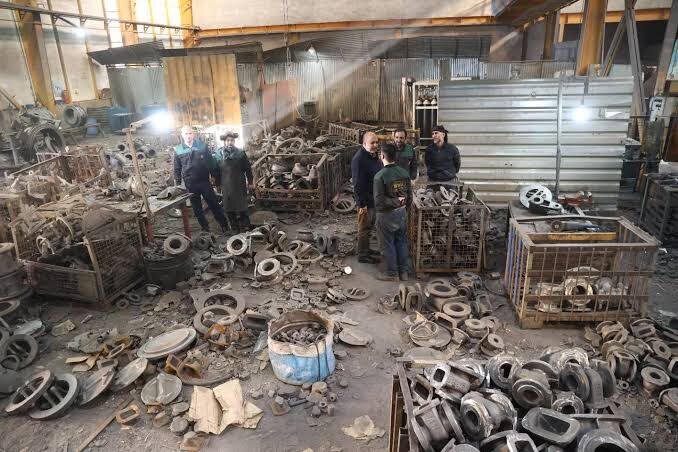
TEHRAN- The Director-General of Industry, Mining and Trade Department of Tehran Province said: So far, 252 production units among the units damaged in the imposed war have been rebuilt and returned to the production cycle.
Mahmoud Sijani, in an exclusive interview with IRNA, while explaining the measures taken to support industrial units damaged during the 40-day war, stated: After identifying the damaged units, field visits with the presence of provincial officials were prioritized so that the damage status and problems of the production units could be examined closely.
He added: In the next stage, the status of these units was monitored daily in the meetings of the relevant working group, and their problems in various sectors were examined and followed up so that immediate and necessary measures could be taken to prevent the units from stopping operations.
Referring to the problems of the damaged units in the areas of labor, taxation, banking, and social security, Sijani stated: Efforts were made, by adopting supportive decisions and providing immediate solutions, to prevent the aggravation of these units’ problems and the complete stoppage of production lines.
The Director-General of Industry, Mining and Trade Department of Tehran Province continued: Some units were able to resume their activities by being granted deadlines for paying debts, the possibility of relocating their place of activity, and meeting essential needs. Issues such as settling debts, forgiveness of penalties, insurance support for workers, and the use of banking facilities for the return of units to the production cycle were also pursued.
Emphasizing the necessity of preserving the production capacity of active units in the field of strategic and infrastructural products, he said: One of the main priorities in this process was preventing the stoppage of production of products that play an important role in the country’s supply chain and economic activities; therefore, supportive solutions were considered for each unit in accordance with the type of damage and its operating conditions.
Sijani referred to the issue of assessing the damage to the damaged units and said: To estimate the damage accurately, it was planned to use the capacity of official judicial experts, and with the cooperation of the General Justice Administration of Tehran Province and the Center of Official Experts, the damage assessment of the units was carried out free of charge.
He added: Official experts, by visiting the damaged units, examined the extent of the damage incurred and prepared expert reports so that, based on accurate information, it would be possible to plan for the reconstruction and support of these units.
The Director-General of Industry, Mining and Trade Department of Tehran Province noted: The reports prepared from the damage assessment were submitted to the relevant deputy in the field of business environment and planning for pursuing the necessary support and raising the issue at the national level, so that the ground would be provided for the damaged units to benefit from national capacities and support.
Referring to the results of the measures taken, Sijani stated: Out of a total of 557 industrial units that were directly and indirectly damaged during the 40-day war, 252 units have so far succeeded in being rebuilt and resuming production activity.
The US-Zionist imposed war, in addition to causing direct damage to some production units, also affected parts of the country’s industrial supply chains. However, planning for the swift return of damaged units to the production cycle and preventing the halt of related industries has now become one of the central axes of industrial policymaking. In this path, securing financial resources, prioritizing strategic industries, and utilizing domestic capacities form the basis of support measures.
The strategy of the Ministry of Industry, Mining and Trade in this regard is not limited merely to rebuilding the buildings and equipment of damaged units, but is pursued with the aim of preserving production capacity and strengthening the resilience of supply chains. Alongside reconstruction, the modernization of industries is also on the agenda so that directly damaged industries, units affected by supply chain disruptions, and small and vulnerable enterprises, depending on the type of damage, are covered by support packages and reconstruction programs.
To achieve this goal, financial resources are needed, and it has been decided that the use of capital market capacities and modern financial instruments, alongside reconstruction funds, should also be considered.
Alongside securing financial resources for damaged units, another important issue concerning the regeneration of industries has also been taken into account. Under this plan, industries are divided into three categories: “directly damaged,” “damaged within the supply chain,” and “small and vulnerable industries,” with special operational packages developed for each category.
In this plan, a specialized platform has been designed for registering the type of affliction of each company. Through this system, the demands of industries are connected to a network of expert consultants and management specialists in the country, so that the reconstruction process can begin swiftly based on scientific methods and lived experiences from the era of the Sacred Defense (Iran-Iraq war).
In this regard, Tahmoures Lahouti Ashkouri, Deputy Minister of Industry, Mining and Trade and CEO of the Small Industries and Industrial Parks Organization of Iran, in an exclusive interview with IRNA, while explaining his organization’s new strategies in dealing with the consequences of the war, has stated that “protecting production capacities” and “reviving damaged industrial units” are the two main pillars on the agenda of the Ministry of Industry, Mining and Trade.
He emphasized that maintaining the stability of the production flow and precise monitoring of the supply chain of essential goods goes beyond a routine task; it is a defensive priority for the organization to prevent the disruption of upstream and downstream production links, from agriculture and processing industries to the final consumer market.
Referring to the damage inflicted on industrial infrastructure across 17 provinces of the country, Lahouti Ashkouri said: “One-third of all damaged units were concentrated in industrial towns and zones—units that played a vital role in supplying industrial requirements and strategic goods.”
According to the explanations provided by officials of the Ministry of Industry, Mining and Trade and the Small Industries Organization, the national strategy for rebuilding damaged industries represents a shift from mere physical reconstruction toward the resilient regeneration of the country’s industrial ecosystem.
EF/MA
Disclaimer : This story is auto aggregated by a computer programme and has not been created or edited by DOWNTHENEWS. Publisher: tehrantimes.com