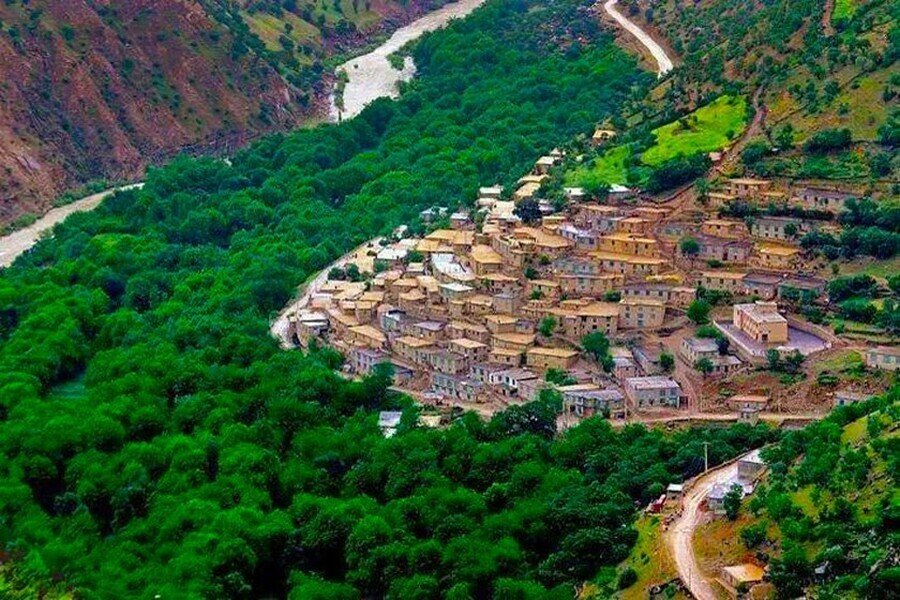
TEHRAN – The head of Iran’s Research Institute of Cultural Heritage and Tourism has warned that inappropriate construction and poorly planned interventions are gradually eroding the traditional architecture and historic identity of the Hawraman (Uramanat) region, a UNESCO World Heritage site in western Iran.
Mohammad-Ebrahim Zarei raised the concerns at a meeting titled “Hawraman: The Cultural Landscape of Uramanat” on Monday, November 23, attended by researchers and experts in the field.
He said extensive changes to the historic fabric of villages and towns across Iran, particularly in Kordestan province, had damaged traditional architectural features and weakened the distinctive character of local settlements.
“In many of these areas, the architecture and natural environment that once defined their unique identity can no longer be seen,” Zarei said, according to the Iranian Students’ News Agency (ISNA).
He described surviving historic structures as valuable examples of indigenous architectural knowledge and the adaptation of human settlements to their natural surroundings.
Zarei criticized new construction in villages across the Kordestan region, saying that buildings inconsistent with local architectural and environmental characteristics had, in some cases, replaced traditional structures under the pretext of improving public facilities.
Such interventions, he warned, risk destroying architectural identity and disrupting the coherence of historic village settlements.
The university professor stressed that development projects in heritage areas must be preceded by an understanding of traditional settlement patterns and cultural practices. He cited the distinct roles of neighborhood mosques, central mosques and prayer grounds as examples of architectural and social features that should be considered before changes are made.
He then called on cultural heritage authorities to introduce clear building regulations for areas with significant architectural value and to combine the protection of historic structures with public education. New buildings, he said, should be designed in accordance with the indigenous architectural traditions of each region.
Zarei also expressed concern about the impact of large-scale and high-rise construction on the historic skyline of Mashhad and the visual prominence of the Imam Reza shrine. He said that in the past, pilgrims could see the shrine’s dome and complex from different parts of the city, but the construction of towers and large buildings had increasingly obstructed those views.
He emphasized that regional architecture reflects the historical, cultural and environmental identity of local communities, urging heritage officials and specialists in Kurdistan and Kermanshah provinces to strengthen cooperation to protect the country’s traditional architecture.
The Hawraman/Uramanat Cultural Landscape, spanning parts of Kordestan and Kermanshah provinces in western Iran, was inscribed on UNESCO’s World Heritage List in 2021.
Located in the Zagros Mountains, the region is home to the Hawrami people, a Kurdish community whose agropastoral traditions and settlement patterns have evolved over thousands of years in response to the rugged mountainous environment.
The UNESCO-listed property covers approximately 409,000 hectares, including 106,000 hectares of core area and 303,000 hectares of buffer zone. Its main components include the Zhaverud, Takht and Lahun valleys.
The landscape is distinguished by its terraced villages, steep-slope architecture, dry-stone agricultural terraces, livestock breeding and seasonal migration between highland and lowland settlements. Twelve villages within the registered property demonstrate how the Hawrami people adapted their way of life to the scarcity of cultivable land and challenging mountain conditions.
AM
Disclaimer : This story is auto aggregated by a computer programme and has not been created or edited by DOWNTHENEWS. Publisher: tehrantimes.com