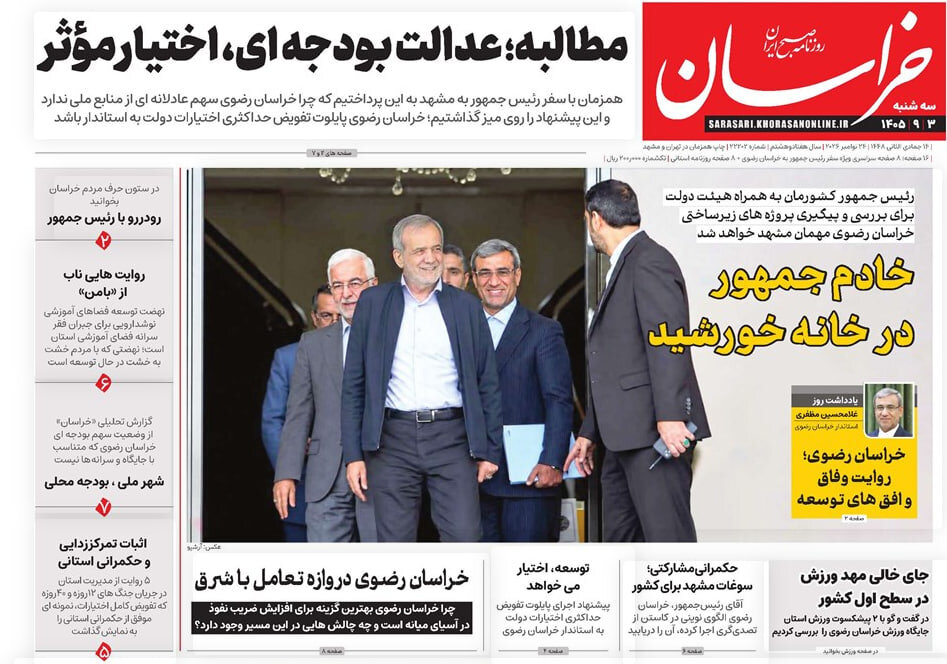
Khorasan analyzed remarks by British General Rob Magowan, who acknowledged that the United Kingdom conducts offensive cyber operations against Russia, China, North Korea, and the Islamic Republic of Iran. The statement, presented as a measure against cyber threats, revealed a broader British security strategy.
Such actions set a dangerous precedent because they normalize offensive cyber activities under the banner of self-defense. The newspaper maintained that this approach weakens international norms and could encourage similar behavior by other governments. International institutions, particularly the United Nations, should play a stronger role in defining and enforcing rules governing state conduct in cyberspace. The newspaper criticized London over its politically motivated accusations and narratives, including the Fairford case, arguing that such efforts cannot obscure Britain’s domestic policies or its cooperation with the US and Israel in actions targeting Iran. The article concluded that the growing acceptance of offensive cyber operations could undermine global stability and fuel international tensions.
Donya-e-Eqtesad: War must be prevented
In an article, Donya-e-Eqtesad emphasized the importance of diplomacy in preventing renewed conflict. Although recent developments may have reduced the likelihood of an immediate return to war, this should not be interpreted as the disappearance of threats. According to the paper, military confrontation may decline while economic competition and political pressure continue. Under such circumstances, diplomacy remains the most rational option available to Iran. This diplomacy, however, should be pursued not from a position of weakness but through realism, flexibility, strategic planning, and a clear understanding of national interests and existing power dynamics. The key challenge is not simply whether war will resume but how it can be prevented while limiting the economic and social costs associated with continued uncertainty. Tehran cannot determine the actions of Trump or Netanyahu. Nevertheless, Iranian leaders retain influence over their own strategic decisions and can play a meaningful role in shaping future developments. In its assessment, active diplomacy offers the most effective path toward reducing tensions and avoiding further escalation.
Ettelaat: More mediation, persistent distance
Ettelaat examined possible future scenarios in relations between Iran and the United States. The possibility of renewed large-scale conflict currently appears greater than the prospect of a comprehensive agreement. Although mediation efforts and diplomatic contacts have increased, the paper said there is little evidence that the two sides are moving closer on their core demands. Tehran appears unwilling to retreat from its principal positions, while Trump could face domestic political difficulties if he were to endorse an agreement largely based on Iranian conditions. As long as these differences remain unresolved, increased diplomatic activity may reflect efforts to manage tensions rather than signs of a breakthrough. The article also pointed to the beginning of a new congressional term in January, which could intensify debate over the goals, costs, and legal basis of military action. Such discussions may increase pressure on the administration to make decisions more quickly. Despite this, uncertainty remains regarding the effectiveness and consequences of any potential military measures.
Arman-e-Melli: Why neither war nor peace is acceptable
Arman-e-Melli published an interview with international affairs analyst Ali Bigdeli, who argued that the current situation of neither war nor peace cannot continue indefinitely. Bigdeli stated that neither side can realistically claim a decisive victory under present circumstances and that diplomacy remains the only practical route toward an outcome acceptable to both parties. He argued that if political rationality prevails, the present period could provide a valuable opportunity to resolve longstanding disputes. Iran currently enjoys a relatively favorable regional position, but prolonging the existing situation could create new challenges and uncertainties. He therefore advocated a more realistic and flexible policy approach. Any future agreement should receive formal approval from the US Congress, reducing the possibility that it could be overturned by a future administration. Such an arrangement would provide greater stability and predictability for both sides.
Hamshahri: The enemy failed to achieve its goals
Hamshahri focused on the failure of Trump and Netanyahu to achieve their principal objectives. The newspaper argued that after months of conflict, many analysts and international media outlets believe Washington and Tel Aviv have fallen short of their main goals, while Iran has achieved a significant portion of its strategic objectives. The report cited the US-based Soufan Center as recognizing Tehran’s success in advancing key aims and influencing security dynamics in the Persian Gulf. It also highlighted Iran’s missile and drone capabilities, arguing that their performance altered regional security calculations. According to Hamshahri, the political cost of continuing the conflict has increased for Washington. The newspaper concluded that the US faces a complicated situation: it has neither fully achieved its objectives toward Tehran nor succeeded in removing what it views as Iran’s principal strategic instruments of pressure.
Disclaimer : This story is auto aggregated by a computer programme and has not been created or edited by DOWNTHENEWS. Publisher: tehrantimes.com