Buying a new TV is always a big decision, namely because its a big piece of tech with a permanent place in your home that you’ll be staring at for hours on end. Not to mention, some of the best of the best cost thousands of dollars. It doesn’t help that most TVs look exactly the same and have nondescript names like the Samsung S95H—not great for narrowing your options.
Fear not. After stress-testing multiple TVs this year, I can attest to one simple truth: in 2026, you have more great options than ever. Art TVs and RGB TVs exploded onto the market and made the typical “just buy an OLED TV” advice seem like an ancient relic of a bygone. These top-performing televisions are my “desert island” picks, if said island had a power generator and good popcorn.
For more audio and home theater recommendations, check out related guides to the best OLED TVs, the best art TVs, the best RGB TVs, the best home theater projectors, and the best soundbars. If you truly don’t know where to start, try our guide on how to buy a TV.
Update November 2026: We’ve revamped this entire guide, replacing nearly all of our top picks, Honorable Mentions, and Other TVs We’ve Tested.
What Size TV Should I Buy?
The great debate: which size television is best for your living room? Does it even matter? The first thing to consider is price: an 80-inch TV is going to cost significantly more than a 65-inch one. In some cases, that means an extra grand or two for the privilege of seeing the stubble on Spider-Man’s face in great detail. Broadly speaking, the larger the room, the more useful a large screen is. The most popular size is 65 inches, which is a great option for most medium sizes spaces.
Should You Buy an Art TV?
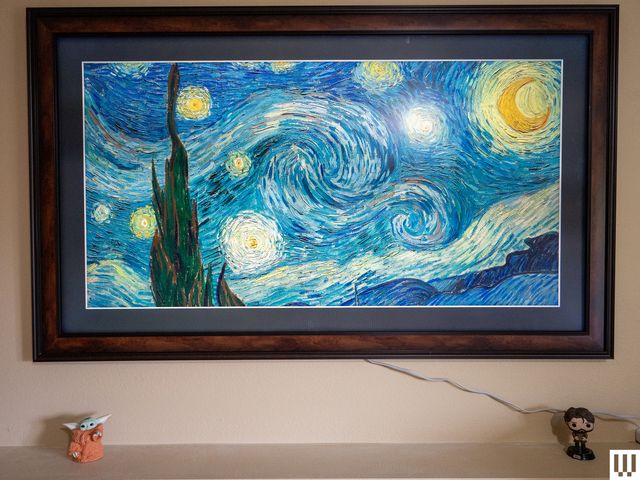
I’m partial to art televisions for one simple reason: They are useful even when they are turned off. Art TVs use an antireflective layer on top of the screen to create more realistic, textured still images like artwork or paintings. The best ones can replace a picture frame or wall art in any room, and double as great TVs.
Should You Pick an OLED or RGB TV?
TV tech has evolved in 2026, and the new kid on the block is RGB TVs. These new models shine red, blue, and green light through an LCD panel to create brighter, more vibrant color. OLED on the other hand can control the color of individual pixels and even turn them off completely, leading to excellent contrast and black levels.
Which one performs the best? That depends. RGB models like the LG Micro RGB Evo provide more control over picture quality, brightness, and contrast. OLED televisions like the Samsung S95H tend to look better on movie night, especially for nighttime scenes when inky blacks need to look realistic. If pressed, I’d pick an RGB TV model because you get more control over color, but that’s just me.
Best Overall TV


Samsung The Frame Pro (2026) Specs
| Display type | Mini-LED |
| Refresh rate | 144 Hz |
| Operating system | Tizen OS |
| Connectivity | Wireless One Connect Box: HDMI 2.1 (x5), Wi-Fi, Bluetooth, USB, Optical, Ethernet |
| Voice assistant | Google Assistant, Amazon Alexa, Samsung Bixby |
| Speaker layout | 2.0.2 channel |
I picked Samsung’s The Frame Pro (2026) as the best overall TV because it has stunningly good picture quality and looks incredible showcasing a masterpiece painting on your wall. I remember staring at the 65-inch model on the wall of my office for two months, just marveling at high-res shipwreck photos and the real wood bezels that encompass the screen (and snap easily into place, by the way). With just about every painting, The Frame Pro showed intricate and detailed textures, as though you could reach out and feel the waves of an ocean or curve of a face.
The Frame Pro is also an excellent choice for movies and shows. Because of the anti-glare screen and matte finish, the dark corridors of scenes in The Batman on HBO had extra depth and animated movies like Toy Story 5 on Disney+ popped with color. Sure, it doesn’t have the true black pixels of an OLED screen, but its other capabilities more than make up for it.
Extra features included easy-to-install stands (no screws needed) and a breakout box called the Samsung Wireless One Connect that lets you connect streaming devices and a game console from across the room. That means fewer wires dangling on the wall.
Best Budget TV


TCL QM7L Specs
| Display type | QD Mini-LED |
| Refresh rate | 144 Hz |
| Operating system | Google TV |
| Connectivity | HDMI 2.1 (x2), HDMI 2.0 (x2), Wi-Fi, Bluetooth, USB, Optical, Ethernet |
| Voice assistant | Google Gemini, Amazon Alexa |
| Speaker layout | 2.1 channel |
TCL is a more budget-focused television maker that tends to undercut the price of brands like Samsung and LG. A good example of this is the TCL QM7L Mini-LED TV above, which has a budget-friendly price but anything but oriented picture quality. If anything, this QLED model competes with some OLED TVs for inky, deep blacks and rich color. Will you notice any contrast issues when you watch the latest Pixar film? Probably not, especially since the QM7L also looked exceptionally bright in our tests.
A few other extras to mention: We loved the backlit remote, which makes it easier to punch up the volume or adjust picture quality settings in a dark room. You might even be able to skip a soundbar with this TV—the internal Bang & Olufsen speakers sound nice and loud.
Best RGB TV


LG Micro RGB Evo Specs
| Display type | RGB Mini-LED |
| Refresh rate | 120 Hz (165 Hz with VRR) |
| Operating system | Web OS |
| Connectivity | HDMI 2.1 (x4), Wi-Fi, Bluetooth, USB, Optical, Ethernet |
| Voice assistant | Amazon Alexa, Google Gemini, LG AI Voice ID |
| Speaker layout | 2.2 channel |
Samsung, TCL, Hisense, and Sony released new RGB TVs this year, but it’s the LG Micro RGB Evo that takes the crown, namely because you can tweak so many of its picture settings. In my tests,I could tweak the picture so much that movies and shows that mostly take place at night still looked visible, clear, and realistic. As one example among many, I remember tweaking settings for the movie Awake, a largely dark film, to the point where it looked clear and colorful. Other RGB models from Hisense and even Samsung struggled with those same dark scenes, no matter which setting I used.
Another major plus is that this model supports 100 percent of the color gamut specs for BT.2020, DCI-P3, and Adobe RGB. In layman’s terms, if you watch a movie like Guardians of the Galaxy Vol. 2 (which also matches those specs), you will see a true rainbow of every color available, with unmatched color vibrancy. This TV is so striking that I came away thinking that OLED TVs are no longer the obvious gold standard in 2026.
Best OLED TV


Samsung S95H Specs
| Display type | QD-OLED |
| Refresh rate | 165 Hz |
| Operating system | Tizen OS |
| Connectivity | HDMI 2.1 (x4), Wi-Fi, Bluetooth, USB, Optical, Ethernet |
| Voice assistant | Amazon Alexa, Samsung Bixby |
| Speaker layout | 4.2.2 channel |
Samsung made a big change to their flagship OLED model this year, the Samsung S95H. They ditch the Samsung One Connect breakout box that was required with previous models (and is still required on TVs like The Frame Pro). The TV now has ports directly on the panel, where you can connect video game consoles, streaming devices, or Blu-ray players directly. While that might create more cable clutter, I found it much easier to use than the previous Samsung S95F.
Perhaps more importantly, the S95H is a top performer when it comes to picture quality and settings. I could adjust the contrast and brightness to perfectly light famously dim shows like Game of Thrones. As an OLED, the blacks look richer and darker, more so than most RGB models. The AI optimization picture settings here are actually useful—during soccer matches, the TV adjust to make the pitch look even greener and minimizes background crowd noise, for example.
It’s a bit pricey, but the overall brightness, contrast, color quality, and even built-in sound are all premium-grade.
Best Budget OLED TV

Roku Pro Series OLED Specs
| Display type | OLED |
| Refresh rate | 120 Hz |
| Operating system | Roku OS |
| Connectivity | HDMI 2.1 (x4), Wi-Fi, Bluetooth, USB, Optical, Ethernet |
| Voice assistant | Roku Voice, Google Assistant, Amazon Alexa |
| Speaker layout | 2.0 channel |
The company famous for streaming sticks released its first OLED TV this year, and it follows the brand’s formula of low-cost simplicity. Roku has, up until this point, stuck with LED TV models with average performance. Wonder of wonders, the Pro Series is not bad at all, making even dark scenes in movies like Solo: A Star Wars Story look vibrant and colorful. Outside of picture quality, Roku makes things as easy as possible, with features like Smart Picture Max, which automatically tweaks picture settings for you, a simple TV operating system (Roku OS, of course), and an uncluttered remote.
I will say, the brightness and contrast are good for this price, but nowhere near the cinema-quality color of something like the premium Samsung S95H. I think it’s a great option for anyone on a budget or for people who only watch TV occasionally.
Best Budget Art TV


Amazon Ember Artline Specs
| Display type | QLED |
| Refresh rate | 60 Hz |
| Operating system | Fire OS |
| Connectivity | HDMI 2.1 (x1), HDMI 2.0 (x3), Wi-Fi, Bluetooth, USB, Optical, Ethernet |
| Voice assistant | Amazon Alexa |
| Speaker layout | 2.0 channel |
The Samsung The Frame Pro (2026) is my TV of the year, but the Amazon Ember Artline is also a capable, significantly cheaper, art TV. Just don’t expert as premium of an image in movies and TV shows.
Art televisions use a matte finish on the screen to help make paintings look more realistic and textured. The Ember Artline achieves this look, and even includes frame bezel that snap into place around the screen (these are sold separately on Samsung’s Frame TVs). I loved looking at painting on this TV, including some animated ones Amazon offers in the catalog. Using the TV is simple, and the improved Alexa+ voice assistant is useful for changing the volume (hands free) or finding obscure sci-fi films.
Image quality isn’t the big selling point of this TV: the art, aesthetic, and low price are. Gamers will find the 60 Hz refresh rate lacking, especially for twitchy action titles. Contrast and brightness are okay, but not nearly as impressive as something like the Samsung The Frame Pro. But keep in mind: this TV is far, far cheaper than premium options.
Best Gaming TV


Sony Bravia 9 II Specs
| Display type | RGB Mini-LED |
| Refresh rate | 120 Hz |
| Operating system | Google TV |
| Connectivity | HDMI 2.1 (x2), HDMI 2.0 (x2), Wi-Fi, Bluetooth, Optical, Ethernet |
| Voice assistant | Google Gemini, Amazon Alexa |
| Speaker layout | 2.2.2 channel |
While the LG Micro RGB Evo is endlessly tweakable and outperformed every other RGB model I tested for picture quality, the Sony BRAVIA 9 II RGB TV still takes the cake when it comes to gaming. That’s especially true if you own a Sony PlayStation 5, since the TV will automatically adjust the picture quality and latency to match the game console. I tested it mostly using a high-end PC, and at a 120 Hz refresh rate, latency felt non-existent to me.
I also found this TV to be a capable alternative to a premium OLED. Red, green, and blue colors are almost infinitely adjustable. During a scene in Toy Story 5 by a tree in a field, the sun creates splashes of color that look incredibly lush and vivid. Watching Game of Thrones, I found I could enable a special black level setting to make night battles look more realistic.
The Bravia 9 II uses Google TV OS and Google Gemini voice assistant, which both run simply, smoothly, and with no weird hiccups. While the LG Micro RGB Evo is a better performer for color and contrast, the BRAVIA 9 II’s gaming features, fast performance, high-end speakers, and deep blacks are exceptional.
Honorable Mentions
Hisense UR9 RGB Mini-LED: My top pick for a midrange RGB, the Hisense UR9 has rich colors thanks to RGB tech shining red, green, and blue pixels. Some scenes, including ones in the movie The Last Duel, looked extra crisp and colorful. But it’s not quite as excellent as my top picks.
LG B6 OLED: The LG B5 is a great budget-friendly OLED TV that performed very similarly to the Roku Pro Series OLED. Either one of them would serve you well, but we gave the nod to the Roku TV for it’s lower price, simpler remote, and easy to use Roku operating system.
Other TVs We’ve Tested
Samsung Micro RGB R95H: Samsung’s Micro RGB display tech didn’t make the Samsung Micro RGB R95H stand out from the competition as much as I’d hoped. In fact, the LG Micro RGB Evo responded much better to picture quality adjustments, and while shows and movies looked colorful and clear, they weren’t quite as jaw-dropping as similarly priced RGB and OLED competitors.
Sony Bravia 7 II: The Sony Bravia 7 II is unfortunately outclassed by the other midrange RGB TV on this list: the Hisense UR9. It is more expensive, and it’s harder to set up, and the picture quality doesn’t quite match that of the Hisense TV.
Sony Bravia 8 II: Former WIRED reviewer Ryan Waniata tested this stunning high-end OLED, and praised it’s top-notch image quality and processing. That said, the Samsung S95H is newer, about the same price, and has a more striking, glare-free image than the Sony Bravia 8 II.
TCL Nxtvision Series Art: This budget art TV simply cannot compete with similarly low-priced art TVs like the Amazon Ember Artline TV and Hisense Class S7 CanvasTV. Both offer better picture quality and a better general user experience. You can read my full review here.
TCL RM9L RGB Mini-LED: The TCL RM9L RGB TV is huge and hugely expensive. The $6,000 85-inch is the smallest and cheapest model you can get, and it is generally outclassed by the LG Micro RGB Evo.
What We’re Testing Next
The WIRED reviews team is busy testing the ever-popular midrange LG C6 and premium LG G6. Given past performances from LG C and G-series TVs, we expect them to be strong contenders for top accolades in this guide.
Disclaimer : This story is auto aggregated by a computer programme and has not been created or edited by DOWNTHENEWS. Publisher: wired.com