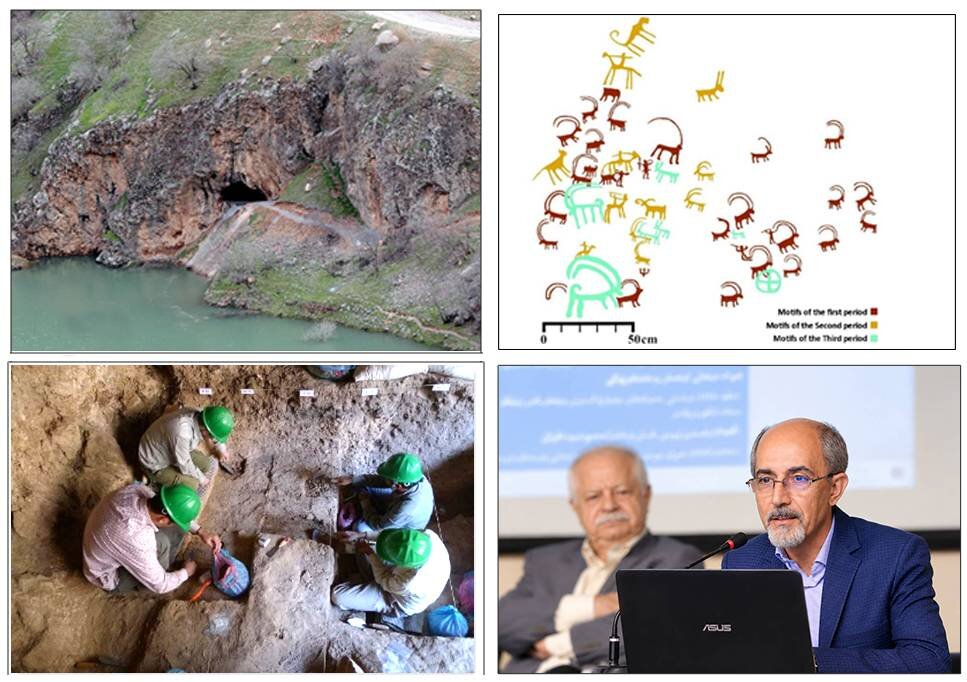
TEHRAN – Archaeological investigations in Sirwan Valley have uncovered evidence of human presence dating back more than 70,000 years, shedding light on the region’s long history of human occupation and cultural development, a National Museum of Iran archaeologist said. The valley forms part of the Cultural Landscape of Oramanat/Hawraman, a UNESCO World Heritage site in western Iran.
Fereidoun Biglari, head of the museum’s Paleolithic Department, presented the findings at a conference titled “Hawraman: The Cultural Landscape of Oramanat,” held on Monday, November 23, at the Research Institute of Cultural Heritage and Tourism.
In a presentation entitled “The Archaeological Landscape of the Sirwan Valley, with Emphasis on the Findings of the Salvage Excavations in the Darian Dam Area,” Biglari reviewed the history of archaeological research in Hawraman, focusing on surveys and rescue excavations conducted in the area affected by the Darian Dam project.
Archaeological surveys carried out in 2015 and 2016 identified more than 70 archaeological and potential sites across the region. The discoveries included caves, rock shelters, open-air settlements, cemeteries, rock art sites, castles, bridges and an ancient mountain road, highlighting the archaeological diversity of the Sirwan Valley.
Of these locations, 16 sites threatened by the planned reservoir underwent salvage excavations. They included open-air sites, caves, rock shelters and cemeteries. The investigations uncovered evidence dating from the Middle and Upper Paleolithic and Epipaleolithic periods to the Middle and Late Chalcolithic, Iron Age, historical periods and the Middle and Late Islamic eras.
The findings provide evidence of more than 70,000 years of human presence in Hawraman, offering a long-term perspective on patterns of occupation and cultural development in the mountainous region.
However, Biglari said 22 identified sites and potential archaeological locations within the project area were eventually submerged after the Darian Dam reservoir was filled during the winter of 2015–2016. The submerged locations comprised nine confirmed archaeological sites and 13 potential sites.
He also outlined the scientific and research outcomes of the project, noting that its findings have so far been published in 20 articles in Persian, English and French.
The research was further discussed at the First National Conference on the Archaeology of Hawraman, held at the University of Kurdistan in 2018 and dedicated to the Darian Dam salvage excavations. The event featured 12 presentations covering subjects ranging from Paleolithic archaeology and early village communities to the Bronze and Iron Ages and later historical periods.
Other presentations examined the region’s geology and geomorphology, archaeozoological evidence and ethnoarchaeological research.
The conference “Hawraman: The Cultural Landscape of Oramanat” was jointly organized by the Research Institute of Cultural Heritage and Tourism’s Tourism Group and the Society of Iranian Architectural Notables. It brought together researchers, cultural heritage officials and members of the public for two panels examining the cultural landscape of Oramanat in Kurdistan and Kermanshah provinces.
The Sirwan Valley is part of the Cultural Landscape of Oramanat/Hawraman, which was inscribed on UNESCO’s World Heritage List in 2021 during the organization’s 44th World Heritage Committee session. The inscription brought Iran’s total number of World Heritage properties to 26, recognizing the region’s cultural and historical significance and its longstanding relationship with human communities.
AM
Disclaimer : This story is auto aggregated by a computer programme and has not been created or edited by DOWNTHENEWS. Publisher: tehrantimes.com