TEHRAN – Senior Iranian officials and military commanders have reiterated the country’s determination to counter external pressure, strengthen its defense capabilities and maintain control over security arrangements in the Strait of Hormuz, as tensions with the United States remain high.
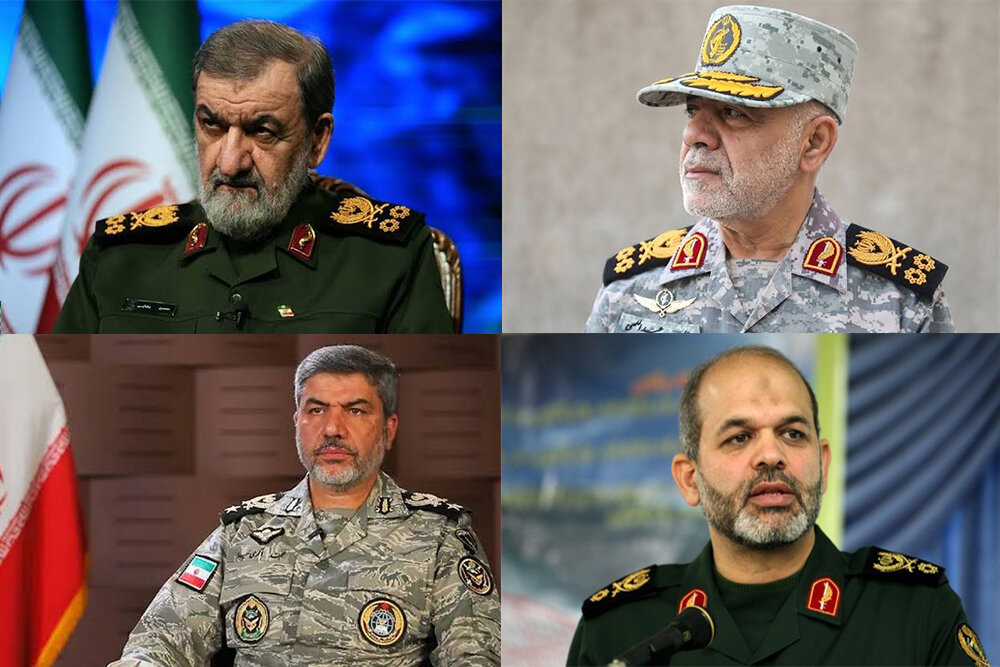
Secretary of the Supreme National Security Council Mohsen Rezaei said on Wednesday that Iran was firmly determined to break the US blockade, dismissing Washington’s plans as a continuation of ‘its failed strategy’ against the Islamic Republic.
“Trump and his defeated team’s plans to blockade Iran are as delusional and futile as their failed war strategy,” Rezaei wrote on X. He added that the Iranian nation, Armed Forces and state institutions were determined to overcome the blockade and respond forcefully to any new aggression.
Foreign Minister Abbas Araghchi had earlier described the US blockade as entirely unlawful, expressing hope that it would be lifted through a rational and logical approach.
Meanwhile, Islamic Revolution Guard Corps (IRGC) Commander Major General Ahmad Vahidi said Iran’s Armed Forces were fully prepared to push the country’s adversaries into retreat, stressing that the prospect of Iranian retaliatory operations had significantly constrained their room for action.
Speaking on Wednesday, Vahidi said Iran’s adversaries had made extensive efforts to undermine the resolve of the Iranian nation, but that the country’s determination remained stronger than ever. He also emphasized the unity and operational readiness of Iran’s military forces, saying all branches were fully engaged in defending the country.
The commander said the adversary was experiencing the consequences of its setbacks and facing strategic uncertainty, adding that Iran’s Armed Forces had an opportunity to further strengthen their capabilities. He described all components of the IRGC—including its Aerospace Force, Navy, Ground Force, Quds Force and Basij Organization—as stronger and better prepared than before.
In separate remarks, Chief of Staff of the Iranian Armed Forces Major General Ali Abdollahi said Iran’s missile capabilities had challenged two major military powers during the recent US-Israeli aggression, forcing them to reconsider their positions.
Abdollahi also referred to Iranian strikes on US military installations in the region, saying a number of bases had sustained extensive damage and some had yet to return to their previous operational condition. He said Washington was seeking to relocate its forces and move some installations farther away, but stressed that geographical distance would not place them beyond the reach of Iran’s Armed Forces.
“Wherever the bases are stationed, they will be within the reach of Iran’s Armed Forces, if necessary,” he said, adding that coordinated operations had also enabled Iran to strike designated targets at sea and compel the opposing side to retreat.
The senior commander has also called for a broader strengthening of Iran’s defense preparedness, emphasizing that national power depends not only on military hardware but also on public trust, social resilience, national unity and collective determination.
In a message marking Basij Week, Abdollahi highlighted the force’s role in national defense, crisis response and development. He called for greater investment in training skilled generations, expanding scientific and technological activities, supporting youth innovation, and strengthening service-oriented groups.
He said these priorities were consistent with the directives of Leader of the Islamic Revolution Ayatollah Seyyed Mojtaba Hosseini Khamenei, and the strategy of making Iran stronger and achieving absolute deterrence. He also described cooperation between the Armed Forces and popular capacities, particularly the Basij, as essential to comprehensive national preparedness.
Security arrangements in the Strait of Hormuz
Army spokesperson Brigadier General Mohammad Akraminia said on Wednesday that surveillance and control measures in the strategic waterway had been reinforced on the orders of the Army’s commander-in-chief.
Addressing Air Force commanders and personnel, Akraminia said the readiness of Iran’s Armed Forces, including the Army and the IRGC, had increased. He urged vessel operators and shipowners to coordinate passage through the strait with Iranian military authorities, warning that ships crossing without the required coordination faced heightened risks.
He said some vessels that had recently attempted to pass through the waterway without coordinating with Iranian forces had struck naval mines. The deployment of new monitoring systems, upgrades to existing equipment and improvements in operational structures had further enhanced Iran’s surveillance capabilities, he added, noting that the measures would remain in place.
Akraminia also characterized the confrontation with Iran as a multidimensional hybrid war involving military, political and economic instruments. He said the United States was employing all three fronts, with the emphasis shifting according to circumstances and objectives.
The Army spokesperson further argued that the objectives behind the attacks on Iran extended beyond the nuclear, regional and missile issues cited by its adversaries, describing those issues as pretexts for broader aims. He said Iran’s resistance and countermeasures had prevented its opponents from achieving their objectives.
The statements by Iran’s senior security and military officials point to a continued emphasis on deterrence, operational readiness, alternative responses to external pressure, and tighter security oversight of the Strait of Hormuz. They also underscore Tehran’s position that any further escalation would be met with a response from the country’s military and security institutions.
Disclaimer : This story is auto aggregated by a computer programme and has not been created or edited by DOWNTHENEWS. Publisher: tehrantimes.com