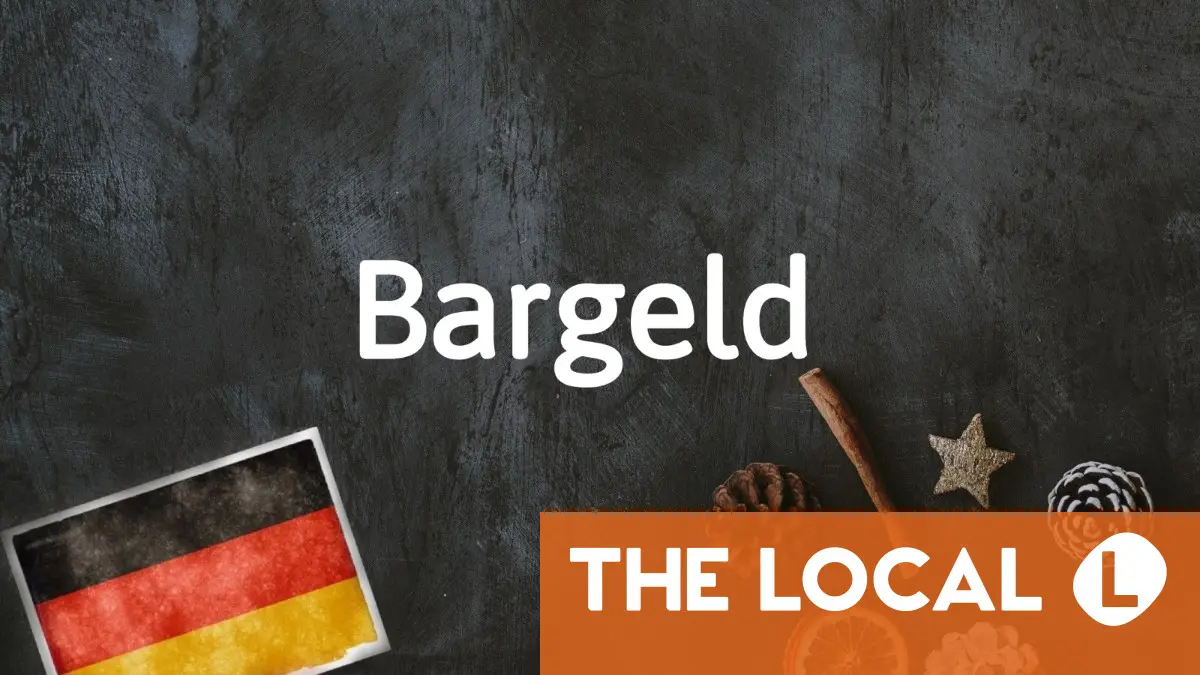
While the world is moving away from cash payments, Germany still has a soft spot for its Bargeld.
What does Bargeld mean?
Das Bargeld means cash in German. And despite the growing popularity of contactless payments, it’s still something you should probably keep in your wallet when living in or visiting Germany.
But it is becoming less popular. A Bundesbank study published in June 2026 found that, for the first time, more than half of everyday purchases in Germany were made using cashless payment methods in 2025. Cashless payments accounted for 55 percent of all recorded purchases, while cash was used for 45 percent.
That reflects wider European trends. According to the European Central Bank (ECB), card payments overtook cash payments at points of sale across the eurozone for the first time in 2026. Cards accounted for 45 percent of transactions in shops, restaurants and at vending machines, compared with 44 percent for cash, according to the report released this week. Mobile payments made up another nine percent.
The German term is made up of the words “bar” and “das Geld” (money). Geld has been around since at least the 8th century, when the Old High German word gelt was used to describe payments, taxes, compensation and rewards. It is related to the verb gelten, which today has several meanings, including to be valid, to apply or to be considered something.
The word bar originally meant bare or uncovered in Middle and High German, but in medieval German it was also used to describe money laid out in the open and counted.
Why do I need to know Bargeld?
Breaking news: Bargeld is still very much in vogue in Germany. Despite the trends mentioned above, you’ll see and hear the word all the time in everyday life in Germany. You might also hear bar for short (the word remains lowercase because technically you’re still describing how you pay).
Whether you’re grabbing a cocktail, snacks at the Späti or heading out for a meal, the nur Bargeld (cash only) sign is bound to pop up at some point.
As Germany has traditionally been a cash-friendly country, some smaller businesses still prefer cash payments.
READ ALSO: Are Germany’s famous ‘Cash Only’ signs on their way out?
And there’s a practical reason to keep some notes and coins handy: according to the Bundesbank, cash was accepted for 94 percent of purchases at physical locations in its latest study.
Despite the shift towards digital payments, 80 percent of people surveyed by the Bundesbank said they considered it important for German businesses to keep the option of paying with cash.
Use it like this:
Ach, hier wird nur Bargeld akzeptiert. Hast du 20 Euro?
Oh, it’s cash only here. Do you have 20 Euros?
Ich habe kein bar dabei, nur meine Karte.
I have no cash on me, only card.
Kann ich bar bezahlen?
Can I pay in cash?
Disclaimer : This story is auto aggregated by a computer programme and has not been created or edited by DOWNTHENEWS. Publisher: thelocal.de