Some of the loudest men on the internet say Grand Theft Auto VI turns players into simps, but the people playing it are mostly saying: we like it that way. In a new poll, 66% of Americans who have played the game said its optional chore missions make it better.
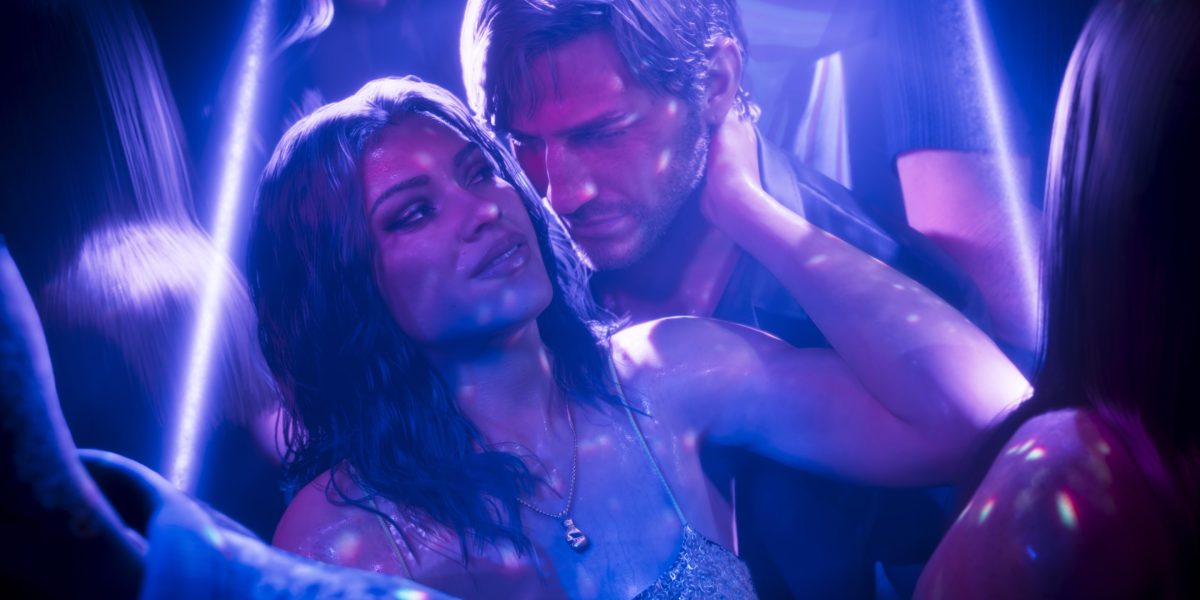
In Grand Theft Auto VI, you can steal a car, rob a bank and run from the police. You can also pick up groceries for your girlfriend, buy her flowers and help her redecorate the apartment.
That last part has set them off. On Nov. 18, the day before the game came out, Braden Peters, the looksmaxxing streamer known as Clavicular, posted on X that the game was emasculating and that “half of the missions are jestermaxing and simping for girls.” A day later, Myron Gaines, a podcaster popular in the online manosphere, posted on the platform that despite strong first-day reviews, this was “yet another example of how political correctness, inclusivity and feminism has destroyed a legendary game series,” and then complained that Jason is pushed around by his girlfriend. Then came Zack Hoyt, the streamer known as Asmongold, who griped during a stream about having to watch TV with Lucia, rub her feet and sit through her friends’ stories, then joked about whether he’d have to buy her tampons too.
Jestermaxxing, in the slang of looksmaxxing forums, means acting clownish around women to make up for a lack of looks or money. Picture a court jester tumbling for the queen. In King Lear, though, the jester is Lear’s “all-licensed fool,” the one person at court free to mock the king. Clavicular knows the move himself: in January, a clip of him at a club went viral under a caption declaring that jestermaxxing at the club was the new meta.
The complaints spread well beyond influencers. One X user posted a screenshot of a mission called “Flowers for a Lady,” in which players arrange a flower delivery for Lucia because your girlfriend “will appreciate this.” The user then called the game “woke slop” and obviously made by women. One user responded that the mission amounts to getting your girlfriend a gift, drawing in 1.2 million views and nearly 150,000 likes.
“Simp,” for anyone who has been spared it, is slang for a man who does too much for a woman.
In this case, the offense is a man who does his share.
Ben Feder, who ran Take-Two Interactive, Rockstar’s parent company, when Grand Theft Auto IV came out in 2008, sees the backlash as a measure of the game’s reach. “GTA has always had humor and satire in it. I think it’s always been a part of it,” Feder said. “If anything, what I take away from it is how mainstream GTA has become.”
Rockstar Games says the game took in an estimated $3.79 billion on its first day, the biggest entertainment launch ever. Take-Two did not respond to a request for comment.
The kids want to simp
Most Americans don’t share the manosphere’s outrage. Across all adults in the same Economist/YouGov poll, 25% of respondents said the optional chore missions make the game better, while 15% said worse, and the rest saw no effect or weren’t sure.
The split is starkest by age. Among adults 18 to 29, the group most likely to play, 46% said the chores make the game better and 12% said worse. Then boomers, Americans 65 and older, were the only age group where more said worse than better, 18% to 8%. Even self-described MAGA supporters leaned positive, 28% to 19%.
The critics also seem to have missed that GTA has always been satire. Kiri Miller, a Brown University professor who has written extensively about the series, argued in her book Playing Along that GTA criticizes the culture of violence it depicts. A game that has spent 25 years mocking American excess is now mocking a newer target: men who think buying flowers is a humiliation.
The game has even moved from a series staple: the option to pay for sex work. Lucia, the first playable female protagonist in the franchise’s history, joins in on the action, and there’s now a button that lets Jason hold Lucia Caminos’ hand.
Could the biggest blockbuster in history change the culture?
That sign of the times might also give credence to what’s so out of reach for many younger generations—and could offer a reason why younger audiences overwhelmingly liked doing chores in the game. After a clip of xQc, the most-watched GTA streamer, went viral showing he spent his first 45 minutes in the game renovating his house, a user wrote on X that GTA has always let players live out what real life denies them, like killing people and breaking the law. In 2026, it’s “having a house and a stable relationship.”
William Chopik, a psychologist who studies close relationships, said a game can make even chores feel worth doing. “One interesting thing about video games is that they can take behaviors that might otherwise feel mundane or burdensome and structure them in ways that make them manageable, rewarding, and even enjoyable,” he told Fortune. “But part of the appeal of doing chores in a video game might be that the connection between one’s actions and their positive consequences is much more apparent than in everyday life.”
The same goes for love. “Romance isn’t always about grand gestures—sometimes it’s doing the dishes, anticipating a partner’s needs, or making their day a little easier,” Chopik said. He doesn’t expect a game to change young men overnight. “But if the worst thing that comes out of this is that it models more responsible life and relationship behavior (I won’t vouch for other areas of the game that undermine that), I think that’s maybe a win.”
That sentiment was repeated by Dr. Liesel Sharabi, Hily Dating App’s relationship science advisor. “Some of the optional missions in the game include everyday acts of service like buying groceries for your partner or fixing things around the house,” Sharabi told Fortune. “I think the game could encourage its players to be more considerate partners by normalizing everyday activities like doing chores or running errands when you’re in a relationship.”
Christopher Ferguson, a psychology professor at Stetson University who has spent years studying the effects of video games, is more skeptical. “Despite decades of concern, it eventually became clear that games like GTA did not cause school shootings or bullying or other negative outcomes we worried about,” he told Fortune. “The flip side is there’s little evidence that they cause positive outcomes either.”
“GTA6 likely reflects the current culture more than it is causing it,” Ferguson said. “Of course in denying some expectations about its content it’s being transgressive just as it always had been.”
Bring back the simp music
The music makes the same joke. Emotion 98.3, a soft-rock station of power ballads and love songs, returns from 2002’s Grand Theft Auto: Vice City. Its playlist includes Exile’s 1978 hit “Kiss You All Over,” Eric Carmen’s “All By Myself,” Heart’s “Alone” and Dr. Hook’s “When You’re in Love With a Beautiful Woman.”
Exile saw a massive uptick in streams following the game’s release. “It’s exciting to think that someone might discover our music for the first time while playing the game,” Exile said in a statement, 48 years after the song spent four weeks at No. 1. The same goes for Rockstar’s trailers, which leaned on love songs too, from Tom Petty’s “Love Is a Long Road” to the Pointer Sisters’ “Hot Together.”
After Captain & Tennille’s 1980 song “But I Think It’s A Dream” (based on a real-life married couple) appeared in an August preview, its streams rose 130,730% in three days. Swedish pop star Tove Lo wrote a new song, “Blood in Your Eyes,” inspired by Jason and Lucia’s romance. And Honey FM, a station of R&B slow jams, is hosted by TLC’s Chilli and T-Boz and plays D’Angelo’s 1995 love song “Lady.”
Those songs come from an era when men sang openly about wanting someone, but that era has been fading. Earnest love songs have fallen from 23% of top songs to about 12%. A Michigan State University study co-authored by Chopik of nearly 40,000 songs released between 1947 and 2024 found that both positive and negative emotional words in lyrics declined, while angry words increased. A 2024 study in Scientific Reports found song lyrics have grown simpler, angrier and more self-obsessed over five decades.
“But these trends might be suggesting that people struggle to express their emotions, and these songs (and games) might provide a way of expressing things that people want to,” Chopik said.
It wasn’t long ago that the sap reached hip-hop, too. In 2008, Soulja Boy had a hit asking a girl to kiss him through the phone, and nobody called him a simp for it.
It wasn’t long ago that the sap reached hip-hop, too. In 2004, Lil Jon, the man who made crunk a genre of shouting, slowed down for “Lovers and Friends,” a love song asking a woman he was scared to ask to hug, to slow dance, and nobody called either of them a simp for it.
Disclaimer : This story is auto aggregated by a computer programme and has not been created or edited by DOWNTHENEWS. Publisher: fortune.com