From a 19th-century artist’s descent into madness and the extraordinary escape of a Soviet spy to the story of a humble spice and the life of a tennis legend – our reviewers cast their eyes over 10 new releases.
Fiction
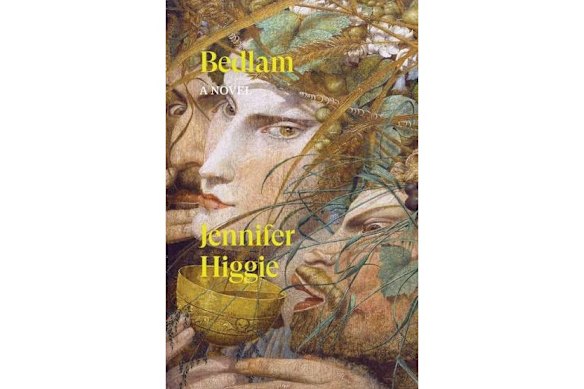
Bedlam by Jennifer Higgie (Verso, $23)
Bedlam offers us a pivotal year in the life of Richard Dadd, a real 19th-century artist who was eventually committed to Bethlem Hospital (better known as Bedlam) and later to the new Broadmoor Criminal Lunatic Asylum. His crime? Parricide during a psychotic episode.
Before we get to that, however, the narrative takes us back to 1842, when a 25-year-old Dadd embarked on a grand tour of Europe, North Africa and the Middle East with his pompous patron, Sir Thomas Phillips – a trip intended to help Dadd develop “a rich internal world” and nurture his artistic talent. Written in vibrant, lyrical prose, the first half of the book reads a little like a travelogue as Dadd swoons at the sights and sounds around him. Yet somewhere along the way, he succumbs to the physical and mental strain of the extended voyage, and the novel follows his wild, delusional flights of fancy and growing detachment from reality upon returning home. In short, feverish chapters, Higgie evocatively captures Dadd’s curiosity toward both natural and man-made wonders.

The Science of Fire by John Kinsella (Transit Lounge, $30)
The ever-prolific John Kinsella – who works across novels, short stories and poetry – is back, this time with a verse novel. In The Science of Fire, an unnamed scientist grieves the suspicious death of his partner, a particle physicist who died in the laboratory shortly after speaking out at a university ethics committee against vivisection.
While the narrator comes to terms with this intimate loss, he also contemplates broader environmental catastrophes as bushfires descend on his rural property. Kinsella is well known for writing about the natural world, and here he once again shows his appreciation for our green planet even as it’s besieged by man-made climate disasters. Filled with descriptions of native vegetation and creatures at risk of losing their burning habitats, the book holds both wonder and violence. At first glance, Kinsella’s poetry may look simple, yet it can be challenging to parse – his style is often dense, with complex syntax that requires patience and a slow unpacking.
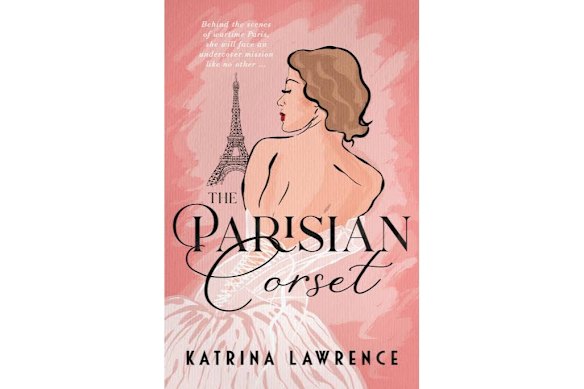
The Parisian Corset by Katrina Lawrence (HarperCollins, $35)
There appears to be no end of fiction set in wartime Paris, and this debut by Katerina Lawrence (whose previous book was also about the city of light) falls squarely into that category. Her heroine, 18-year-old American Sophie Beauvais, embarks on the adventure of a lifetime, sailing from New York to Paris after winning a competition that gives her the chance to explore her French heritage – and the rare opportunity to work for a stint at Vogue.
However, it takes a good while for the narrative to build momentum. Sophie is swept into the glamorous world of a top fashion magazine (cue parties and photoshoots), and the book only hits its stride once Paris falls under Nazi occupation. Sophie’s fate after Vogue shutters its Paris operations (the clue is in the book’s title) and her efforts to aid the Resistance give the novel its true sense of urgency. Lawrence has built her fiction on real history, and readers curious about the intersection of fashion and war will find it an engaging read.
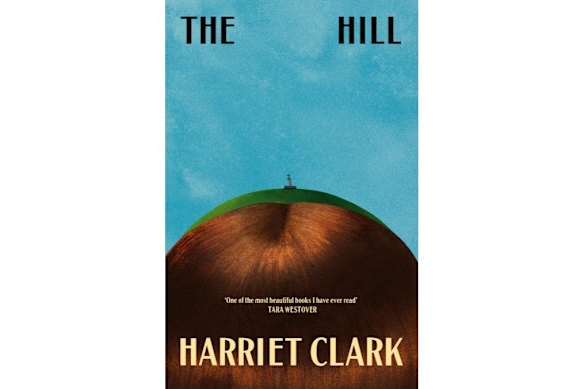
The Hill by Harriet Clark (Hachette, $35)
This debut is a slow-moving coming-of-age novel partly inspired by Harriet Clark’s own life. It follows Suzanna, who lives with her cold, detached grandmother, Sylvie, in New York City while her mother, Helen, serves a life sentence – having been incarcerated since Suzanna was a baby. Every week, Suzanna makes the trip out of town to visit Helen in a hilltop prison, though Sylvie refuses to join her, never having forgiven her daughter for the actions that put her there. Bit by bit, the reader uncovers the nature of Helen’s crime alongside Sylvie and her friends’ radical past as members of the Communist Party.
Unfortunately, it’s hard to care much about any of the characters in The Hill. This isn’t a book driven by plot or action. The mood is introspective and claustrophobic, and the prose is devoid of emotion, marked by a flat affect. A dispassionate tone runs throughout this portrait of three generations of estranged women, as though the author was standing several steps back from their interactions, viewing her characters through gauze.
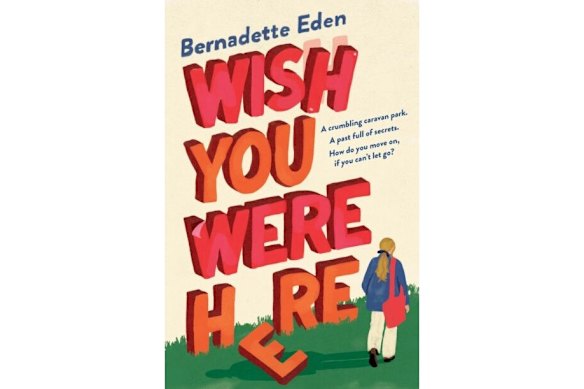
Wish You Were Here by Bernadette Eden (HQ Fiction, $35)
For Sally, life is a hot mess. It’s been four years since the death of her husband, and suffice it to say she’s not coping well with widowhood. Not only is she single-parenting her pre-adolescent children, Clem and Ned, but the 33-year-old is also solely in charge of running a dilapidated caravan park in South Australia. To make matters worse, a new family tourist resort – complete with spas and golf courses – is opening nearby and threatens to run her business into the ground.
Wish You Were Here is a study of a woman under duress. A fair number of family secrets in this debut also make it less predictable than the usual story of finding hope and equilibrium after major setbacks. As a harried young mum trying to make a living, Sally will resonate with anyone juggling competing priorities, while the novel thoughtfully explores mental health, depression and the necessity of accepting support from friends and community.
Non-fiction
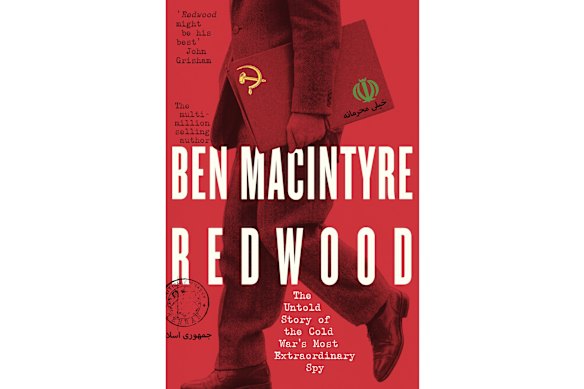
Redwood by Ben Macintyre (Viking, $37)
In Tehran, October 1981, while Iran was in revolutionary turmoil, two spies (one KGB, one MI6) sat in a bathroom, the taps running, bath filling and the radio up. The MI6 agent, sitting on the toilet, listened as 6′4 Vladimir Kuzichkin (the eponymous code-named “Redwood”) explained why he wanted to defect. “I have no power in the bedroom,” he stammered, leaving the English agent perplexed until he realised that the Russian was defecting because he was impotent and wanted western cures.
The scene may have comic absurdity written into it, but what follows – expertly told by Macintyre – is Kuzichkin’s dramatic escape from Iran and the KGB to the UK. As tense as these scenes are, the absurd is never far away, Vlad eventually fetching up as Andre Larkin, an acupuncturist in Hampshire, one of his patients being Alec Guinness, aka George Smiley, one of the most famous spies in espionage literature. Woven into the tale are the intrigues of the US, Russia and the UK in response to events in Iran, and, it seems, US preparedness to use nuclear weapons. It’s tempting to compare this to a thriller, but there are parts of it you just couldn’t make up.
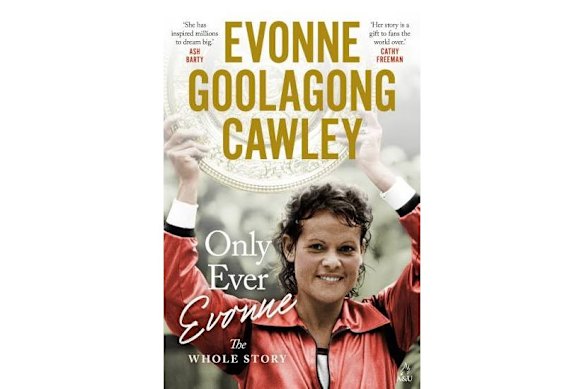
Only Ever Evonne by Evonne Goolagong Cawley (Allen & Unwin, $50)
When Evonne Goolagong Cawley was growing up in the small NSW town of Barellan she “devoured” the stories in a children’s magazine called Princess – one of them being about a girl from nowhere who wins Wimbledon. It was a happy-ever-after fairy tale that she made her own and from then on, Wimbledon became her North Star. But the fairytale had a dark side, which she describes in her latest memoir. Her coach, her ‘mentor, guardian and second father’ made an unwanted sexual advance.
“Even now,” she writes,“when I think about that moment, it makes me sick”. Naturally, she covers the highs of her stellar career (her memories of playing “in the zone” have real poetic resonance), but this memoir departs from the usual sporting biography by incorporating the wider issues of life – like politics and the racism she experienced, Goolagong Cawley movingly describing her deep disappointment when the 2023 referendum vote failed. Mature reflections on a rich life.
Storytelling by Isabel Allende (Bloomsbury, $35)
Isabel Allende’s Storytelling could also have been titled My Life in Writing. It’s a combination of masterclass and memoir in which she refers mostly to her own books, the circumstances in which she wrote them and how she did. Her account of how she came to write her first and most famous novel The House of the Spirits is particularly fascinating. It began as a letter to her dying grandfather on January 8, 1981 – Allende beginning all subsequent books on January 8 – with no intention of writing a novel. She soon realised, however, she was writing was fiction. So, in delivering a series of classes on the craft of storytelling, she’s also telling a story: hers. Some of her observations can get a bit grand, as in the magic of literature and writers as monks in their cells or mediums communing with spirits. Most of the time though, her lessons come with good, solid advice. Allende brings a lifetime of writing to these classes, they’re lively, immediate, deeply informed and will, no doubt, ring bells for newcomers and professionals alike.
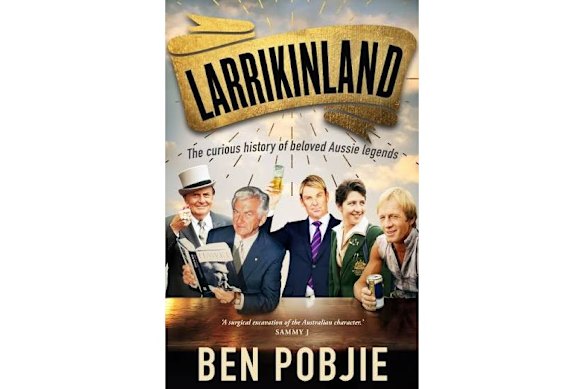
Larrikinland by Ben Pobjie (Allen & Unwin, $35)
This playful study of the many ways in which the term ‘larrikin’ can be read in relation to the Australian character is written with just the kind of irreverent relish that is consistent with larrikinism itself. Take Ben Pobjie’s conclusion about the impact of WW1 in elevating the significance of the term to another level altogether. ”World War 1 was … staged by the great powers of Europe for the sole purpose of solidifying Australia’s national identity.”
Pobjie clearly has great fun tracing, for example, the etymology of “larrikin” – from “larking”, first emerging in the 19th century around Warwickshire and used in the pejorative – as well as tracing the term’s journey from a put-down to a compliment. Taking in such figures as Bob Hawke, Shane Warne and Dawn Fraser, he also examines the ambiguity and contradiction that haunts the word – is Ned Kelly a larrikin or just a murderer? And, I might add, if we so much like to see ourselves as anti-authoritarian larrikins, why have we over the years consistently elected conservative, establishment governments? Entertaining and thought provoking.
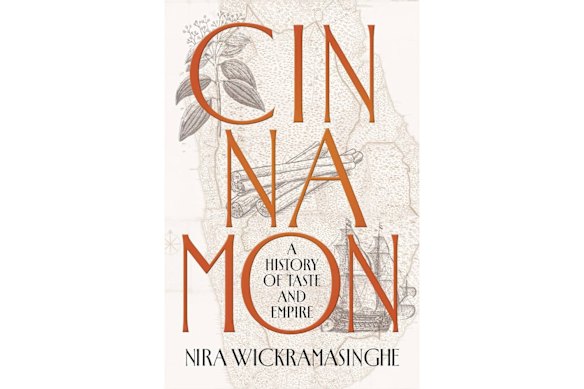
Cinnamon by Nira Wickramasinghe (Scribe, $37)
Cinnamon may be a common commodity in most people’s pantries today, but this tour through world history – seen through the lens of cinnamon – reveals (like all spices) just how valuable and exotic it once was. Although the focus is often on Sri Lanka, where historian Nira Wickramasinghe was born, it also charts how the spice became a global phenomenon, used by ancient Egyptians and Greeks and Romans as a perfume and incense. By the 16th century it was the ingredient in the cooking for Italian feasts and festivals (especially favoured by the popes of Avignan) and the key element in the first cookbooks of the time.
But it’s also a story of colonialism, conquest and trade, particularly the Dutch rule of Ceylon – the Cinnamomum verum or “true” cinnamon tree being “indigenous to Sri Lanka alone” – and incorporates the struggle of the cinnamon peelers, who might have been colonial subjects, but were rebellious ones all the same. An embracing, often vivid cultural history that comes with generous wafts of the bark stick itself.
What else is happening in the book world?
The Booklist is a weekly newsletter for book lovers from Jason Steger. Get it delivered every Friday.
Disclaimer : This story is auto aggregated by a computer programme and has not been created or edited by DOWNTHENEWS. Publisher: www.smh.com.au