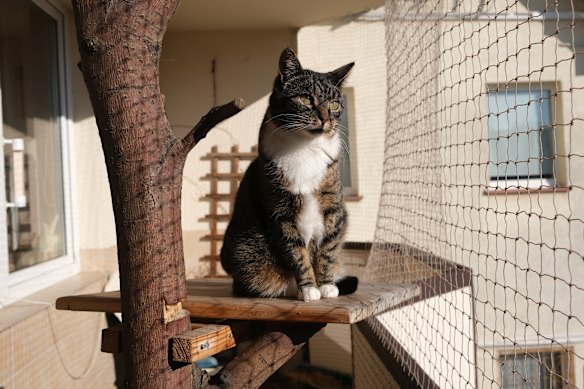

Local governments will be able to make their own laws about whether cats should be kept indoors after an amendment to the state’s legislation passed parliament late on Thursday.
The amendment passed the Upper House of WA parliament with 45 minutes to spare in the sitting calendar, with local conservation groups praising the decision to finally change legislation that would allow councils to make specific rules about whether cats should be contained to property.
Under the current law, councils need to get permission from a parliamentary committee to introduce changes to their local regulations.
More than 20 councils have tried to make their own laws about keeping cats inside in the past, but only three have been successful – all in regional WA.
As a result, the cat laws in each local government differ greatly, causing Local Government Minister Hannah Beazley to announce plans to change the law in February.
WA’s Feral Cat Working Group, headed up by scientist Dr Peter Klinken, welcomed the move.
“The passing of this bill means that local governments now have the right to determine how they will care for their pet cats, their wildlife and their community values,” the group said in a statement.
“The WA Feral Cat Working Group found that 78 per cent of local governments in WA would look to implement local laws to contain pet cats when there was a clear pathway to do so.
“Communities across the state have been increasingly vocal about the need to have cat containment laws in Western Australia, reflecting a broad cultural shift across the country in recent years.”
WAtoday asked every local council in metropolitan Perth in August where it stood on potentially changing its bylaws.
The amendment passed parliament during the late hours of Thursday evening following debates between members.
Deputy Liberal leader Tjorn Sibma told the chamber he believed the amendment would be ineffective unless some level of resourcing was given to local councils to help them enforce any changes they make.
“I am unconvinced, sad as it might sound, that, despite the best endeavours by all concerned, this bill, soon to be an act, will become the efficacious shield for wildlife that its proponents hope that it will be,” he said.
“That is largely a resourcing and capacity issue at the level of local government … unless it is resourced properly in monetary terms, has proper implementation schedules and provides the kind of sensible, helpful communication and advice to regular cat owners who want to do the right thing, it will fail.
“But I hope it works and I would like to see the measures and provisions of this bill made effective in a way that is respectful and practical.”
The feral cat working group said it was important to acknowledge the impact cats had on wildlife, regardless of the amendment’s efficacy.
“A roaming pet cat kills around 186 mammals, birds and reptiles per year,” the group said in a statement.
“That translates to around one million animals killed by pet cats in the greater Perth region alone, every single week. At the same time across greater Perth, around 200 pet cats lose their lives in roaming-related accidents every week.”
Dr Bruce Webber, the group’s executive, said while the amendment was a good first step, cat owners also had to step up to ensure they were responsible owners.
“The best thing you can do for your cat is to keep it appropriately entertained while permanently contained. By preventing their cats from roaming, owners essentially eliminate the risk of death due to vehicle strike, animal attacks, diseases, being stolen, abused or being impounded,” he said.
“Being a responsible cat owner is about keeping your pet cat happy and healthy, while also protecting
our native wildlife.”
 Hannah Murphy is a journalist with WAtoday covering breaking and general news. She previously worked for the ABC in the state’s Kimberley region.Connect via email.
From our partners
Disclaimer : This story is auto aggregated by a computer programme and has not been created or edited by DOWNTHENEWS. Publisher: www.smh.com.au