
The Trump administration has signalled little interest – and, in some cases, opposition – to some of the main ideas Democrats are contemplating. But drug and medical service pricing is one area of potential compromise.
US President Donald Trump says he wants to find common ground with Democrats on healthcare. But doing so will not be easy.
“There’s a real possibility that we get a lot of great things done, especially on healthcare,” Trump told reporters last Friday during a news conference at the White House. “I’m open to great healthcare. Now, can it be what they want? No, but it can be a combination of what we all want.”
Democrats, fresh off their sweeping electoral victories this month, are seeking to make healthcare a central part of their agenda for the next Congress. But the party is still building consensus around which ideas it will pursue, such as a progressive push for Medicare-for-all and more moderate proposals on adding hearing, vision and dental care to Medicare.
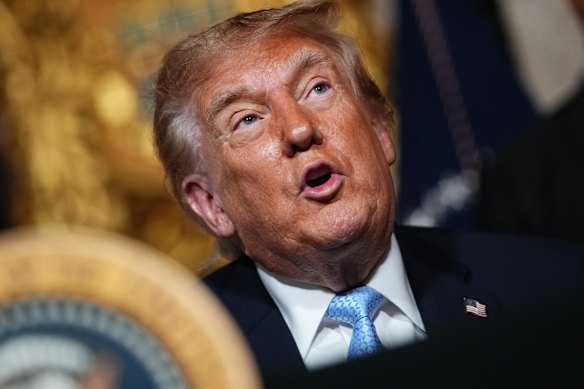
The Trump administration has signalled little interest – and, in some cases, opposition – to some of the main ideas Democrats are contemplating. However, an area of potential compromise could be drug and medical service prices.
Both Trump and congressional Democrats have, for years, blasted the cost of medicines, and the president has frequently touted his administration’s actions meant to lower drug pricing, including deals made with pharmaceutical companies during his second term. When discussing those deals recently with conservative radio host Hugh Hewitt, Trump suggested there was room to go further, saying, “Great things can be done between the Democrats and Republicans on healthcare”.
The two parties have also been seeking to increase transparency into healthcare’s opaque pricing structures, with the Trump administration finalising a revamp last month of rules requiring health insurers to publish the prices they negotiate with doctors and hospitals.
A Centres for Medicare and Medicaid Services spokesperson said in a statement that the agency “welcomes opportunities to work with Congress on healthcare issues, including efforts to reduce the cost of prescription drugs, increase price transparency, and deliver better value for patients and taxpayers”.
“President Trump has made lowering healthcare costs while protecting program integrity a priority,” the spokesperson said.
Under president Joe Biden, Democrats tried reducing drug prices by passing legislation that empowered Medicare to begin negotiating the price of some medicines for the first time. Since then, top Democratic lawmakers have sought to build on those efforts, pitching plans to increase the number of drugs the program can negotiate costs on per year and to extend those lower prices to the commercial market.
Unlike many Republican lawmakers, Trump has historically been open to Medicare drug price negotiation, alleging in 2017 that pharmaceutical companies were “getting away with murder”.
But the Trump administration and Democrats have tried before, unsuccessfully, to negotiate on drug pricing. During Trump’s first term, discussions between his administration and then-House Speaker Nancy Pelosi collapsed.
Wendell Primus, who was serving as Pelosi’s senior health and budget adviser at the time, said he believed they had a real shot at hammering out a deal. But, he said, “the House Republicans were not on board”.
House Democrats wanted to allow the government to directly negotiate prices for Medicare, with an option for private insurers to take advantage of the deals, and impose excise taxes on non-compliant drugmakers, which Republicans opposed. A narrower, bipartisan Senate bill that would have targeted lower drug prices for Medicare, such as capping seniors’ out-of-pocket costs, stalled over Republican opposition to a provision that would have required pharmaceutical companies to pay the government if they raised a drug’s prices faster than the rate of inflation.
“Legacies are important to presidents,” said Chris Jennings, a long-time Democratic health policy consultant. “That’s why I think the best advice I give to anyone who asks on Capitol Hill is: be prepared to be able to move, because there may be time and opportunities and vehicles that suddenly become available for progress.”
Next year, House Democrats’ sizable majority should allow them to pass legislation without any GOP assistance, although Senate Democrats will need Republican help to pass bills unless they use a procedural move to bypass the filibuster. And Trump is almost certain to veto policy changes that he dislikes.
Democrats have ambitious proposals unlikely to receive White House support – chief among them is reversing Medicaid cuts that were imposed in Trump’s One Big Beautiful Bill Act and reviving generous Affordable Care Act subsidies that have lapsed.
House Minority Leader Hakeem Jeffries (New York), who has been nominated to lead Democrats as House speaker in the next Congress, has framed those proposals as necessary to “fix our broken healthcare system in terms of the damage that’s been done by Donald Trump and MAGA extremists over the last two years”.
Yet, Democrats broadly say that the party needs to do more than simply undo Republican actions.
Democrats have been attempting to build consensus around ideas to expand Medicare coverage, including lowering the eligibility age and adding hearing, vision and dental care to the program. They also want to ensure all children have health coverage.
Meanwhile, some progressive Democrats want the party to go even further and establish a universal healthcare program that would cover all Americans – Medicare-for-all, which some Trump officials have lambasted.
Independent senator Bernie Sanders, who is expected to lead the Senate health, education, labour and pensions committee in the next Congress, planned to use his position to press for a four-year plan to enact the policy, he told reporters this month.
Roughly two-thirds of Americans support the idea of Medicare-for-all, according to a September poll from KFF, the highest share since the health policy research and news organisation began asking about the idea a decade ago. Yet, pollsters have found opinions shift as Americans hear competing claims from supporters and critics of the policy, suggesting views could be highly malleable amid a public debate.
Mehmet Oz, Trump’s Medicare and Medicaid chief, has panned the idea of Medicare-for-all in recent days, arguing that such a massive change would create a major budget deficit that, in turn, would lead to the rationing of healthcare.
“If you crush the system, which is what’s being proposed, then you will devastate the systems that we already have and leave nothing in their place,” Oz said in a November 20 Fox News interview.
A White House official pointed to an analysis conducted last month by the administration’s Council of Economic Advisers that asserted Medicare-for-all would raise the federal deficit by approximately $US47.4 trillion ($71 trillion) over 10 years.
While there is no official analysis from the non-partisan Congressional Budget Office on how much Medicare-for-all would cost, the independent Committee for a Responsible Federal Budget estimates that the proposal would increase federal spending between $US25 trillion and $US35 trillion over 10 years, depending on policy details.
Even among Democratic lawmakers, the notion of single-payer healthcare is divisive, making the likelihood of Democratic leadership attempting to pass it in the next Congress an open question. But some progressives argue that appealing to Trump’s penchant for seeking to place his name or likeness on everything, including buildings, gold coins and passports, could help.
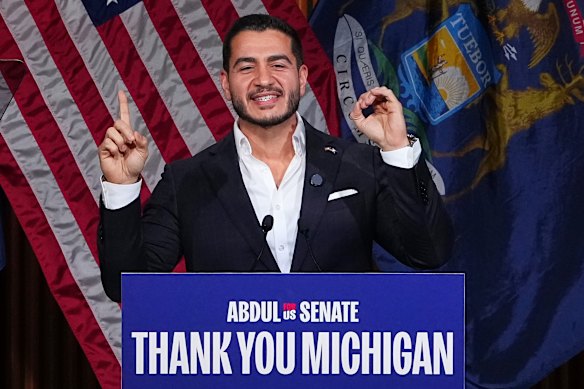
Democratic senator-elect Abdul El-Sayed campaigned on passing a version of Medicare-for-all that maintains private insurance alongside a public option, which differs from the proposal that some other progressives have called for that would mostly phase out private insurance.
In a post on X this month, El-Sayed suggested naming a universal healthcare program “Trumpcare”. Trump shared a screenshot of El-Sayed’s post over a week later on Truth Social without adding a caption. Trump told the New York Post this week that he planned to meet with El-Sayed.
“Maybe there’s some place in the middle that we could go,” Trump told the news outlet.
When asked on NBC’s Meet The Press about whether he believes Democrats could get Medicare-for-all done by putting Trump’s name on it, El-Sayed said, “I don’t really care what it’s called. I care that the people of this country finally have the unmet promise of guaranteed healthcare in this country”.
The Washington Post
Get a note directly from our foreign correspondents on what’s making headlines around the world. Sign up for our weekly What in the World newsletter.
Disclaimer : This story is auto aggregated by a computer programme and has not been created or edited by DOWNTHENEWS. Publisher: www.smh.com.au