Beirut, Lebanon – On Lebanon’s Independence Day on Sunday, Israel’s Arabic-language military spokesperson Ella Waweya posted a video on X in a classroom in Dibil, a Christian village in south Lebanon.
In the video, she wished Lebanese a happy national day, praised the singer Fairuz, and blamed the Lebanese armed group Hezbollah, which is fighting an ongoing war against Israel, for the hardships faced by the people in southern Lebanon.
Recommended Stories
list of 3 itemsend of list
The video drew widespread condemnation from Lebanese officials, including from Dibil’s municipality, who told local media that the visit took place around a month before the video was posted.
The council said the visit took place “without prior coordination with the school administration”. The Israeli military said an investigation was reviewing the incident and it is not clear whether Waweya had official approval to post the video.
Unlike neighbouring Shia Muslim villages, Christian villages in southern Lebanon have generally been allowed to stay on their lands during Israel’s war on Lebanon. But they still live under Israeli occupation.
“We’re in a giant prison,” Ayoub Khreish, the president of Ain Ebl municipality, told Al Jazeera from his village on Lebanon’s southern border. “We can only move around in these [neighbouring] villages. Anytime we want to go to Beirut, we need to get permission.”
This system goes through a so-called “mechanism”, whereby a request is submitted to the Lebanese Army, which passes it to the UN and then onto the Israelis for approval.
Advertisement
Now living under the Israeli military’s authority, these Christian villages are being used as part of an Israeli strategy to foment divides among the Lebanese population, experts told Al Jazeera.
Villages under the control of Israel
Israel launched a massive assault on Lebanon in October 2023, shortly after genocide in Gaza began, with approximately 9,000 people killed since then, according to Lebanon’s Ministry of Public Health.
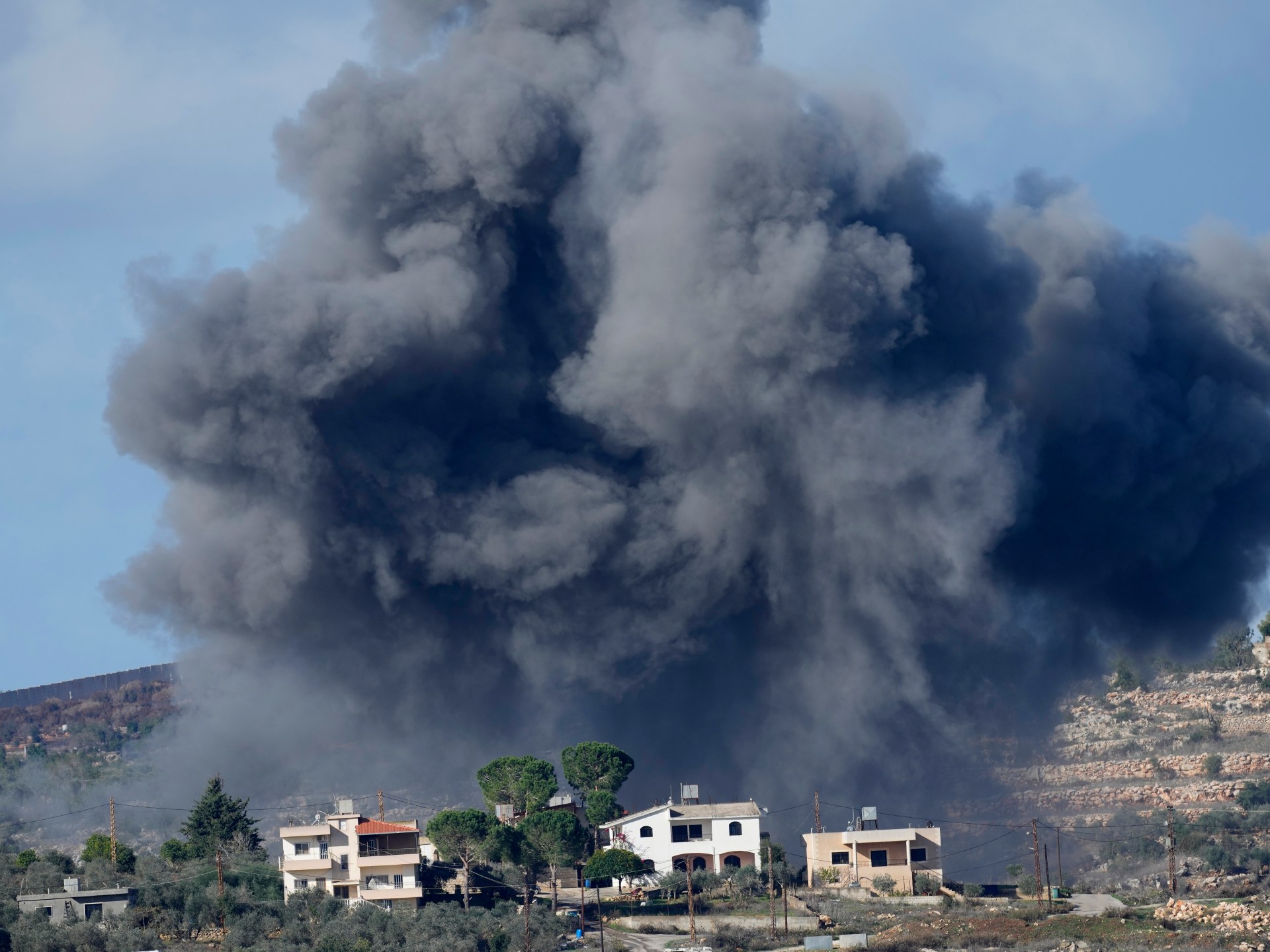
Southern Lebanon, where Hezbollah has a presence, has been the area worst affected by the violence, with thousands of Israeli air raids and repeated Israeli raids in villages.
Israel’s war on Lebanon has left Christians in southern villages in a precarious position. Much of the south has been made uninhabitable by Israeli attacks and demolitions. While Shia Muslims have taken the overwhelming brunt of the violence, Christians have been killed in attacks and been displaced, too.
In early November, the mayors of five Christian villages appealed to the Council of Catholic Patriarchs and Bishops of Lebanon, asking for help so residents can remain on their land and displaced people can return.
“Help us make staying on our land a choice of life based on security, dignity, work and hope, rather than an anxious wait in uncertainty,” they wrote at the time.
Khreish, municipal president of Ain Ebl, said a little more than half of the town’s population fled since the start of the war. Daily convoys bring in food and other necessities, but the local economy has ground to a halt.
He initially hoped for a political solution to the crisis, but a June framework agreement between Israel and Lebanon that looked to have Israeli troops withdraw from the south and Hezbollah disarm has not progressed as originally hoped. Talks between the two sides have been stalled since August.
“We thought peace and a political solution would be closer than this,” he said. “But the opposite seems to be true; it’s far off.”
As the occupation drags on, Lebanese in these villages feel they are forced to deal with the political reality in front of them. Khreish said Israeli soldiers enter the village regularly and interact with locals.
“We’re no longer afraid of them,” Khreish said. “We’re under their authority, the authority of the Israeli military.”
Political weaponisation
Experts say this particular treatment of Christians in Lebanon is part of a wider strategy to fragment and divide the local population.
“It’s part of a longstanding strategy on behalf of Israel towards the minorities of the region to divide and conquer,” Munira Khayyat, author of Landscape of War: Ecologies of Resistance and Survival in South Lebanon, told Al Jazeera. “You see this happening, of course, in Palestine, and in Lebanon, they’ve always done this. They always had this strategy of separating the Christians from their social, ethnic, national and historical environment to reinvent them as foot soldiers for the Zionist cause.”
Advertisement
In July, Israel’s Prime Minister Benjamin Netanyahu, who may soon be out of office, claimed that Lebanon’s Christians were asking Israel for protection from its Muslim neighbours.
“Christian villages in Lebanon, some of them have actually asked to be annexed to Israel, because we protect them against Hezbollah, Hezbollah fanatics who want to kill them, and we do the same things with Christians everywhere,” Netanyahu told Fox News.
Netanyahu’s claims were rejected by Lebanese officials, including Hanna al-Amil, president of the Rmeish Municipality, the largest Christian-majority border village.
A statement was signed by 15 villages in southern Lebanon that called the claim “completely fabricated” and “unrelated to reality”.
Michael Young, a Lebanese political analyst and writer at the Beirut-based Carnegie Center, said Israel aimed to show the outside world, and the US in particular, that it protects Christians and other minorities after its actions in Gaza turned public opinion heavily against it. In Gaza, Israel had bombed Christian churches, where many Palestinians sought refuge from the Israeli genocide.
“People like [US political commentator] Tucker Carlson are playing this up, so from a public relations perspective, they want to show they are friendly to all minorities; Druze, Christians and so on,” Young said.
Fractured states
Experts said that the Israeli efforts to cater to minorities in the region are more than an external public relations campaign.
“There is another much more sinister reason,” Young said. “The Israelis have a policy in the region of fragmentation.”
Young pointed to a paper (PDF) published in October by Tamir Hayman, a former chief of the Israeli military’s Intelligence Directorate and the current executive director of the Institute for National Security Studies (INSS), an Israeli think tank.
In the paper, Hayman outlines what he discerns as Israel’s new, unwritten national security concepts. One key concept is the Israeli national security view that “Arab states are not genuine nation-states, but collections of tribes and ethnic groups lacking a shared history and a foundational national vision.”
“Consequently, undermining their stability is viewed as a natural process, one that Israel can manage more effectively than it can contend with strong nation-states, and one that it should even encourage,” Hayman continues.
In south Lebanon, locals of all denominations have expressed frustration or anger towards Hezbollah over the last few years.
“There is anger against Hezbollah, no doubt about it. But people criticising Hezbollah are not automatically with Israel,” said Young.
Many Lebanese Christians have been shocked by the destruction wrought on Shia villages around them and find it “inconceivable they can live without their Shia neighbours”.
Back in Ain Ebl, Khreish said the war and occupation had left them feeling stuck and that any effort to travel outside their area brings “constant anxiety”.
“We just hope for peace and that there won’t be war on us. What has this war brought us?” he said.
Advertisement
Like many others from south Lebanon, these Christian-predominant towns and villages feel they are stuck in limbo, waiting to see what comes next.
“We don’t think of the future. We live day by day. We don’t have eyes on the future because we don’t know what will happen,” Khreish said.
Disclaimer : This story is auto aggregated by a computer programme and has not been created or edited by DOWNTHENEWS. Publisher: aljazeera.com