“Just five more minutes!” If you’ve ever tried getting a child to put down a phone or tablet, chances are you’ve heard this familiar refrain.
But long before cartoons were available at the tap of a screen and games came with colourful animations, childhood entertainment looked a little different. It meant chalk-drawn squares on the floor, marbles tucked into pockets, endless rounds of hide-and-seek and friends gathering in the neighbourhood until someone called them home.
The best part? Most of these games needed little more than a few friends, some open space and a generous dose of imagination.
Bringing these old-school games back can be a fun way to encourage children to take a break from screens, get moving and spend quality time with others. Here are six Indian childhood favourites worth introducing to the next generation.
1. Hopscotch (Stapu)
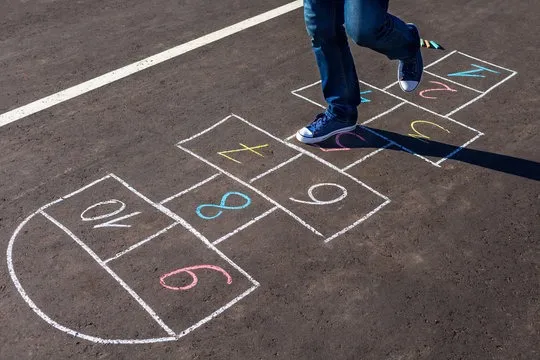
All you need is a piece of chalk and a little space to get started. Draw a series of numbered boxes on the ground, toss a small stone into one of them and ask children to hop through the squares on one foot, skipping the box containing the stone.
Known as stapu in many parts of India, hopscotch is a simple game that can keep children entertained for hours. It encourages balance, coordination and concentration, while giving them a chance to cheer each other on.
2. Seven Stones (Lagori)
A game that brings together teamwork, speed and a little strategy, lagori is a favourite that deserves a comeback.
Stack seven flat stones on top of one another and divide the players into two teams. One team tries to knock down the stack with a ball, while the other attempts to rebuild it before getting hit by the ball. The opposing team tries to stop them by tagging players with the ball.

The game gets everyone running, dodging, planning and laughing. It is also a wonderful way to introduce children to teamwork and friendly competition.
3. Carrom
Rainy afternoon? Too hot to play outside? Bring out the carrom board!
This classic indoor game needs a board, striker and carrom coins. Players take turns flicking the striker to pocket their coins, aiming to clear the board before their opponents.

Carrom is a lovely way to bring the family together. It helps children practise hand-eye coordination, patience and strategic thinking. Parents can even make it a family tournament, complete with playful challenges and a little friendly rivalry.
4. Tip-Cat (Gilli-Danda)
Think of it as a traditional Indian game that puts hand-eye coordination to the test. Gilli-danda uses two wooden sticks: a small tapered one (the gilli) and a longer one (the danda).

Players use the longer stick to flick the smaller one into the air and then hit it as far as possible. The game can be played in an open ground with simple rules agreed upon by everyone.
It is a wonderful way for children to enjoy outdoor play, practise coordination and discover a game that entertained generations before smartphones existed.
5. King, Minister, Thief, Soldier (Raja, Mantri, Chor, Sipahi)
This is a fun indoor game that needs just four players and a few small slips of paper.
Write the names Raja, Mantri, Chor and Sipahi on four slips and distribute them among the players. The person who gets Raja reveals their identity, while the others have to figure out who the Chor is. The Mantri gets a chance to guess, and the Sipahi can help with the investigation, depending on the rules the group decides.
With guessing, suspense and plenty of laughter, this game can turn an ordinary afternoon into a mini detective adventure.
6. Tag and Chase (Kho-Kho)
A playground favourite, kho-kho is a fast-paced team game that keeps children on their toes.
Two teams take turns chasing and dodging. Players from the chasing team sit in a row, facing alternate directions, while one active chaser tries to tag opponents. By calling ‘kho‘ and transferring the chase to a teammate, players must think quickly and move strategically.

Photograph: (Dsource)
Besides being a great way to get children running, kho-kho encourages teamwork, agility and quick decision-making.
Making room for play
The idea isn’t to ban screens altogether or make children feel guilty about enjoying their favourite digital games. Instead, it is about making space for other kinds of fun, too.
Parents can start small by setting aside 20–30 minutes for a family game, inviting neighbourhood children over for an afternoon of outdoor play or teaching their little ones a game they enjoyed growing up.
After all, childhood doesn’t always need a screen, a scorecard or a fancy toy. Sometimes, all it takes is a chalk-drawn square, a few friends and the freedom to play.
Sources:
’10 Traditional Games and Activities Guaranteed to Kill Screen Time’ by Donna Edmunds for Heroes of Literacy, Published on 24 October 2024.
‘9 Indian Traditional Games For Your Children To Get Rid of Mobiles!’ by Standard ColdPress.
Disclaimer : This story is auto aggregated by a computer programme and has not been created or edited by DOWNTHENEWS. Publisher: thebetterindia.com