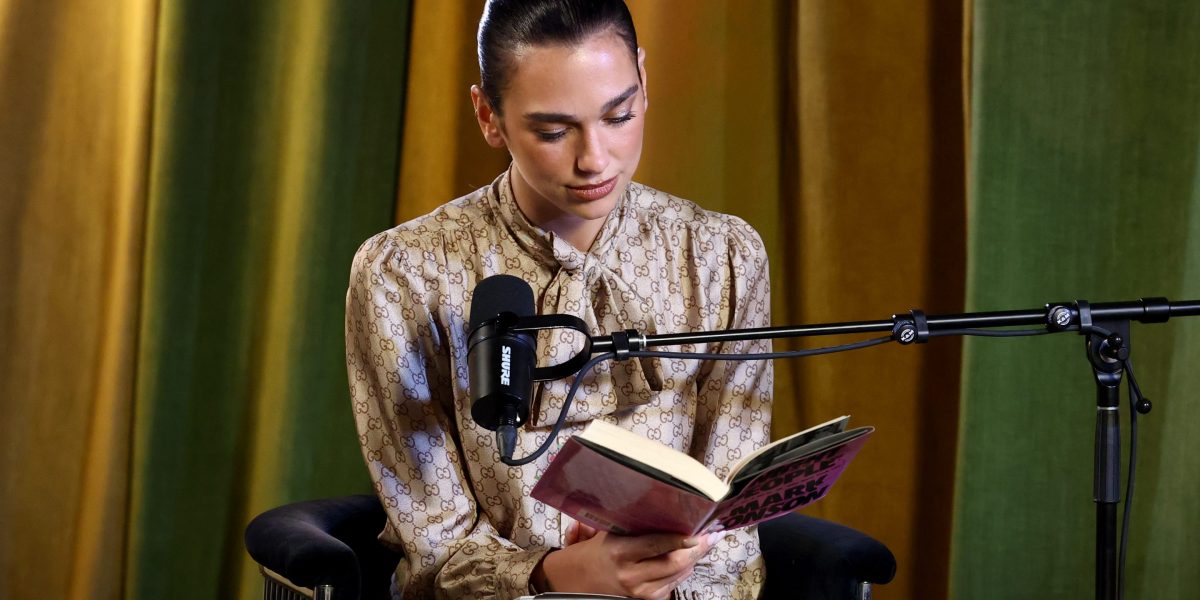
Being the internet’s cool girl takes surprising work for someone who’s supposed to make it look effortless. She knows about the hole-in-the-wall restaurant before the line wraps around the block, has a vacation wardrobe worth taking notes on, and somehow finds time to read the book everyone will be talking about in six months.
Few have mastered that balancing act as well as Dua Lipa. The Grammy-winning pop star has become as much an inspiration for where to vacation, what to read, and where to eat as for what to listen to.
She interviews authors like Margaret Atwood for her book club, shares cultural recommendations through her lifestyle platform, Service95, and is a fixture in the fashion world.
But after years of celebrities turning their personalities into businesses and influencers making nearly every aspect of their lives shoppable, the economics of being cool may be changing. Being everywhere may no longer make someone worth following, which poses a slight problem for an industry that makes money off visibility.
U.S. spending on creator advertising is expected to reach $44 billion this year, more than triple the $13.9 billion spent in 2021, according to the Interactive Advertising Bureau. But even as brands pour more money into the creator economy, younger consumers are growing weary of its biggest stars.
A July survey of 13- to 39-year-olds from youth research firm YPulse found that 62% are tired of seeing the same big names everywhere, while 73% trust smaller creators more than big influencers.
“You can pay for attention, but you can’t buy cultural credibility or this idea of being cool,” Izzy Farmiloe, global head of strategy and growth at Dazed Studio, the agency arm of youth culture and fashion publisher Dazed Media, told Fortune.
How the feed made Dua Lipa
Long before Instagram gave celebrities a place to document their breakfast, much of the fascination with the cool girl came from how little the public knew about her.
In a November essay for his newsletter, Considered Chaos, brand strategist Eugene Healey explained how each generation’s cool girl was shaped by the media of her time. Kate Moss had fashion magazines, the Olsen twins had the paparazzi, and Alexa Chung had fashion blogs and street-style photographers.
Social media brought audiences closer to the women they admired, making relatability an asset for personalities like Emma Chamberlain. As algorithms began serving up content based on people’s interests rather than simply who they followed, celebrities also had more reason to venture beyond the industries that made them famous.
“Dua Lipa was made for the feed,” Healey wrote.
Her friendship with designer Simon Porte Jacquemus might draw in fashion enthusiasts, while her book club could introduce her to someone who has never listened to Future Nostalgia. Each new audience offers another opportunity to make money beyond selling records and concert tickets.
It’s a business model that has become increasingly familiar, with celebrities launching beauty brands, starting newsletters, and inviting followers into their kitchens. Somewhere along the way, having a favorite lip gloss became an opportunity to launch a cosmetics company.
Why trying too hard turned uncool
The trouble with making a living off being cool is that the more people see someone being paid to recommend things, the harder it becomes to tell what she actually likes. Even the seemingly casual Instagram photo dump, filled with blurry pictures and half-eaten meals, can be as carefully curated as the polished posts it was meant to replace.
For Jenna Drenten, a marketing professor at Loyola University Chicago, the problem lies in the very nature of an influencer’s job. “They are expected to sell what is popular, but also expected to discover what’s new,” Drenten told Fortune.
Drenten pointed to BookTok, where recommending a novel outside the usual bestseller rotation can set a creator apart. If enough people take her advice, however, the book becomes just another BookTok sensation, losing some of the very appeal that made it worth recommending in the first place.
Brands risk falling into the same trap. Farmiloe has seen companies chase the same trends and hire the same talent in their pursuit of relevance, spending money only to end up looking more like one another.
“I actually think silence can often be a stronger strategy now,” Farmiloe said.
Trying too hard to look polished may also backfire for brands, especially as artificial intelligence makes it easier to produce everything from flawless images to cultural recommendations. “To sort of show mistakes is a way of proving that a human has made something,” Farmiloe said, adding that even typos have become chic.
Why the next cool girl may be harder to sell
Healey identified three potential successors to the Dua Lipa era: the obsessive, who knows a particular subject inside and out; the ghost, whose reputation spreads without constantly posting; and the host, who brings people together in real life.
He argued that the three share expertise and charisma that are hard to fake at a moment when faking has never been easier. If the next dominant medium is an AI model that can summarize the world’s knowledge on demand, Healey wrote, cool becomes whatever can’t be summarized.
For brands accustomed to measuring influence in followers, likes, and views, the next cool girl may be much harder to price. Drenten sees growing appeal in people who can offer something beyond a product recommendation, whether it’s a longtime librarian who can introduce readers to literature they might never have discovered on their own or someone who brings strangers together outside the confines of their carefully curated feeds.
As going out becomes increasingly expensive, Farmiloe sees an opportunity for brands to help create those experiences. She pointed to Reference Point, a London library, bookshop, and bar that doubles as a gathering place for chess, poetry, and jazz.
Rather than paying someone to talk about a brand, companies could give people a place to spend time together.
“Instead of just getting noticed, how do you get people to care or actually like engage or spend time with your brand?” Farmiloe said.
Disclaimer : This story is auto aggregated by a computer programme and has not been created or edited by DOWNTHENEWS. Publisher: fortune.com