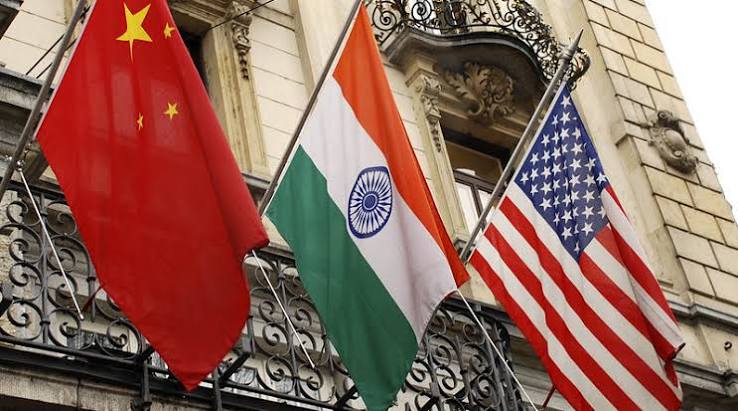
Chennai: India’s failure to “effectively monitor and address” imports and FDI from China harms US producers and exporters, alleges United States Trade Representative. India also produces significant amounts of medical devices, semiconductors, telecommunications articles, and solar products.
India imports significant amounts of gross fixed capital formation and intermediate input goods from non-market economies, particularly China, which US firms also produce, USTR said in its statement proposing tariffs.
“When firms in India artificially enhance investment, production, and exports, more market-oriented sectors and firms in the United States that do not benefit from the same measures to promote enhanced capacity and production experience decreased production, and lower investment in capacity or innovation, resulting in fewer jobs and lower wages for their workers,” it said.
India’s failure to effectively monitor and address imports and FDI from NMEs harms U.S. producers and exporters. Surging imports of NME inputs not only distort competitive conditions within India but also enhance the artificial competitiveness of Indian downstream products manufactured using those NME inputs, to the detriment of both competing U.S. producers and exporters.
Failures by India to address FDI aimed at increasing manufacturing for purposes of producing excess capacity from China also permit China to export its excess capacity through Indian industries. The result is distorted competitive conditions for U.S. firms, and distorted prices, lost sales or exports, and diminished revenues in India and global markets.
According to GTRI, criticizing India’s reliance on Chinese inputs ignores the reality that the US remains a vastly larger importer of Chinese goods and industrial components. Further, USTR finds that India produces significant amounts of steel, medical devices, semiconductors, telecommunications articles, and solar products, which US firms also produce, and which are sold in global markets.
However, domestic production of medical devices meets only 30% of local demand. India exports $ 3.8 billion of medical devices against $ 8.2 billion imports. About 80%–85% of demand is still sourced internationally. In the case of semiconductors, India has just started setting up facilities and manufacturing.
Washington’s sudden critique of state-backed manufacturing suffers from a convenient bout of amnesia, says GTRI.
“While lecturing India on industrial policy and intermediate inputs, the US cheerfully bankrolls some of history’s priciest subsidy sprees—pouring over $300 billion into clean energy under the Inflation Reduction Act, billions more into domestic chipmaking through the CHIPS Act, and massive annual farm subsidies that routinely flood global markets with artificially cheap agricultural surpluses.
Disclaimer : This story is auto aggregated by a computer programme and has not been created or edited by DOWNTHENEWS. Publisher: deccanchronicle.com