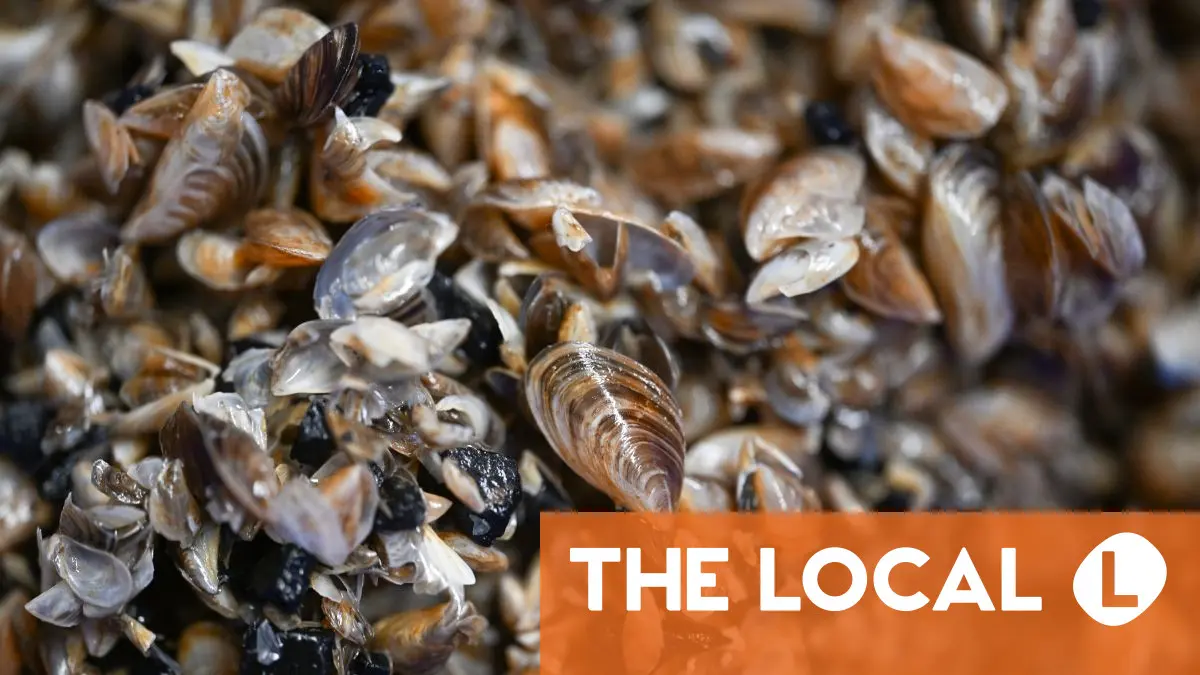
A humble mussel got a lot of air time in the Bundestag on Friday. The story behind the ‘Quaggamuschel’ comments reveals a playful side to Germany’s politicians, even during unusually painful budget talks.
The Bundestag voted on the 2027 federal budget on Friday. The faces were grave and the decisions were hard. Every third euro is borrowed and even Chancellor Friedrich Merz conceded the process deserved no “prize for beauty”.
Yet in the middle of all this, one enduring German tradition has quietly asserted itself. It’s a reminder that almost anything is easier to bear if you can only hang on to your sense of humour.
Quaggamuschel
Most years Germany’s chief budget officials from different parties maintain a strange tradition in which they agree on a code word which they are then obliged to try and work, as inconspicuously as possible, into their speech about the budget.
According to tradition, the custom dates back to 2007, when the then Finance Minister Peer Steinbrück complained of critics clinging to him like “little ferrets” (Frettchen).
The tradition also sets off a race among journalists for which outlet can be the first to get the code word into print. This year’s word – Quaggamuschel (quagga mussel in English) – was published shortly before 2pm.
Lisa Paus of the Greens, who chairs the budget committee, wished for a coalition which wasn’t “infested by a Quaggamuschel of the subspecies Chaos” in her speech.
READ ALSO: Cheaper power, pricier spirits – How Germany’s 2027 budget will affect you
Ines Schwerdtner of the Left Party declared that “the budget is not a Quaggamuschel“.
The CSU’s Florian Oßner said he was worried about the level of borrowing, in addition to the Quaggamuschel in Lake Constance.
What is a Quaggamuschel?
A quagga mussel is a freshwater mussel, about 4cm wide, with a striped shell. It’s named after the quagga, an extinct subspecies of zebra, because its stripes fade out in a similar way.
It is also a very successful invader. A mature female can produce up to a million eggs a year, and each adult filters a litre or more of water daily. In Germany it was first identified in 2005 and now lives in the Rhine, the Main, and the Rhine-Main-Danube Canal.
READ ALSO: German word of the day – Missgeschick
It reached Lake Constance in 2016, where it has multiplied massively and regularly clogs filters and waterworks machinery.
In other words, it’s a problem that seemed to appear out of nowhere, spreads unchecked and is very expensive to clear up – so pretty ideal as a word to slip into budget debates.
A short history of unlikely words
The mussel joins an eccentric list. Last November, MPs working on the 2026 budget used Zukunftswerkstatt Schwein (Future Workshop Pig).
Felix Döring of the SPD managed it relatively gracefully. Finance Minister Lars Klingbeil praised budget debates that run “from A for the Tax Code to Z for the Future Workshop for Pigs”.
During the 2024 debate, the Zirkuspädagoge (circus educator) got a laugh. The CDU’s Helge Braun said that experience in the circus “wouldn’t have been a bad thing” after a Constitutional Court ruling upended the coalition’s plans.
Other past words include Kapitänsbinde (captain’s armband), Glatze (bald head) and Herdenschutzesel (Livestock Protection Donkey).
Disclaimer : This story is auto aggregated by a computer programme and has not been created or edited by DOWNTHENEWS. Publisher: thelocal.de