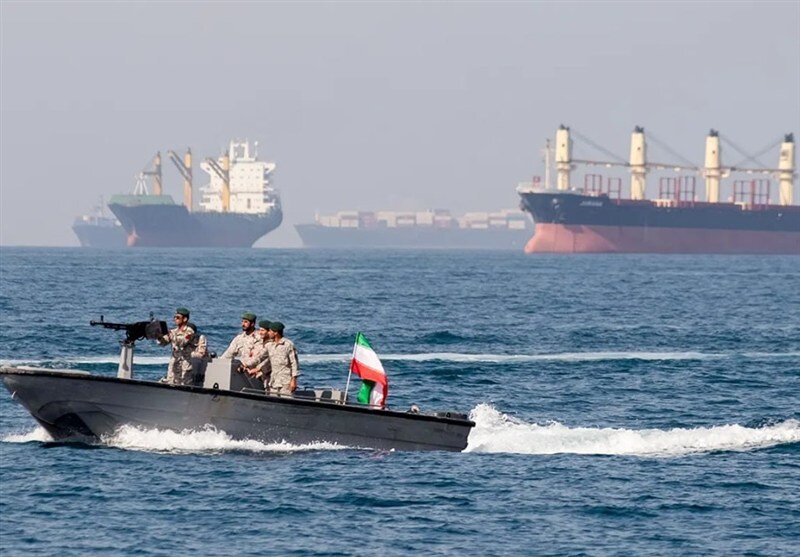
TEHRAN – Senior Iranian military commanders have highlighted the country’s enhanced naval, air defense and ground capabilities, warning that any renewed aggression against Iran would be met with a forceful response.
Speaking at Tehran’s Friday prayers, Navy Commander Rear Admiral Shahram Irani revealed that Iranian naval forces had struck the USS Abraham Lincoln aircraft carrier with a missile on the first day of the US-Israeli war of aggression against Iran.
Irani said Iranian forces had identified the enemy’s central command structure and the aircraft carrier at the outset of the conflict before launching a missile that had never previously been tested in combat.
“The missile hit its target and struck the enemy’s body,” he said, describing the strike as a direct hit against the ‘heart of the enemy.’
The commander added that, despite its military capabilities, the adversary had sought assistance from ports in neighboring countries to evacuate wounded and dead personnel, provide medical treatment and carry out repairs. These measures, he said, were aimed at enabling the enemy to resume combat flights against targets inside Iran.
Irani said the Iranian Navy had since further upgraded its systems and operational capabilities while maintaining constant vigilance. He stressed that the force was monitoring all enemy movements and stood ready to respond to any hostile action.
Describing the adversary’s position in the region, the naval commander said that despite deploying its resources and military capabilities, it had been unable to secure passage for even a single vessel through the Strait of Hormuz.
“Whatever it has brought into the scene, whether manned or unmanned, at sea or in the air, has not been able to get even a single vessel through the Strait of Hormuz,” he said.
Irani added that enemy pilots, troops and commanders were facing uncertainty over where, how and by what means they were being targeted. He said the Iranian people and the Islamic Republic would take pride in driving the enemy out of the Persian Gulf and West Asia permanently.
Developing of air defense systems
Meanwhile, Deputy Chief of the Iranian Army for Coordination Rear Admiral Habibollah Sayyari said the country had developed new air defense equipment and advanced systems in response to lessons learned from the 12-day and 40-day wars imposed by the United States and Israel.
He described strengthening air defense capabilities as a major defense priority, saying the recent conflicts had demonstrated the need to expand efforts in this field.
“We concluded from the recent wars that we must do more work in the field of air defense than we did in the past,” Sayyari said.
He added that Iran had developed new equipment through the efforts, determination and innovation of its specialists, and that these capabilities had already been employed in defending the country and inflicting considerable damage on the enemy.
Sayyari also referred to the Army’s newly developed air defense products and the design of advanced systems, warning that any force contemplating aggression against Iran would encounter their capabilities in practice.
“In the event of any aggression, the enemy will see the effects and capabilities of these systems,” he said.
Armed Forces chief warns of regret-inducing response
Chief of Staff of the Iranian Armed Forces Major General Ali Abdollahi, in a message marking Navy Day, warned that any threat or act of aggression against Iran would be met with a “decisive, effective and regret-inducing” response.
Abdollahi said the Persian Gulf and the Strait of Hormuz had become focal points of strategic confrontation with ‘global arrogance and criminal Zionism.’
He praised the operational and combat readiness of both the Iranian Army Navy and Iran’s Islamic Revolution Guard Corps (IRGC) Navy, emphasizing that their close cooperation was essential to protecting national security and interests, defending Iran’s territorial waters and safeguarding its maritime authority in the Sea of Oman.
The senior commander said Iran’s Armed Forces were fully prepared to respond to any threat or aggression.
He also commended Navy commanders and personnel for their role in defending the country’s independence, security and maritime power.
Tanker explosion in Strait of Hormuz
In a separate development, the IRGC Navy said an oil tanker had struck a naval mine and exploded while attempting to pass through an unauthorized route in the Strait of Hormuz.
According to a statement issued on Friday morning, two tankers had attempted to make a covert passage north of Jazirat Umm al Ghannam Island. One struck a naval mine and exploded, while the other was forced to turn back.
The statement said the number of tankers attempting to use the unauthorized route had fallen sharply in recent days, describing the trend as evidence of the IRGC Navy’s authority and control over the eastern and western approaches to the strategic waterway.
Warning fire drove US F-16 away
The IRGC also announced that a US F-16 fighter jet had changed course and moved away from Iranian airspace after an air defense system operated by the IRGC Aerospace Force fired a warning shot.
In a statement on Thursday, the force said the aircraft had approached Iranian airspace southeast of Hengam Island while escorting vessels it described as violating maritime regulations and providing them with air cover near the Strait of Hormuz.
The warning fire prompted the fighter to carry out a sharp maneuver before turning away from Iranian airspace, the statement said.
The IRGC warned that attempts to circumvent regulations governing maritime traffic through the Strait of Hormuz were unacceptable and could result in heavier losses for the vessels involved and the military forces supporting them.
Describing Iran’s airspace as a red line, the force warned US commanders that any renewed intrusion by American fighter jets would trigger a decisive air defense response. It added that such aircraft could face a fate similar to that of an F-15 fighter and US drones previously targeted by Iranian forces.
Army maintains highest level of readiness
Separately, Deputy Commander of the Iranian Army’s Ground Force for Operations Brigadier General Sirous Amanollahi said the force was at its highest level of combat readiness and had prepared operational plans to counter potential threats.
Speaking to IRNA on Friday, Amanollahi said Army units had been deployed along the country’s borders, from the northwest to the area where Iran, Turkmenistan, and Afghanistan meet.
He said operational plans had been drawn up based on assessments of potential adversaries’ capabilities, while the Ground Force’s combat capacity had been strengthened throughout border regions.
Amanollahi also pointed to coordination among the Army, the IRGC, the Law Enforcement Force, the Basij and popular forces under the commander-in-chief’s leadership, saying inspections and assessments had confirmed that the force’s combat readiness was in excellent condition.
He added that Ground Force units had received advanced weapons and equipment, including air defense and maneuver systems, and were prepared to act in accordance with their operational plans.
The general said Iran’s experience during the eight-year war imposed by the Iraqi Ba’athist regime, along with lessons from recent conflicts involving the United States and Israel, had shaped the country’s military preparations.
He stressed that the Ground Force would resist any attempt to threaten Iran’s borders and would not allow hostile forces to enter the country. He also credited public presence with helping prevent ground operations against Iran.
Disclaimer : This story is auto aggregated by a computer programme and has not been created or edited by DOWNTHENEWS. Publisher: tehrantimes.com