TEHRAN – Settler terrorism in the West Bank is no longer a marginal phenomenon linked to extremist groups or isolated individual attacks.
It has become part of a much broader political and security landscape, revealing big changes within the Zionist project itself, the nature of the relationship between the regime and the settlement movement, and the rise of the religious-nationalist and messianic far right from the margins to the centers of decision-making.
The issue is not simply the scale of these attacks or the number of their victims, but the role this terrorism plays in reshaping Palestinian geography, as well as the political and institutional environment that allows it to continue and expand.
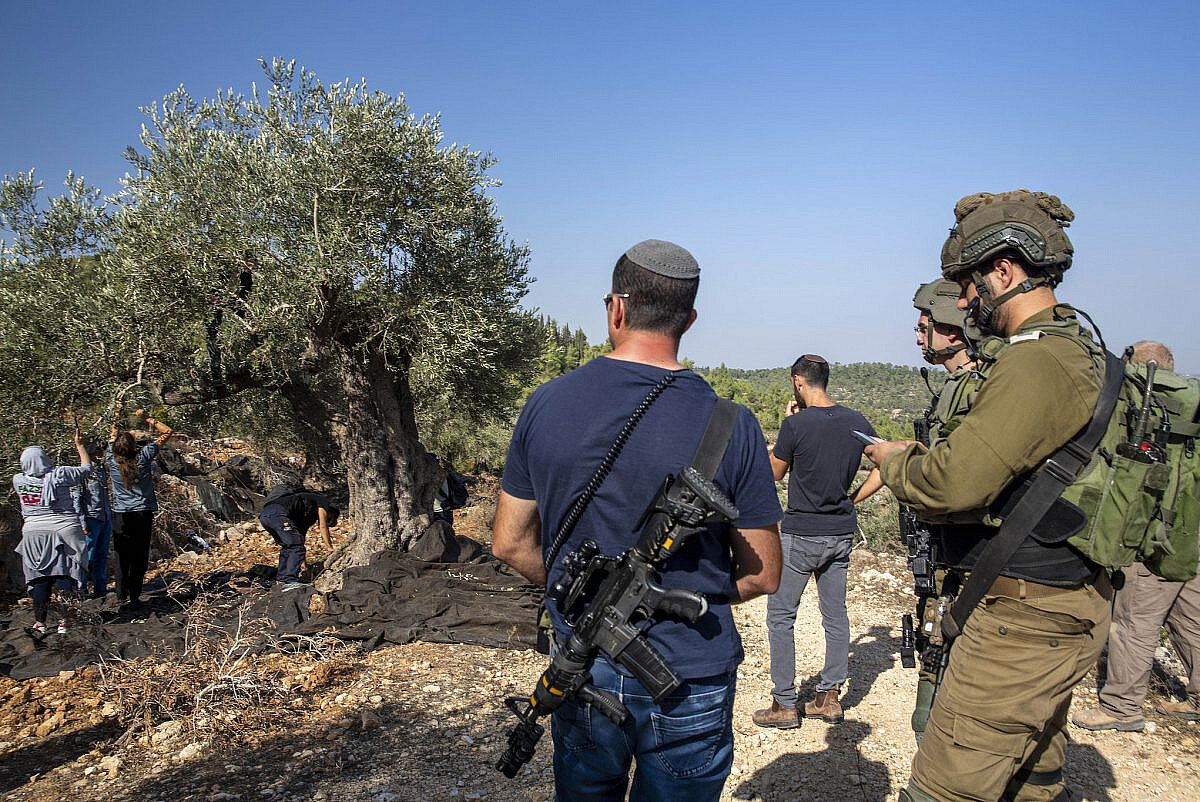
Settler terrorism goes beyond attacking Palestinians and their property. Its purpose is also to impose conditions that force Palestinians to leave their land and communities. An attack on a village, the burning of a home, or an assault on farmers and shepherds is not an isolated incident. Rather, these practices build on one another, making Palestinian life increasingly impossible across large areas.
The figures show just how widespread the phenomenon has become. According to data from the United Nations Office for the Coordination of Humanitarian Affairs (OCHA), more than 1,800 settler attacks were recorded in 2025, affecting around 280 Palestinian communities and injuring 1,190 Palestinians. During the first eight months of 2026, another 1,623 attacks were recorded, linked to the displacement of 2,616 Palestinians.
These figures reflect more than a rise in the number of attacks. They point to a pattern of terrorism serving a clear political and geographical purpose: breaking up Palestinian communities, isolating them, and reducing the Palestinian presence in targeted areas. This, in turn, helps expand settlement control and undermines the possibility of establishing a geographically connected Palestinian entity.
At its core, the relationship between the regime’s government and the West Bank settlers is defined less by confrontation than by their complementary roles in advancing the illegal settlement project.
While the regime provides political and legal cover, infrastructure, and settlement expansion, extremist settler groups carry out field terrorism on the ground to impose new realities and drive Palestinians out of their land.
Minor disagreements may arise between the two sides over methods or the limits of what is legally acceptable, but these do not change their shared strategic goal: expanding Zionist control over the occupied West Bank and beyond.
This relationship is reflected in the stark gap between security warnings about settler violence and the lack of accountability. A report by the International Commission of Inquiry noted that, in August 2024, the regime’s internal security service, Shin Bet, had warned of an attack on the village of Jit.
However, the regional police command failed to take effective preventive action, and the attack resulted in the killing of a Palestinian. The report also cited data from the Yesh Din organization showing that 93.6% of police investigations into settler violence over twenty years resulted in no indictments, according to figures available as of January 2026.
This institutional failure cannot be viewed in isolation from the political positions that reinforce these groups’ sense of protection and legitimacy. The Hilltop Youth, groups known for establishing unauthorized outposts and carrying out terror attacks against Palestinians, have increasingly benefited from this political support.
In November 2025, National Security Minister Itamar Ben-Gvir stated that he was proud the police had stopped “harassing” them.
This shift is particularly significant given the movement’s transition from the margins of the regime’s society into positions of political influence. In a 2024 study titled The Legitimation Process of the Hilltop Youth: From Outcasts to the Israeli Cabinet, Tom Levizky and Yuval Benziman examine how these groups moved from opposing regime authorities and established settler leadership to pursuing political legitimacy through media engagement and political alliances.
This process reached a turning point in 2023, when politicians associated with this movement took up key ministerial positions.
This development goes beyond the rise of individual far-right figures to government positions. It represents the transformation of a movement that once operated on the fringes of state institutions into one that now helps shape policy and influence government decision-making.
As a result, the movement’s ideas are no longer confined to isolated outposts or groups operating on the ground; they have increasingly found their way into the very government institutions responsible for overseeing and advancing the Zionist settlement project.
The relationship between the government and the settlers is no longer defined by confrontation between opposing sides, but by a division of roles. The mechanisms of control are now exercised through both official state institutions and acts of terror carried out by settlers on the ground.
The government does not need to directly orchestrate every attack to benefit from its consequences, just as settlers do not require explicit official approval for every action, so long as their actions advance the broader objectives of the illegal settlement project.
Minor disagreements over methods or instances of overstepping authority may be genuine, but they do not alter the fact that both sides share the same overarching objective.
The religious-nationalist and messianic far right’s drive to expand settlements and terrorize Palestinians cannot be understood without examining the ideological beliefs that underpin its conception of Palestinian land.
In the movement’s ideological vocabulary, the West Bank is not viewed as occupied territory open to negotiation, but as “Judea and Samaria,” an integral part of the biblical Promised Land.
According to this ideology, Palestinians are seen not as a people with political and historical rights, but as obstacles to the Zionist project. Since October 7, this outlook has been reinforced by rhetoric portraying all Palestinians as a security and demographic threat.
Settler terrorism serves not only to pressure Palestinians but also to advance an ideological vision of reducing their presence on the land. Israeli messianism, the belief that expanding the illegal occupation across a “biblical land” and fulfilling a “divine” promise, should be understood within its broader ideological Zionist framework.
It draws on a religious and nationalist worldview that grants Zionist Jews an exclusive claim to Palestinian land and pushes this idea to its furthest limits. While political Zionism presented the project as the realization of Jewish national self-determination, messianism gives it a religious sanctity that turns control over more land into a duty that allows no concessions or compromise.
The difference within the regime is not about the foundations of the project itself, but about how far it should go and what kind of state it should produce.
Some leaders of this movement are unfazed by international sanctions and pressure.
However, this position does not necessarily represent the entire establishment. Traditional security, economic, and diplomatic institutions recognize that continued settler terrorism and settlement expansion come at an increasingly high cost for the regime in its international standing.
In May 2026, the European Union imposed sanctions on four entities and three individuals linked to serious violations of Palestinian rights in the West Bank. Those targeted included the settlement movement Nachala and its leader, Daniella Weiss.
The issue of sanctions has returned to the forefront of international debate. This reflects growing concern over the consequences of settler terrorism and continued settlement expansion.
A divide has emerged within the settler project itself. It is not a disagreement over Zionist claims to Palestine or the Zionist character of the regime, but over the limits of settlement expansion and its political and strategic costs.
A growing camp is willing to accept international isolation in defense of its extremist agenda, while other Zionist institutions and sectors fear that its policies will weaken Israeli standing and international relations. This disagreement is over how the project should be managed and where it will lead, not over its foundations.
Disclaimer : This story is auto aggregated by a computer programme and has not been created or edited by DOWNTHENEWS. Publisher: tehrantimes.com