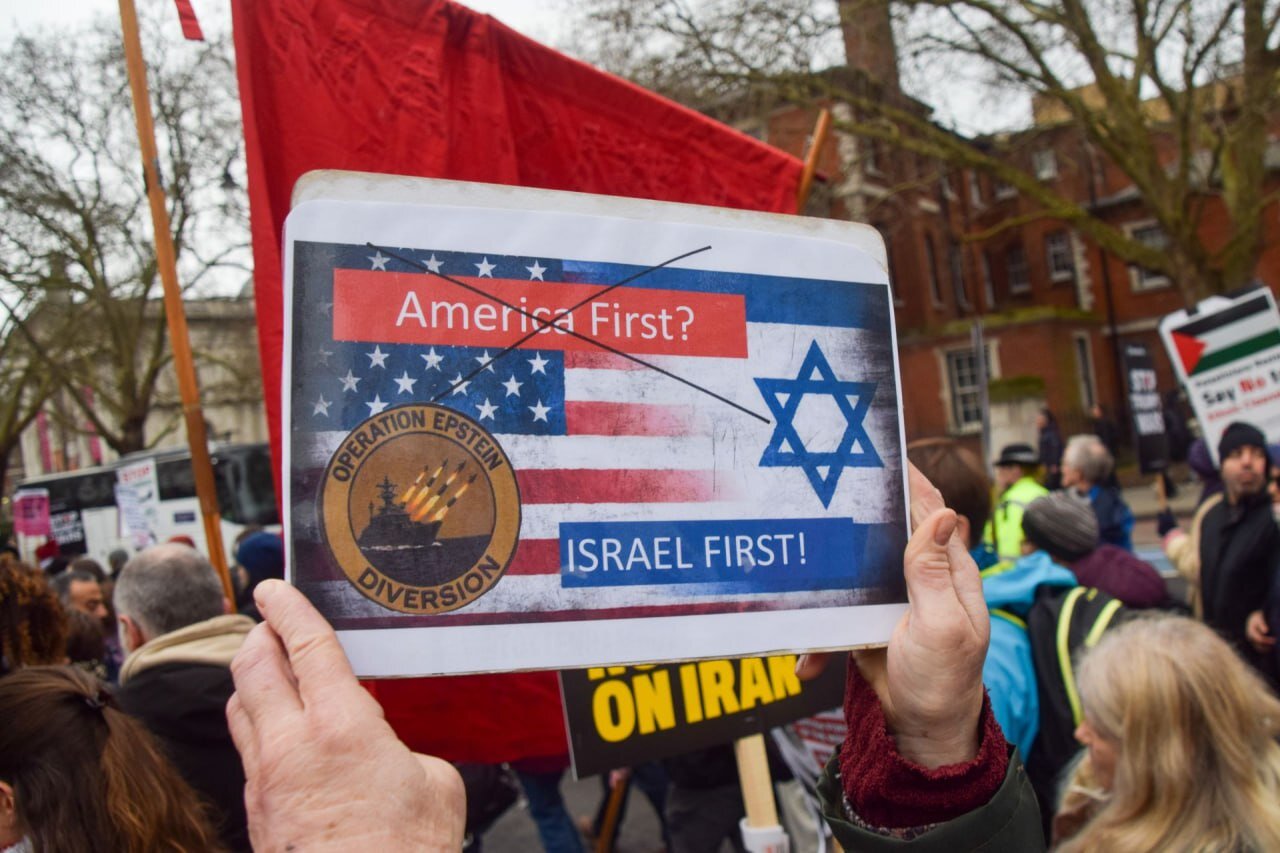
TEHRAN — Nearly nine months after the United States and Israel launched their joint war on Iran on Feb. 28, Washington is once again debating a new large-scale assault, and once again the pressure is coming from Tel Aviv.
According to U.S. and Israeli officials cited by The New York Times on Nov. 18 and Haaretz on Nov. 19, Prime Minister Benjamin Netanyahu is pressing President Donald Trump to join Israel in a four-to-seven-day campaign of airstrikes against Iran. Israeli planning, the reports say, includes renewed strikes on remaining nuclear sites and widespread attacks on energy infrastructure that could cut power to civilians — a step Trump has not yet approved.
It is a familiar pattern. Despite running on “America First,” Trump has twice taken America into Israel’s war, and critics in the U.S. itself now openly ask whether U.S. policy is “Israel First.” With Netanyahu demanding a third round, that question has become central to the debate in Washington.
A four-to-seven-day plan on Trump’s desk
The Times report says talks intensified last week when Mossad Director Roman Gofman met in Washington with CIA Director John Ratcliffe and later with U.S. envoy Steve Witkoff in Miami, while Military Intelligence chief Maj. Gen. Shlomi Binder also lobbied American counterparts to resume operations.
CBS News reported on Nov. 20 that Israel and the U.S. are considering a new assault in the short term. The stated Israeli concerns are Iran’s rapid rebuilding of ballistic-missile production and its move to shield nuclear and military infrastructure underground.
Trump himself has focused on what he calls “one or two” remaining targets, including the Pickaxe Mountain nuclear facility, and this week claimed without evidence that Iran may be seeking chemical or biological weapons. NBC News, cited on Nov. 24, said the administration is even discussing killing members of Iran’s leadership.
Trump has offered no clear decision. He told Fox News last week he still wants a deal that “will last,” but added: “I’m going to finish it off.”
Who is pushing the button in Washington?
The Associated Press reported on Nov. 2 that Netanyahu pushed for another wave of strikes after the Nov. 3 U.S. midterms during a weekend call with Trump, who would not commit. One official said Netanyahu was working with senior U.S. officials to persuade Trump to launch a quick but extensive air campaign.
AP reported on Nov. 19 that Persian Gulf states, Pakistan and Turkey have since engaged in concerted diplomacy, including calls with senior U.S. officials, to counter Netanyahu’s push and avert all-out war. Regional officials told AP they feared Gofman’s visit would tilt Trump toward restarting the war.
That lobbying is driven by politics as much as strategy. Netanyahu heads a caretaker government after losing his parliamentary majority in the Oct. 27 election. The Times reported on Nov. 24 that critics see his all-out push for war as inseparable from his bid to stay in power by forcing an emergency unity government under Gadi Eisenkot.
Israeli officials know the window may close in January, when Democrats take control of both houses of Congress, giving opponents far greater say over war funding. Defense Minister Israel Katz said on Nov. 24 that Israel and U.S. Central Command are “ready to attack Iran together. Operational plans are ready. President Trump will decide.”
Ynet reported on Nov. 11 that IDF Chief of Staff Lt. Gen. Eyal Zamir and other security officials have resisted a unilateral strike without clear U.S. backing, and that Washington blocked Netanyahu on at least one occasion.
Envoy remark lays bare logic
Nothing has crystallized the “Israel First” charge more than Israeli Ambassador to Washington Yechiel Leiter’s interview with Newsmax on Nov. 19.
Asked how U.S. troops could return home from mass deployment while Iran still supports its regional allies, Leiter replied: “You get American soldiers back here to the United States to their families when Iran is defeated.” He later clarified that defeat means full regime change in Tehran and called for U.S.-Israeli “resilience.”
The backlash was immediate and bipartisan. Veterans, military families and commentators from both the anti-interventionist right and the left accused a foreign diplomat of dictating U.S. deployments. Some wrote that American personnel were being treated as Israel’s property. Axios correspondent Barak Ravid said it was hard to overstate how negative the reaction was in the U.S.
Leiter tried damage control on Nov. 20, writing on X: “Only the president of the United States decides when and where American troops are deployed.” But as JNS and The Times of Israel noted, critics said the damage was already done.
Iranian Foreign Minister Abbas Araghchi mocked the remark: “We did not know that the Israeli Ambassador to Washington was the Commander-in-Chief of the U.S. military.”
Two wars for Israel, paid for by Americans
For many Americans, the envoy’s words confirmed what two rounds of war have cost them.
The U.S. conducted limited defensive strikes on the eve of the midterms, including a strike on a missile site on Qeshm Island in the Strait of Hormuz on Nov. 2. Iran retaliated with attacks on a U.S. air base in Kuwait and targets in Bahrain.
Indirect negotiations have failed to produce a ceasefire to reopen the Strait of Hormuz. Iran refuses to discuss its nuclear program unless the U.S. lifts its naval blockade and accepts other conditions, while Trump has threatened bridges and power plants but reportedly hesitated on oil infrastructure for fear of gasoline price spikes.
Some Republicans have blamed Israel for contributing to the party’s midterm defeat. Polling cited by U.S. media suggests the Iran war is deeply unpopular with the American public, who bear the costs in deployments, energy shocks and regional retaliation — while Israel presses for more.
Tehran warns of unrestricted response, keeps diplomacy open
Iran has responded to the threat of a third war with a dual message of deterrence and diplomacy, which is the focus of Tehran’s position.
Supreme Leader Ayatollah Mojtaba Khamenei told military chiefs on Oct. 31 that any new attack must be met with an “immediate, impactful and geographically unrestricted response” and ordered an expansion of target lists.
IRGC spokesman Hossein Mohebbi said the force is “100 percent ready,” while Army spokesman Mohammad Akraminia warned “the flames of war” would engulf a much wider area. Iranian officials have threatened to widen retaliation beyond Israel and U.S. bases in the Gulf to U.S. bases in Europe, Gulf energy infrastructure and undersea internet cables. Araghchi said Iran has upgraded weapons, fixed vulnerabilities and placed forces at highest readiness.
At the same time, Iran says it remains open to indirect talks through Qatari and Omani mediators. China announced it would send a special envoy to Iran, Oman and Saudi Arabia in mid-November. Tehran insists any ceasefire requires an end to hostilities on all fronts and an end to the U.S. blockade.
With Netanyahu fighting for political survival, Trump caught between deal-making and threats, and U.S. allies warning of catastrophe, the question is no longer whether Israel wants a third war. It is whether Trump, elected on America First, will once again put Israel’s objectives — regime change, destruction of nuclear and missile capacity, crippling of energy — above the interests of the American soldiers and voters who would pay for it.
If he does, Leiter’s slip may be remembered not as a gaffe, but as policy.
Disclaimer : This story is auto aggregated by a computer programme and has not been created or edited by DOWNTHENEWS. Publisher: tehrantimes.com