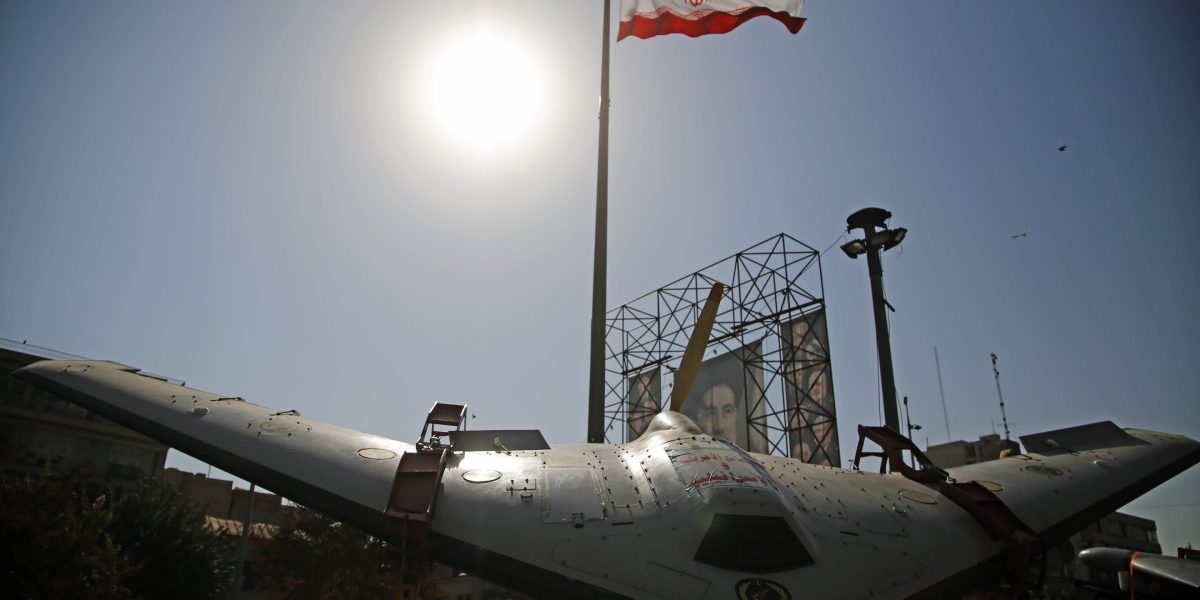
A classified Pentagon report this summer said Iran tapped into SpaceX’s Starlink satellite internet service without authorization to command its forces and oversee one-way drone attacks, among other uses, during the war against the U.S., sources told the Washington Post.
Starlink served as an alternative form of communication for Iran after the U.S. bombardment targeted traditional communications, the Post said, adding that the classified update on the war was provided to Defense Secretary Pete Hegseth.
“The Department is not aware of the report to OSW pertaining to this subject,” Pentagon Press Secretary Kingsley Wilson told Fortune in a statement, referring to the office of the secretary of war.
In early March, days after the U.S. and Israel launched attacks against Iran, SpaceX concluded Iran had exploited Starlink for its own military, angering CEO Elon Musk.
That came after an Iranian drone struck a U.S. military base in Port Shuaiba, Kuwait, on March 1, killing six U.S. troops. Within hours of the attack, SpaceX imposed identity-verification requirements for aircraft flying more than 100 mph, sources told the Post.
Weeks after the Port Shuaiba, SpaceX added restrictions on Starlink’s sales network to prevent terminals from falling into the wrong hands, and paused a resale program that had allowed authorized resellers to distribute terminals to sub-resellers, according to the article.
SpaceX didn’t immediately respond to a request for comment.
While SpaceX could deactivate terminals in Iran, dissidents and ordinary Iranians are using them to bypass internet controls. Before the war started, SpaceX offered Starlink service for free to Iranians with a terminal after the regime shutdown the internet in the country during its deadly crackdown on protestors in January.
Sources told the Post that it’s nearly impossible to prevent any public Starlink terminals from being used by U.S. adversaries.
U.S. uses cheaper version of Starshield for LUCAS drone
Separately, the Post also reported that Musk was angry in early March about the Pentagon’s use of Starshield, the military version of Starlink, for a low-cost U.S. attack drone known as LUCAS.
That’s because the Pentagon’s Starshield subscription was for land-based uses, not for aerial systems. Sources told Reuters in May that SpaceX executives argued the military had been paying about $5,000 for connection per terminal while using a higher tier of service worth nearly $25,000.
The Pentagon countered that the $25,000 monthly fee was meant for aircraft, not one-way attack drones, according to Reuters.
As drones and space-based communications have emerged as critical capabilities in modern warfare, SpaceX has similarly been drawn into Russia’s war on Ukraine.
In February, SpaceX cut off Starlink access to Russian troops by shutting down terminals not on a “whitelist” of authorized users.
Russian drones became severely limited, allowing Ukrainian forces to inflict heavy losses on and take back some territory.
But more recently, Ukraine has complained that its Starlink service has been sharply throttled, slowing down links with drones and making them much less effective.
In two instances this fall, Ukrainian forces reported speed limits of 100 miles an hour on their terminals. That makes Kyiv’s attack drones easier to shoot down and interceptors unable to stop incoming Russian drones.
While neither SpaceX nor the U.S. government has taken responsibility, Musk said Starlink satellites aren’t meant for deadly drone strikes.
“What you see is a gradual loss of efficiency. Fewer opportunities. More work for the same result,” a Ukrainian drone pilot told the Wall Street Journal.
Disclaimer : This story is auto aggregated by a computer programme and has not been created or edited by DOWNTHENEWS. Publisher: fortune.com