TEHRAN – Iran is among 10 countries worldwide possessing the technology to produce allograft tissue products, which are widely used in a range of surgical procedures, including neurosurgery, orthopedics, urology, gynecology, maxillofacial surgery, plastic surgery and wound reconstruction.
Domestically manufactured allografts have also significantly reduced the cost of certain medical procedures, replacing products that were previously imported at prices of around 20,000 euros with locally produced alternatives costing approximately 90 million rials (about 42 euros), according to a report by ISNA.
Masoumeh Majidi, a faculty member at Tehran University of Medical Sciences, explained that allograft products are derived from donated human tissues, primarily obtained from brain-dead donors who have consented to tissue donation or whose families have authorized the donation.
Following the procurement of organs such as the kidneys, heart and lungs for transplantation, other tissues, including skin, bone, tendons and muscles, can also be recovered, processed and prepared for use in various surgical procedures.
These tissues serve a wide range of medical applications, providing surgeons with biological materials for reconstructive procedures and the repair or replacement of damaged tissues.
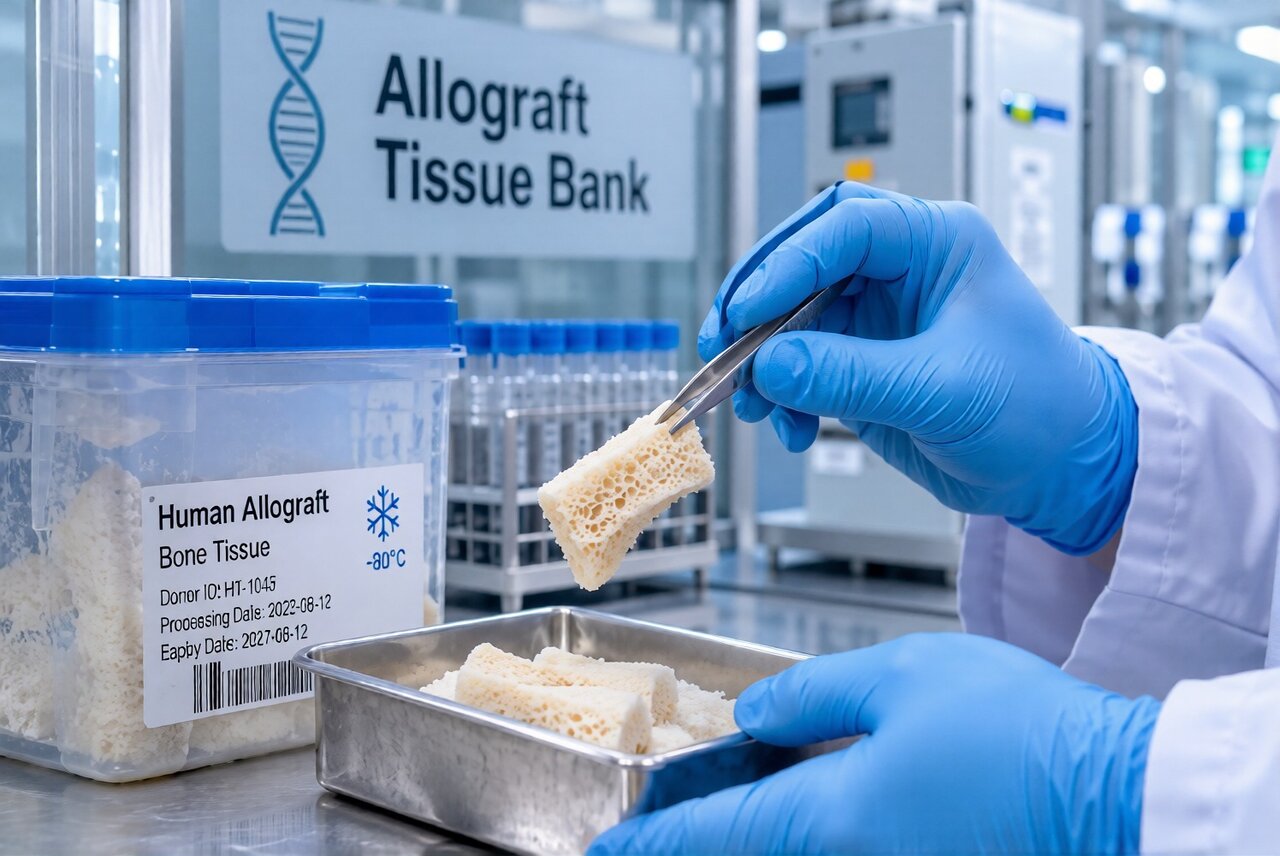
Majidi said bone-based graft products are manufactured in different sizes and forms and supplied to neurosurgeons, orthopedic surgeons and maxillofacial specialists, allowing them to select suitable materials according to patients’ needs and the requirements of individual procedures.
She added that approximately 3,000 transplant procedures are performed annually using these products.
Highlighting Iran’s position in the field, Majidi said the technology for producing allograft tissue products is currently available in nine other countries, placing Iran among the world’s 10 technology-holding countries in this area.
Unlike synthetic materials made from plastics or polymers, allografts are derived from human tissues and are prepared for transplantation into another person. Their biological origin makes them valuable materials in procedures requiring tissue reconstruction, structural support or tissue replacement.
However, preparing human tissues for transplantation involves sophisticated scientific and technical processes, she noted, emphasizing that tissue procurement alone is not sufficient to ensure successful transplantation.
The tissues must undergo specialized processing and preparation to ensure their safety, quality and suitability for transplantation, while preserving properties necessary for their intended clinical applications.
Iran’s tissue banking and processing capabilities have developed over the years, enabling the production of a variety of grafts, including bone, cartilage, skin, tendons, heart valves and pericardial tissues.
Research published by Iranian specialists has also documented the country’s tissue-processing infrastructure and the procedures involved in tissue recovery, donor screening, processing, preservation, sterilization, storage and distribution.
The development of locally manufactured tissue grafts has helped reduce reliance on imported products and broaden access to specialized surgical materials, particularly in procedures where suitable biological tissues are essential.
Majidi said the scientific expertise and technological capabilities developed in this field have made it possible to prepare tissues donated by one individual for therapeutic use in another, offering treatment options for patients requiring reconstructive or restorative surgery.
Disclaimer : This story is auto aggregated by a computer programme and has not been created or edited by DOWNTHENEWS. Publisher: tehrantimes.com