The 158-year-old Tata Group, which has been a witness to the entire modern history of India and has weathered many vicissitudes of fortune, is once again at a crossroads — the board of Tata Sons will meet on Monday to decide on the RBI-mandated public listing, which could change the very nature of its ownership structure.
Hyderabad: The 158-year-old Tata Group, which has witnessed the entire history of modern India and gone through sharp vicissitudes of fortune, is at a crossroads once again — the board of Tata Sons will meet on Monday to decide on the RBI-mandated public listing, which will change the very nature of its ownership structure.
The issue stems from the Reserve Bank of India’s classification of Tata Sons as an Upper Layer NBFC in September 2022, which required the company to list by September 2025. Despite attempts by Tata Sons, including those made under the leadership of its late patriarch Ratan Tata, to avoid public listing, the RBI has reiterated that listing is mandatory.
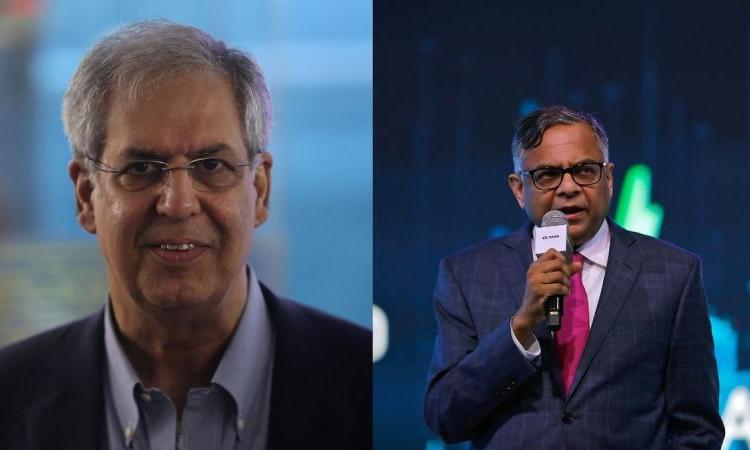
After Ratan Tata’s death, most of Tata Sons’ directors appear to have turned favourable to the listing, leaving Noel Tata, the chairman of Tata Trusts, as a lone dissenter. Noel Tata claims that Tata Sons, a majority stake in which is owned by philanthropic trusts, should not succumb to competitive market forces and insists that alternative ways must be explored to keep Tata Sons’ ownership structure as it was.
Two Tata Trusts, which together hold about 30 per cent stake in Tata Sons, moved the Bombay High Court but failed to secure a stay on the board meeting. The court, however, made the meeting’s proceedings subject to the outcome of the pending interim applications.
This pits the majority of members of the Natarajan Chandrashekharan-led Tata Sons board against the majority owners, i.e. shareholders, represented by the Noel Tata-led Tata Trusts. The board of directors has six members: two executive directors (Chandrashekharan and Saurabh Agrawal), two directors appointed by Tata Trusts (Noel Tata and Venu Srinivasan) and two independent directors (Harish Manwani and Anita George).
The Tata Group faced a similar crisis about 30 years ago, when young Ratan Tata, who succeeded the legendary J.R.D. Tata as Tata Sons chairman in 1991, faced resistance from entrenched satraps of group companies such as Russi Mody, Darbari Seth, and Ajit Kerkar. However, it took Ratan Tata four years to settle the leadership issue in the group. He later strengthened the Tata brand and expanded its global footprint.
The current issue, however, is much more complicated as the Tata Sons board itself and the two members appointed by Tata Trusts are split. The RBI’s directive and Tata Trusts’ insistence on the affirmative voting of a majority of its nominees make the issue more difficult.
Affirmative voting emerges from Article 121 of the Articles of Association of Tata Sons. According to Article 121, the Tata Sons board must obtain the concurrence of a majority of Tata Trusts’ nominees.
The validity of these affirmative voting rights was upheld by the Supreme Court in its March 26, 2021, judgment in the Cyrus Mistry case. However, whether a chairman’s casting vote can override the affirmative voting requirement remains a disputed legal question.
When the Trusts’ nominees were split on extending Chandrashekharan’s tenure, the chairperson used his casting vote during the September 17 board meeting.
This scenario may recur during Monday’s board meeting, with two Tata Trusts nominees — Noel Tata and Venu Srinivasan — divided over the issue. Srinivasan supports the listing, while Noel Tata opposes it, splitting them vertically in a 50:50 ratio.
Noel, however, insists that the chairman’s casting vote cannot override the affirmative voting requirement under Article 121, an interpretation contested by Tata Sons. The issue is now before the Bombay High Court.
Even if the board crosses this hurdle, Tata Sons needs shareholder approval for its conversion into a public company under Sections 13 and 14 of the Companies Act, 2013, through a Special Resolution.
Under Section 114(2), such a resolution requires at least 75 per cent of the votes cast to be in its favour — a requirement that cannot be met if Tata Trusts, which collectively hold about 66 per cent of the company’s shares, vote against it.
The Maharashtra Charity Commissioner’s May 15 order, which directed the deferment of meetings of the Sir Ratan Tata Trust (SRTT) pending an inquiry, further compounds the issue. Under its Articles of Association, Tata Sons cannot constitute the quorum for a general meeting without the presence of an authorised representative jointly nominated by the Sir Dorabji Tata Trust (SDTT) and the Sir Ratan Tata Trust (SRTT), unless it secures appropriate legal relief.
As all these issues involve boardroom negotiations and potential legal challenges, an immediate resolution may not be possible unless every stakeholder agrees to a compromise. Until then, employees and other stakeholders of over 100 Tata Group companies will be glued to the corporate drama, learning new legal concepts each day.
The RBI mandate for the public listing of Tata Sons faces two deadlocks — Affirmative voting and shareholders’ approval.:
The Articles of Association of Tata Sons requires affirmative voting by a majority of the Tata Trusts’ nominees present. Noel Tata opposes listing; Venu Srinivasan supports it. Even if the board approves by majority, the decision could face a deadlock over affirmative voting.
Converting Tata Sons into a public company requires a Special Resolution by shareholders. At least 75 per cent of votes cast must favour the resolution. Tata Trusts can block it if they collectively vote against it.
Disclaimer : This story is auto aggregated by a computer programme and has not been created or edited by DOWNTHENEWS. Publisher: deccanchronicle.com