
THEATRE
A Christmas Carol ★★★★
Comedy Theatre, until December 24
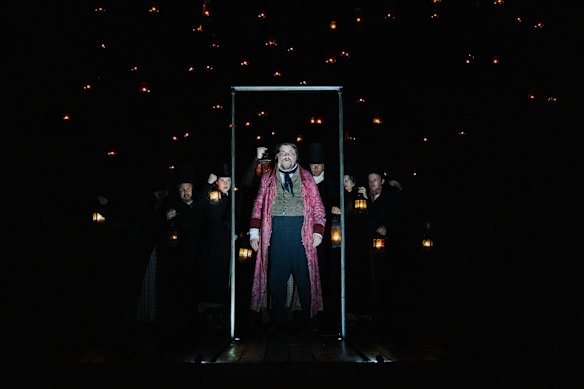
For a fourth year, A Christmas Carol graces the stage in Melbourne’s East End theatre district. The show has firmly established itself as a family-friendly tradition, and it delivers Charles Dickens’ festive ghost story with such charm that it’s impossible to be jaded or selfish or unmoved to charity in its presence, however Scrooge-like you may be.
Lachy Hulme plays Scrooge as a kind of Santa-gone-wrong.Credit: Michelle Hunder
Dickens’ parable was always designed to awaken social conscience. In his own time, the 1834 Poor Law slashed the cost of poverty relief by forcing able-bodied paupers into workhouses, where they performed hard labour under nightmarish conditions in exchange for food and shelter.
In ours, one-third of Australian households faces food insecurity, according to the 2025 Foodbank Hunger Report, and this production has encouraged audiences over the years to donate millions to FareShare – a charity that prepares and distributes meals to those doing it tough at Christmas.
As Dickens put it in the original story: “I have always thought of Christmas … [as] a time when men and women seem by one consent to open their shut-up hearts freely, and to think of people below them as if they really were fellow-passengers to the grave, and not another race of creatures bound on other journeys.”
That’s an insight the inveterate miser Ebenezer Scrooge must be haunted into having for himself, over and again, and the one thing the show does change up every year is the celebrity playing Scrooge.
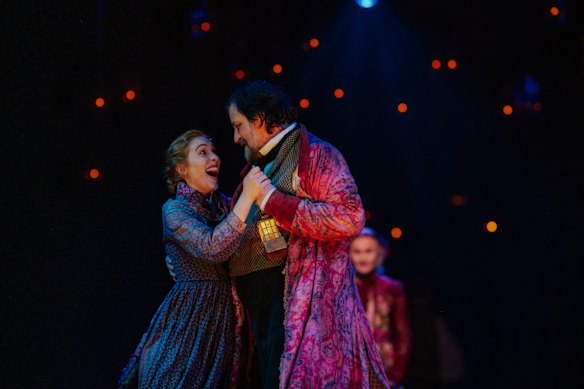
Claire Warrwillow and Lachy Hulme in a scene from the 2025 season of A Christmas Carol.Credit: Michelle Hunder
Each actor who’s tackled the role has put a distinctive spin on the character’s unlikely road to redemption. David Wenham (2022) gave us a crusty, broken-hearted romantic. Game of Thrones star Owen Teale (2023) hid Scrooge’s sorrow behind a wall of rage so high he looked set to behead Christmas itself. And last year, Erik Thomson (Hercules, Xena: Warrior Princess) played Ebenezer as an emotional shut-in, flinching at even the suggestion of vulnerability in others, lest he be compelled to accept his own humanity.
Lachy Hulme is as suited to baddies as heroes – playing Immortan Joe in Mad Max: Furiosa (2024), and Macduff in a 2006 film of Macbeth set in Melbourne’s criminal underworld – and his Scrooge holds a dark mirror to the spirit of Christmas.
This is Ebenezer as a kind of Santa-gone-wrong. It’s as if the big guy with the sack had been suddenly made redundant as a young Mr Claus in the gig economy, only to moonlight as a moneylender for so long that the mask became his face.
That’s fascinating to watch and makes Scrooge’s improbable transformation seem weirdly plausible, as his myopically misplaced nobility gets transferred from the world of transaction to one of emotional connection.
As always, Matthew Warchus’ production is a bell-ringing, carol-singing delight. I’ve seen it four times now, and if it continues to be a feature of my own Christmases – past, present, and future – I’ll count myself lucky.
With uplifting music and dance, elegant costume and design, a spot of audience participation, buoyant performances, and a swiftly paced narrative, it’s a perfect Christmas gift for theatre lovers of all ages.
Reviewed by Cameron Woodhead
MUSIC
Franz Ferdinand ★★★★
Live at the Gardens, Royal Botanic Gardens, November 28
It’s a Friday night in Melbourne at the edge of summer – so naturally, the outfit du jour is raincoats and ponchos. Drizzle turns into a steady downpour through the night, but Scottish band Franz Ferdinand feels right at home – “like playing in a park in Glasgow,” says frontman Alex Kapranos.
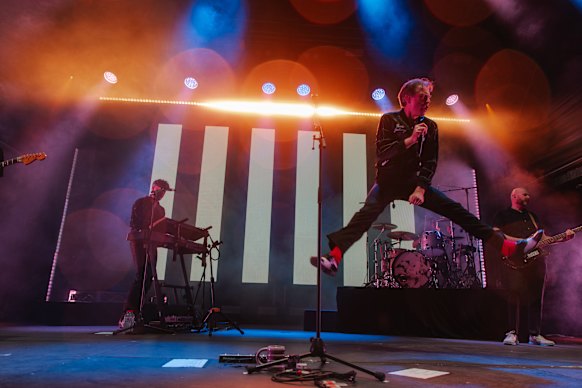
Franz Ferdinand perform at Live at the Gardens on Saturday night.Credit: Richard Clifford
A bit of rain doesn’t deter the band, or the crowd, from partying like it’s 2004.
Franz Ferdinand were poster boys for what’s affectionately (or derisively, depending on who’s saying it) referred to as “indie sleaze” – that noughties era of angular guitar, skinny jeans and an insatiable thirst for the dancefloor. Kapranos, one of two remaining original members, might be in his 50s now, but all that means is that he’s grown even further into his sonorous baritone, always rich beyond its years.
The band released its sixth album, The Human Fear, this year. It’s a mixed bag: some songs, such as the hammy Hooked, are better forgotten. Others include flashes of new and old inspiration – on Black Eyelashes, Kapranos nods to his Greek heritage by playing a bouzouki, which also makes an appearance in the live set. At one point in the evening, all five musicians play the drum kit together.
Unsurprisingly, it’s the earlier hits that get the loudest cheers: No You Girls and Do You Want To are as irresistible and hook-laden as ever.
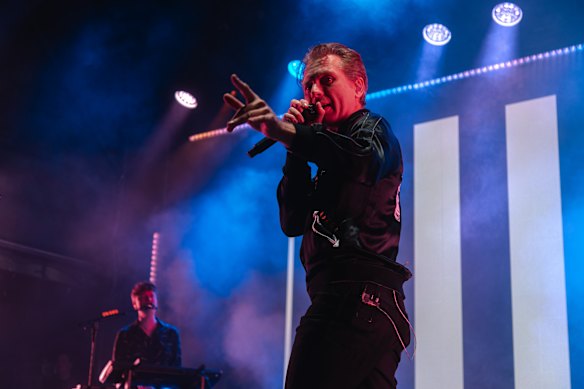
Alex Kapranos and the band – or the crowd – aren’t deterred by a bit of rain.Credit: Richard Clifford
There’s a bit of self-indulgence on display – the instantly recognisable introduction of the band’s best-known track Take Me Out is drawn out for over a minute – but all is forgiven when it rumbles into its iconic tempo shift, building towards what remains one of indie sleaze’s finest moments.
The show goes on afterwards, but it’s hard to beat hearing a song like that live, dancing ourselves clean in the pouring rain and feeling the years wash away.
Reviewed by Giselle Au-Nhien Nguyen
THEATRE
Nihilistic Optimism on Trampolines ★★
Theatre Works, until December 6
Kasey Barratt’s Nihilistic Optimism on Trampolines takes a seminal moment in the history of gothic literature – the writing of Mary Shelley’s Frankenstein – and reimagines it unfolding in the present day … at a trampoline park during a thunderstorm.

Nihilistic Optimism on Trampolines at Theatre Works is an imaginative retelling of Frankenstein.Credit: Sian Quinn Dowler
The show stitches together unlikely elements – trampolining, TikTok-length choreography, a live rock band, and an original play spliced with excerpts from Shelley’s novel and letters – and I admired the boldness, ambition and willingness to experiment that this young ensemble brings to the lab.
Is it any good? Not really. It’s a strange and misshapen creation which, unlike Mary Shelley’s classic, often feels like less than the sum of its parts.
Famously, Mary began to write Frankenstein aged 18, as part of a ghost story competition initiated by Lord Byron at Lake Geneva in the summer of 1816. (The event also birthed the first vampire fiction in English, John Polidori’s The Vampyre.)
Barratt morphs the figures present – Mary (Gabrielle Ward), her fiance Percy Shelley (Bek Schilling), her stepsister Claire Clairmont (Sophie Graham Jones), Lord Byron (Eleanor Golding) and Byron’s doctor John Polidori (Zoe Wakelin) – into bored employees at Trampoline World.
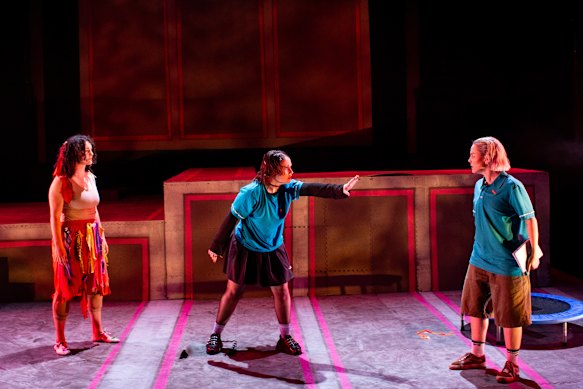
The show – set in a trampoline park – stitches together unlikely elementsCredit: Sian Quinn Dowler
A lackadaisical teen movie vibe cuts against gothic atmospherics, and Barratt’s script spends too long establishing the cheerless routines and post-industrial ennui of young drudges at a leisure park. Most of the water cooler conversation, petty power plays and furtive work flings aren’t especially funny or dramatically compelling, though occasional flashes of camp do lighten the drear.
Things pick up when Victor Frankenstein’s creature (Jett Chudleigh) boings into view. Encounters between the young author and her creation, using dialogue from the novel as well as physical theatre and dance, have an eerie lustre.
Yet somehow the act of reassertion in the face of a historical erasure (Percy Shelley was originally credited as the author of Frankenstein) doesn’t go all-in.
The climax is shadowy and under-realised, and I would have loved to have seen the monster go on a murderous rampage against the male characters (most played in drag) and for feminist fury to be unleashed with maximal force through text and stage action.
Part of the problem is an inexperienced cast. Performance elements from choreography to microphone technique could use more precision and confidence. And the script, too, needs to refine its themes and junk ineffective dialogue.
These artists may have a long way to go, but they’ve a long time to get there. And the range of talents on display – from the athleticism of the trampolining to the three musicians jamming live accompaniment – bodes well for developing a unique theatrical style.
Reviewed by Cameron Woodhead
MUSIC
Mirra – Norwegian Tradition Reimagined ★★★★
Primrose Potter Salon, Melbourne Recital Centre, November 27
Growing up in the Hardanger fjord region in Norway’s west, Benedicte Maurseth developed twin passions that have continued to propel her creative vision and career. One is the traditional nine-string Hardanger fiddle; the other is the natural beauty of the vast Hardanger mountain plateau.
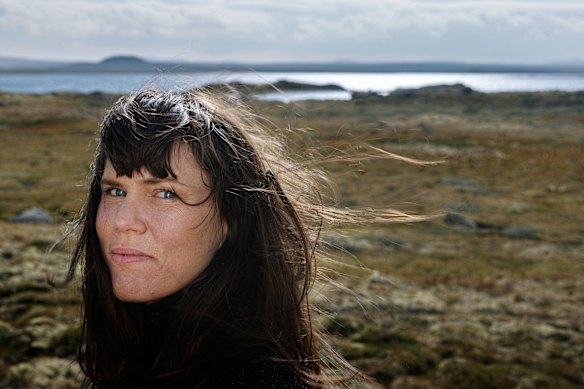
Benedicte Maurseth’s latest album, Mirra, is inspired by wild reindeer.Credit: Agnete Brun
These two passions are directly intertwined on Maurseth’s latest album, Mirra, inspired by the habitat, behaviour and migration patterns of wild reindeer.
At the Recital Centre on Thursday, Maurseth led a superb quartet through a program that – like the album – followed a seasonal cycle. We began in the depths of winter, where reindeer run in circular patterns to keep warm, or lie perfectly still in the snow as the wind whips over them. Mats Eilertsen’s bowed bass harmonics and Håkon Mørch Stene’s rolling percussion suggested the former, while Morten Qvenild’s glistening electronics and Maurseth’s graceful fiddle phrases effortlessly evoked the latter.
Spring brought new life (The Calf Rises) with a ravishing fiddle and piano duet, while Summer Pastures coaxed the music into more rhythmic territory, with electric bass, insistent vibraphone and a trance-like, minimalist drum pattern. Reindeer Call included the sampled voice of a reindeer herder, nestled within a thicket of abstract, improvised textures that gradually coalesced into a slow, shadowy Hunting March.
The reindeer nudged themselves into the foreground at various times (via field recordings of their communicative grunts), as did other native wildlife from the Hardanger region. Heilo featured the cawing of the Eurasian plover as a recurring motif, buoyed by Maurseth’s fiddle as it glided weightlessly on invisible thermals.
Often, one composition segued into the next without pause, adding to the sense that we were immersed in this mysterious and awe-inspiring landscape. Occasionally, the electronic elements dominated and overwhelmed the sound of the fiddle, smothering the resonant shimmer of its sympathetic strings. But for the most part, this was an utterly entrancing evocation of the natural world in all its fierce beauty, majesty and vulnerability.
Reviewed by Jessica Nicholas
The Booklist is a weekly newsletter for book lovers from Jason Steger. Get it delivered every Friday.
Most Viewed in Culture
Disclaimer : This story is auto aggregated by a computer programme and has not been created or edited by DOWNTHENEWS. Publisher: www.smh.com.au





