
Battles over noisy pets, quarrels over parking spaces and barneys over building bylaws are among a rising number of disputes unfolding between neighbours in NSW’s strata properties.
The state’s regulator recorded an 11 per cent surge in the number of disputes requiring mediation in the last financial year, with more than 1.2 million residents now living in strata properties – most often units or townhouses with a common area.
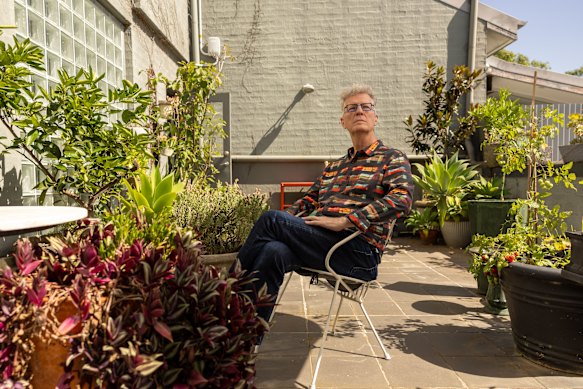
Darlington resident David Glover said disputes can be challenging to navigate for both strata bodies and unit owners.Credit: Sam Mooy
Fair Trading NSW received 2761 applications to mediate strata disputes in 2024-25 – an average of 53 per week and up 11 per cent from the 2490 applications in the previous 12-month period.
In the last financial year a total of 67 per cent of disputes were resolved through mediation, which is a mandatory first step partly aimed at avoiding the need for owners having to seek hearings in the NSW Civil and Administrative Tribunal.
The tribunal heard 1276 matters over the same period. Not all matters are heard in the year they are filed.
In August the tribunal ordered two residents of a Fairlight building to stop parking their pram and e-bike in the common area after the building’s owners corporation complained the wheeled devices had become a “nuisance” and “trip hazard” for other occupants of the 21-unit building.
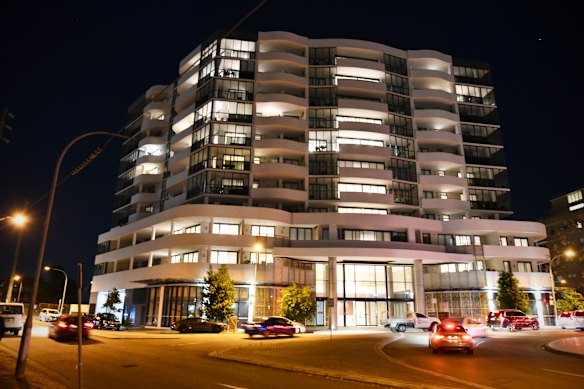
Strata living is becoming a reality for an increasing portion of Sydneysiders.Credit: Dean Sewell
A resident in a Brighton-Le-Sands apartment building tried to have a neighbour’s dog removed for incessant “barking noise”.
The owners corporation of a Newport building successfully applied for orders to stop one resident lighting up on his balcony, arguing the smell of tobacco smoke was leaving other residents with an intolerable “taste of cigarette smoke in their mouths”.
Coogee resident Lisa Brown was involved in a long and expensive dispute with her building corporation, which unsuccessfully sought orders by the tribunal to stop her installing an air-conditioning unit, claiming it would “diminish the peaceful enjoyment” of the property.
“My building gets absolutely freezing in winter and there was never a building rule saying I couldn’t install the air-conditioner, but the strata corporation still took it to the tribunal and fought it all the way,” Brown said. “It costs thousands of dollars and took almost a year to get resolved – just to put in an air-conditioning unit.
“It was a traumatic process and I found myself peeking out my door every time I wanted to leave home, just so I didn’t bump into one of my neighbours who took the complaint.”
A Fair Trading NSW spokesman said the most common disputes in the past year included disagreements over maintenance of common property, breaches of bylaws, and disputes over building damage and repairs.
Sydney lawyer Allison Benson, who runs a firm specialising in strata and community title law, said disputes can be a confusing process for owners to navigate, partly due to the complexities of strata law.
Benson said the high-density living environments of strata properties heighten the potential for conflicts between owners with differing expectations.
“Disagreements can be straightforward to resolve if the issue is black and white, such as if water is leaking into a unit. Where the process becomes challenging is when emotions are driving those disputes,” she said.
“In many cases, disagreements have been simmering for long periods of times between neighbours, sometimes words have been exchanged in hallways or in a car park, and that can make finding a resolution through mediation harder.”
David Glover, managing director of the Owners Corporation Network, said the dispute resolution process can be equally challenging for building owners corporations.
Glover, who serves on the strata body of his Darlington apartment building, believes the process could be streamlined if binding orders could be issued as part of the mediation process, negating the need for disputes having to be heard by the Civil and Administrative Tribunal.

David Glover, pictured at his Darlington strata property.Credit: Sam Mooy
“There’s a big gap between the mediation service and the tribunal, and it can be an expensive and time-consuming process for building corporations, particularly when disputes are vexatious or taken [to the tribunal] by intractable owners,” he said.
A Fair Trading NSW spokesman said the department is finalising reforms aimed at reducing mediation wait times. A new mandatory training system for members of strata committees is also due to come into effect next year.
Recent planning reforms by the NSW government aimed at boosting housing density are expected to drive an increase in registered strata dwellings in NSW, with 50 per cent of Sydneysiders forecast to live in strata homes by 2040.
Start the day with a summary of the day’s most important and interesting stories, analysis and insights. Sign up for our Morning Edition newsletter.
Most Viewed in National
Disclaimer : This story is auto aggregated by a computer programme and has not been created or edited by DOWNTHENEWS. Publisher: www.smh.com.au







