
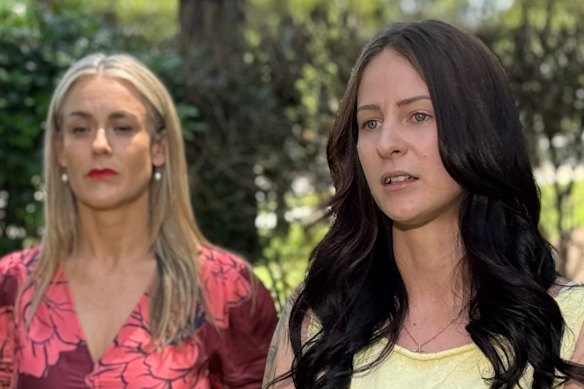
Brisbane mother Logan Bell found herself sleeping rough with her seven-year-old daughter earlier this year after fleeing a domestic violence relationship.
After couch-surfing with friends, she went to Micah Projects in July, and they organised emergency accommodation.
Bell worked two jobs, studied full-time and looked for housing during the three months she spent living in a hotel with her daughter.
Single parent Logan Bell is one of thousands of low-income earners struggling to afford basic living expenses, QCOSS says.Credit: Courtney Kruk
“I was spread so thin, I could barely attend inspections myself,” she said.
“When I was going to inspections and when I was in emergency accommodation, there were so many other disadvantaged families like myself.”
Bell has since found a rental in Brisbane, but can only afford it because she shares with another person. Even with that support, she is still spending 50 per cent of her income on rent, and struggling to afford other necessities.
“I’m a single mum, I’m working and I do get Centrelink benefits, so I’m literally making as much money as I can in my circumstance,” Bell said.
“And I still was not able to secure any housing [on my own].”
Bell is one of thousands of low-income earners in Queensland unable to cover basic living expenses such as rent, food and healthcare, according to a new report released on Monday by the state’s peak body for social services.
The Queensland Council of Social Service’s 2025 Living Affordability Report shows families with children and single parents the hardest hit by cost of living pressures, with some in debt nearly $300 per week.
The report analysed five model families – a single adult on JobSeeker; a single student; a single parent with two children; a couple with two children; and a single couple on the Age Pension – to determine whether low earners can afford the basic standard of living.
Only pensioners were found able to afford basic needs, with all other modelled households in weekly budget deficits between $17 and $277.
Some low-income households reported paying more than half their income in rent, with tens of thousands waiting for social housing.
Education expenses, food affordability and reduced bulk-billing services were also of concern.
QCOSS chief executive Aimee McVeigh said housing was the biggest cost of living issue in Queensland, as it was virtually impossible for a low-income family to secure an affordable rental.
“Keeping a roof over your head has become out of reach for so many working families, and yet the state government hasn’t reviewed eligibility for social housing in two decades,” McVeigh said.
“In addition to that, in the last 12 months, we’ve seen them wind back eligibility for crisis housing support.”
QCOSS called on both levels of government to give Queensland children equitable access to health, education and housing, by raising the income support rate and developing a families strategy.
“What we’ve seen year-on-year since COVID is that cost of living pressures are putting incredible strain on families with children,” McVeigh said.
“We have almost 100,000 single parent households who year-on-year are struggling to afford the basics, [and we] have a generation of children in Queensland who are growing up without access to a roof over their head, three meals a day, and proper healthcare.
“With families facing another bleak Christmas, it is time we recognise the immediate and long-term impacts of poverty and disadvantage to children.”
Start the day with a summary of the day’s most important and interesting stories, analysis and insights. Sign up for our Morning Edition newsletter.
Most Viewed in National
Disclaimer : This story is auto aggregated by a computer programme and has not been created or edited by DOWNTHENEWS. Publisher: www.smh.com.au


