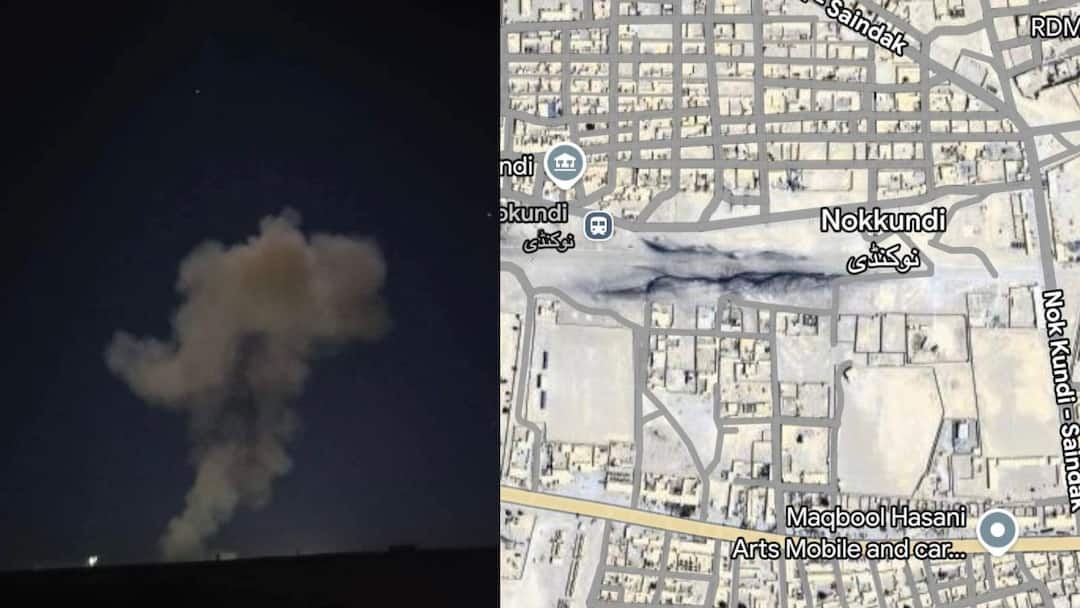
A major suicide attack in the Nokkundi area of Balochistan by Baloch insurgents targeted a compound for foreign experts, engineers, and staff associated with the Reko Diq and Saindak mining projects near the Frontier Corps (FC) headquarters on Sunday night. According to information, Baloch insurgents first detonated five large explosives at the sensitive compound and then opened fire on security personnel. The attack occurred at around 9 PM IST and was still continuing as of 12:45 AM IST on Monday.
Baloch Liberation Front (BLF) claimed responsibility for the attack, and its spokesperson, Major Gwahram Baloch, said the assault was carried out by the group’s Sado Operational Battalion (SOB) unit on the compound of the foreign staff and engineers related to the Saindak and Reko Diq projects. While official casualty figures have not yet been released by Pakistani authorities, media reports indicate that emergency services have been declared in all district hospitals in Chagai, where the attack took place.
Attack At ‘Safest’ Site
The most alarming aspect of the attack is that it took place in an area Pakistan has been touting globally as the “safest” site for foreign investment. Despite promoting the Reko Diq and Saindak projects as secure destinations for international capital, Pakistan’s own security apparatus failed to protect the compound.
In June, during a meeting with US President Donald Trump at the White House, Pakistan’s Field Marshal Asim Munir formally invited the US to invest in the Reko Diq mine. The Pakistani government continues to claim that Reko Diq contains one of the world’s largest untapped gold and copper reserves, valued at billions of dollars, yet this attack starkly highlights the fragility of such assurances.
Pakistan’s Loan For Reko Diq Project
Recently, Pakistan also secured a loan of more than PKR 35,000 crore from the US Export-Import Bank (EXIM) for the Reko Diq project. However, the recent suicide attack on the foreign staff compound exposes glaring security failures and raises serious doubts about the Pakistan Army’s ability to protect such high-profile international investments.
Pakistan, a nation long exposed for exporting terrorism worldwide, is now paying the price for its own policies, facing a severe internal security crisis as terrorist groups it once nurtured and trained turn against the state. The situation has worsened drastically since Asim Munir assumed the role of Chief of Army Staff in 2022. Elevated to Field Marshal in May and then appointed Chief of Defence Forces in November, Munir has overseen a period in which Pakistan’s own militancy network is running increasingly out of control.
Earlier, on November 24, a similar suicide attack struck the FC headquarters in Peshawar, claimed by TTP’s proxy group Jamaat-ul-Ahrar. In the past ten days, Pakistani forces have killed 30 militants affiliated with TTP, including Abu Dujana alias Ali Hamdan from Bahawalpur, and Mohammad Harris from PoK. Both had been trained by Pakistan’s state-sponsored terrorist group Jaish-e-Mohammad (JeM) for terror operations in India, but they later joined TTP and turned their weapons against Pakistan’s own military, exposing the catastrophic failure of the state’s decades-long policy of nurturing terrorism.
Disclaimer : This story is auto aggregated by a computer programme and has not been created or edited by DOWNTHENEWS. Publisher: abplive.com