
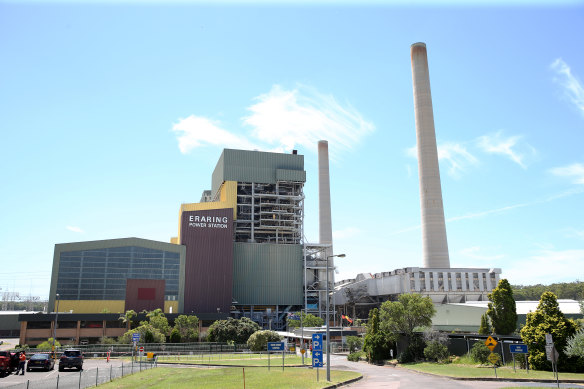
Energy industry insiders who understand the complex transition to renewables won’t raise an eyebrow around the latest warnings that the closure date of Australia’s biggest coal-fired power plant Eraring may need to be extended.
It’s the dirty little secret that the Australian Energy Market Operator (AEMO), the NSW state government, the power plant’s owner Origin, and in fact the entire industry has seen coming for a while. And there has been no shortage of hints along the way.
While no one is saying definitively that the 2027 date for the closing-down party has changed, there is now an inevitability about it.
Eraring is the biggest power station in the country.Credit: Peter Lorimer
Energy transmission has become one of the hottest and most politicised issues in Australia, so warning bells about the possibility of blackouts in the event of the planned decommissioning of coal power stations fuel a blame game. It also confuses the average Australian who just wants reliability and an electricity bill without sticker shock.
Australians generally have also been happy customers on the ride to renewable energy, with large numbers installing solar panels and batteries thanks to generous financial assistance from governments.
Energy companies have also largely embraced the transition to renewables, investing billions over the past decade in wind solar and batteries. But more is needed at a time when construction costs and shortages are hitting all industries.
Industry has invested heavily in renewables despite the roadblocks provided by more than a decade of inconsistent government policies around how to deal with decarbonisation. Evidence of this became clear last week when the two major federal political parties were at odds on timelines for moving to net zero.
Federal Opposition Leader Sussan Ley used AEMO’s warning about the potential delayed closure of Eraring to push her party’s policy credentials, while former National Party leader Barnaby Joyce joined the fray with his shrill suggestion that the Coalition has failed by not building new coal-fired power plants.
Soap boxes aside, there is recognition from industry experts that there is a clear need for additional investment in renewables but that the largest choke-point in the transition is actually transmission – more particularly, the grid.
In NSW, government-owned Transgrid has been working to get essential high voltage pieces of equipment installed. Called Syncons, they are described as the spinning wheels that are needed to stabilise the electricity grid.
What was a simple system to run using coal plants is becoming highly complex using renewables. And it requires huge capital expenditure.
But given the old power plants are also at the end of their life, there is also an enormous expense in keeping them operating beyond their use-by date.
This in part explains why our electricity bills have been elevated.
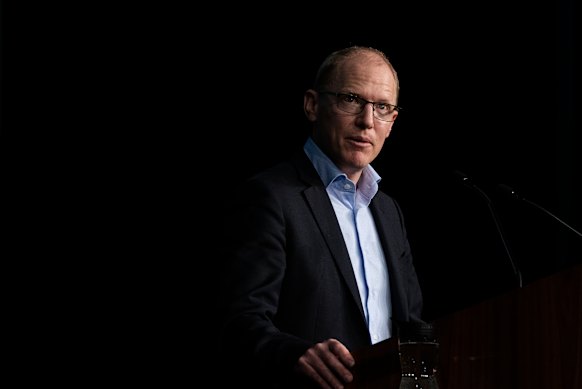
AEMO chief executive Daniel Westerman said building nuclear plants would take too long.Credit: Louise Kennerley
AEMO chief Daniel Westerman isn’t suggesting the sky is falling in; rather its newly released report is reminding the industry that major investment in the grid is needed to avoid the risk of blackouts across the state.
There are similar risks in other states including Victoria and Queensland, but NSW is in the more immediate frame.
It isn’t as if the industry hasn’t been warned.
“As it stands today – and AEMO has been flagging the need for investment in these big spinning machines in each year since 2021 – the currently installed date of those synchronous condensers is after the retirement date of Eraring as it’s currently announced,” Westerman said.
This is a timing mismatch that appears to demonstrate that Eraring, just outside Newcastle, will need to remain open for another few years at least.
System security shortfalls were to blame for the catastrophic blackout that hit 50 million people across Spain and Portugal in April.
It seems our electricity will be dirtier for a little longer.
The Business Briefing newsletter delivers major stories, exclusive coverage and expert opinion. Sign up to get it every weekday morning.
Most Viewed in Business
Disclaimer : This story is auto aggregated by a computer programme and has not been created or edited by DOWNTHENEWS. Publisher: www.smh.com.au








