The 2025 Parliament winter session begins with 13 major bills, including reforms in nuclear energy, higher education, corporate law, and taxation, signaling transformative changes and policy debates across India.

Published: December 1, 2025 11:35 AM IST
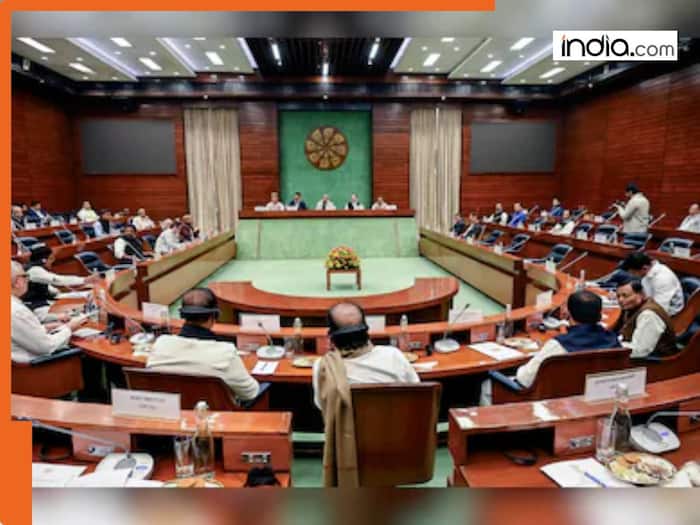
The government has tabled 13 bills in the winter session of Parliament starting December 1 for discussions over the next three weeks. Topping the list are high-impact reforms on nuclear energy, higher education, corporate law and taxation, as part of the government’s push for structural reforms across sectors.
Covering 15 sittings until December 19, the session will also see a day-long debate on the 150th anniversary of the national song Vande Mataram, as part of the symbolic tribute.
Legislative pipeline
Key bills on the government’s legislative agenda this session include:

Atomic Energy Bill, 2025: Widely considered to be one of the most significant bills in this session, the reform measure would allow private participation in India’s civil nuclear sector, a field that had previously been the exclusive domain of public sector units. The bill will enable non-government entities to operate atomic power generation plants, along with state-run units, towards the country’s nuclear energy goals. As part of the overarching nuclear power development plan, the government has also laid out plans to achieve a capacity of 100 GW of nuclear power by 2047.
Higher Education Commission of India Bill, 2025: A significant revamp of the higher education sector regulator landscape, the bill proposes to establish a single overarching body to regulate standards, research and scientific and technical institutions in the country. This would subsume the role of existing regulatory bodies that currently function in the higher education space, with proponents of the bill arguing it would help end regulatory fragmentation.
Insurance Laws (Amendment) Bill, 2025: Continuing with plans to deepen insurance sector penetration and ease of doing business in the segment, with previous proposals having seen the government considering to remove FDI limits in insurance, the proposed bill would continue this line of liberalisation by further opening up the FDI regime for the insurance industry, as well as simplifying the regulatory environment for insurance companies in India.
Corporate Laws (Amendment) Bill, 2025 and Securities Markets Code Bill, 2025: These bills would, in part, help update the country’s corporate governance rules, as well as subsume multiple existing regulations relating to securities and markets into one consolidated framework for the financial industry. Proponents of these bills are hailing them as a step towards modernising corporate law and boosting ease of doing business compliance.
Other notable bills in the pipeline also include the Insolvency and Bankruptcy Code (Amendment) Bill, 2025, which seeks to reform existing insolvency laws, the Arbitration and Conciliation (Amendment) Bill, 2025 , which focuses on arbitration and insolvency law amendments, and the National Highways (Amendment) Bill, 2025, which seeks to improve ease of doing business in the highways and infrastructure sector. The government is also pushing forward with the Jan Vishwas (Amendment of Provisions) Bill, 2025, which will rationalise offences and penalties under laws that are currently on the statute books.
In the Lok Sabha, meanwhile, it is expected that the Central Excise (Amendment) Bill, 2025 and a new health-security or national-security cess will be introduced as well, as the government could look to make changes to the tax and revenue landscape for businesses and consumers.
Opposition issues and other key discussions
While the government focuses on its legislative priorities, it can be expected that opposition members would continue to raise a wide range of issues, including the revision of voters’ lists being undertaken by the election commission, policing, pollution, national security and other civil rights issues.
On the first day itself, with the special session on the Vande Mataram, a door has also been opened to a potentially emotive debate on national identity and history.
The big question
Should these bills be cleared and become law, India’s landscape in sectors like education, energy and insurance may be reformed for years to come. Opening up the nuclear sector for private participation is being seen as a move to rapidly scale up clean-energy generation, while a unified higher education regulator may help streamline governance, but also consolidate regulatory oversight and power. Easing of rules in the corporate and securities space, meanwhile, could help business but also raise questions on regulatory mechanisms and protection of investors.
As this session of Parliament proceeds with a mix of ambitious legislative measures and symbolic national dialogue, it could take the country down the road of significant policy reforms, even as wider and deep political fault lines simmer in the offing.
Also Read:
Disclaimer : This story is auto aggregated by a computer programme and has not been created or edited by DOWNTHENEWS. Publisher: india.com