
From youth protests against military service and pension plans to the healing British-German relationship and a new door sound for Berlin’s S-Bahn trains, here’s what we’re talking about at The Local this week.
Inside Germany is our weekly look at some of the news, talking points and gossip in Germany that you might’ve missed. It’s published each Saturday and members can receive it directly to their inbox by going to their newsletter preferences or adding their email to the sign-up box in this article.
Young Germans angry at the government
We’ve been witnessing somewhat of a youth rebellion in the last weeks in Germany.
On Friday two major laws were approved by the German Bundestag – and both have an impact on young people. The military service law and the pension package reform received a majority of votes, but not without invoking major protests.
Thousands of school pupils up and down the country ditched their classes to demonstrate against the planned changes to military service rules, which the government hopes will boost recruitment in the Bundeswehr, or the German army.
From next year, a questionnaire will be sent out to all young German men and women turning 18-years-old (although it will be voluntary for women to complete) to assess their interest in serving, and ask them questions about their fitness levels.

Students at a strike in Dresden against changes to military service law. Photo: picture alliance/dpa | Sebastian Kahnert
Then, from July 1st 2027, all 18-year-old German men will be required to undergo a mandatory medical examination, even if they do not opt for voluntary military service.
The law stops short of compulsory service, but politicians say that this route may be introduced in future if there’s a shortage of recruits.
The government is boosting its defence in the face of the possible spread of war in Europe in future.
READ ALSO: How Germany is stepping up preparations for war
But many young people want no part of it.
“Merz, we are students, not soldiers,” said a sign carried by a young man at a Dresden protest, directed at the German chancellor. Other posters had messages like: “Make vodka, not war” and, “My brothers, follow your dreams, not orders.”
Some parents held signs that said: “Not my son!”
READ ALSO: Who is affected by Germany’s new military service draft law?
Indeed, Friday was a busy day. At lunchtime, MPs gave the green light to a pension package that will introduce a number of measures, including setting the pension level at 48 percent until at least 2031.
This will see a retired person guaranteed a monthly pension payment equal to 48 percent of the average net income they had earned over their working life.
But young members of the CDU, including 18 members of the Bundestag from the party’s youth wing (Junge Union) argued it puts an unfair burden on young people. Junge Union chief Johannes Winkel said the move saddles younger generations with more than €100 billion in additional pension costs.
Many threatened to vote against it, but in the end crisis was averted for Merz: the bill passed with a majority 319 votes, with 225 votes in opposition.
German President chats Oasis with the Brits
The Brits and Germans have a long and complicated relationship.
In recent years, the partnership has been hit by the UK’s exit from the EU. At the time, Germans pleaded: ‘please don’t go’, to no avail.
Since then, it’s been cordial if a little rocky at times. But could we be reaching a turning point?
This week German President Frank-Walter Steinmeier has been courting the Brits in a state visit to underline European ties amid the ongoing war in Ukraine.
Steinmeier said after Brexit, people were “disappointed and sometimes unable to understand the decision” but that both sides had decided “not to stay stuck in these feelings”.
“Don’t look back in anger, as one of the most famous songs by Oasis puts it so well,” he told MPs, referencing the Brit pop legends.
Steinmeier noted that Liam and Noel Gallagher’s reunion this year after 16 years apart and their sold-out Oasis tour had created “the greatest pop event of the past decade”.
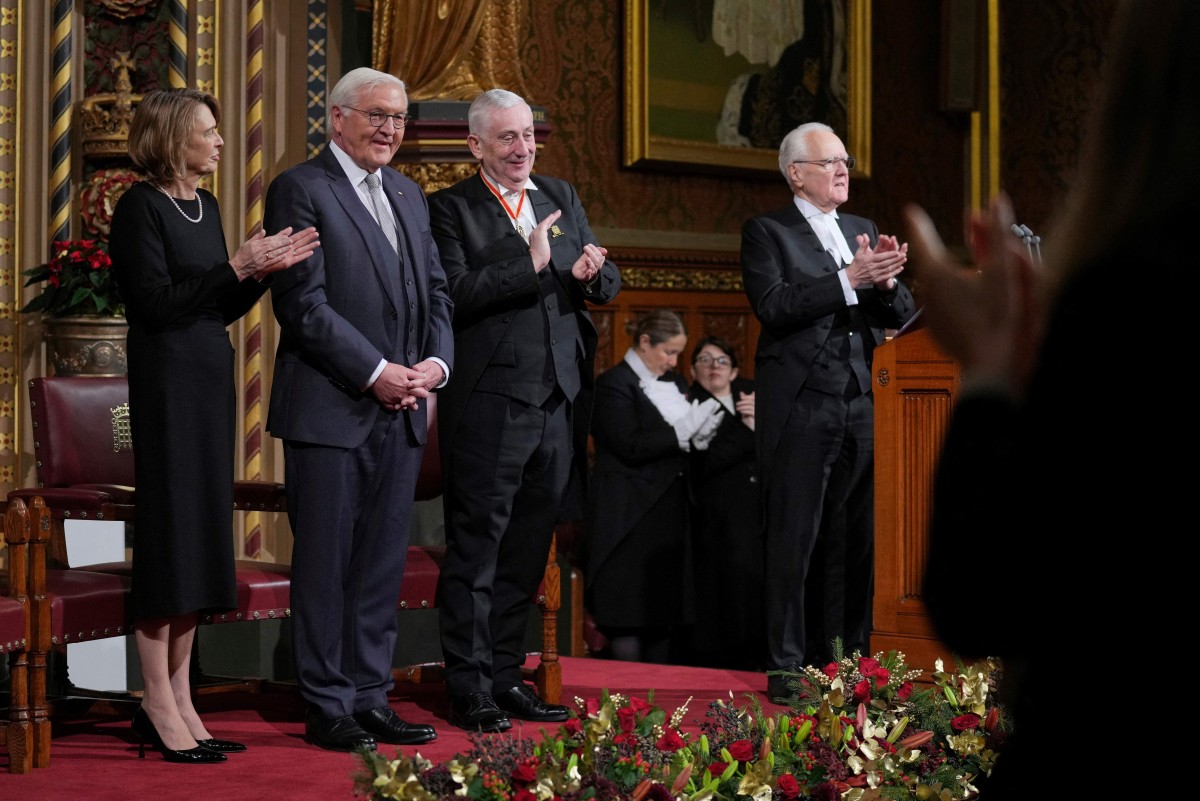
Germany’s President Frank-Walter Steinmeier during the UK visit. (Photo by Kin Cheung / POOL / AFP)
“Cool Britannia is alive! Our relations may have changed, but, my dear Britons, our love remains,” he said. “So let us look not to the past, but rather together to the future.”
Now we know what’s on Steinmeier’s playlist.
New S-Bahn door closing sound coming to Berlin
For regular S-Bahn passengers in Berlin, this is perhaps the most frequently heard sound of the city. When the train’s doors close, the two-note warning sound, consisting of the notes G, B and G (which local broadcaster RBB has kindly captured for us here) plays.
But the famous sound of doors closing in Berlin is changing.
An EU regulation to standardise technical standards across rail networks, and to better support passengers with disabilities, requires all trains in the bloc to use the same type of door-closing alert.
The signal must consist of rapid, pulsing tones at a rate of six to ten pulses per second. (Regular S-Bahn passengers in Berlin will have noticed that the city’s newer trains already use the new, more jarring alarm.)
Of course, there have been some delays with the new sound being rolled out, so you’ll likely hear the classic sound, that’s been around for nearly 40 years, on many trains for a few years longer.
With reporting from AFP.
Disclaimer : This story is auto aggregated by a computer programme and has not been created or edited by DOWNTHENEWS. Publisher: thelocal.de






