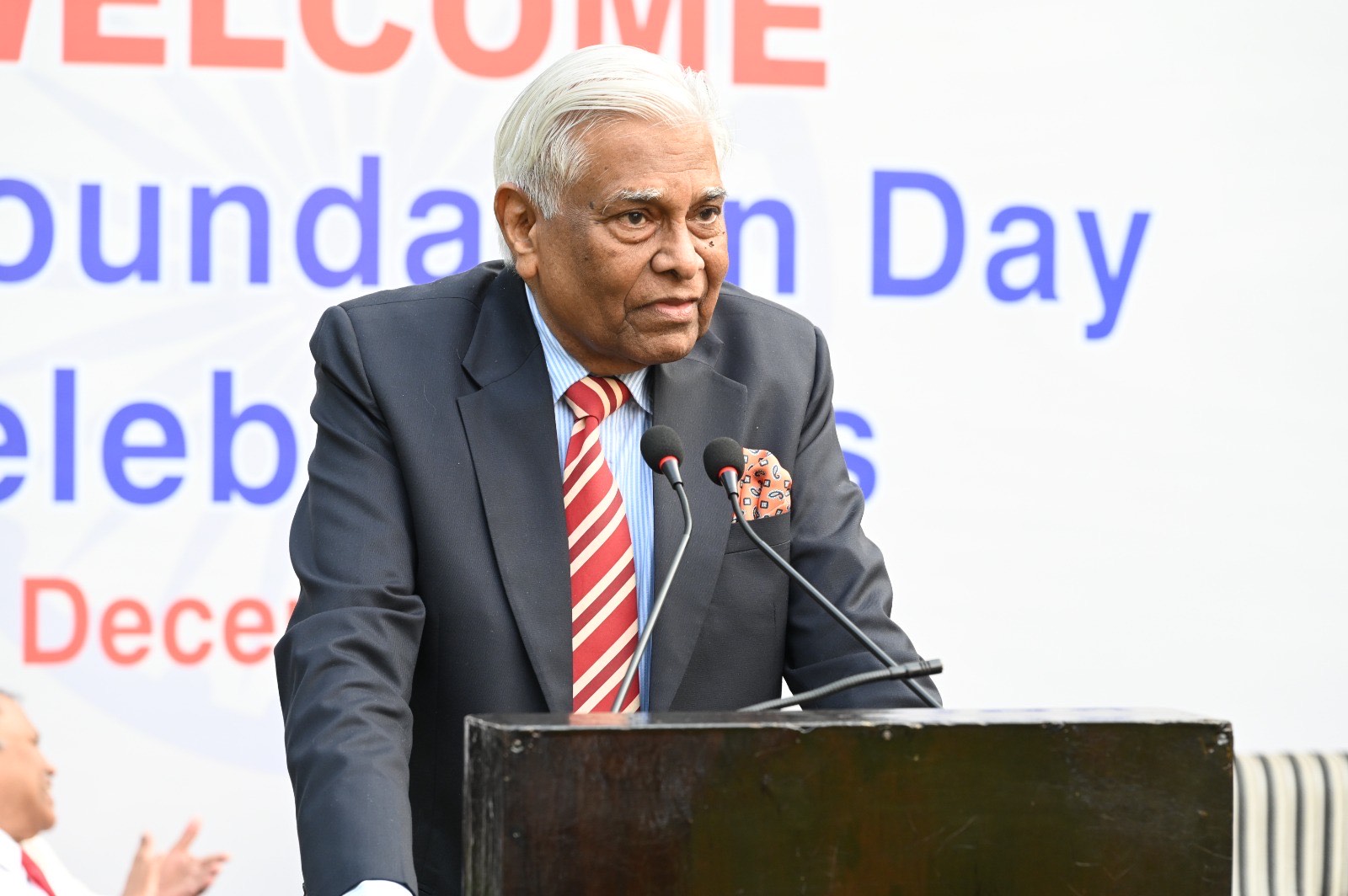
Hyderabad: The country’s push to deepen financial inclusion and strengthen digital public infrastructure framed the discussions at the Foundation Day lecture delivered at the Administrative Staff College of India during its sixty ninth anniversary event in Hyderabad on Saturday.
The lecture, ‘India’s Financial Inclusion Journey’, was delivered virtually by M Nagaraju, secretary in the Union department of financial services. He spoke about the country’s transition from basic account access to a more layered system that combines identity, banking and mobile technology.
Nagaraju said that financial inclusion had become a structural requirement in a diverse country and that access to reliable financial services helps households save securely, cope with risks and invest in education and health. He described it as central to both social progress and economic resilience. He pointed to India’s Financial Inclusion Index which stood at 67.0 in March 2025, indicating measurable improvements in access, usage and service quality.
He said that schemes under the Pradhan Mantri Jan Dhan Yojana framework continue to pull large sections of the population into the formal banking system. According to him, the high share of women and rural account holders shows the shift toward wider participation and improved control over personal finances.
Speaking about reforms in welfare delivery, Nagaraju said direct benefit transfers have reduced leakages and improved transparency by linking identity, bank accounts and digital platforms. He said this system has enabled smoother transfers and produced considerable fiscal savings.
He also spoke about India’s lead position in real time digital payments and said the Unified Payments Interface has expanded financial participation among small businesses, informal sector workers and communities with limited access to traditional banking.
The lecture covered support schemes for informal and micro enterprises, including programmes for street vendors, artisans, women led businesses and beneficiaries from scheduled communities. He said insurance, pension and credit schemes remain essential for the long term stability of vulnerable groups.
Nagaraju pointed the priorities for the coming years which include improving the quality of account usage, expanding responsible credit, strengthening consumer protection and improving coordination among financial regulators. He said that digital literacy, institutional capability and strong governance systems will be central to achieving inclusive growth.
Nagaraju said institutions such as the Administrative Staff College of India (ASCI) had shaped policy thinking and leadership development for many years and continue to play an important role in public sector capacity building.
Disclaimer : This story is auto aggregated by a computer programme and has not been created or edited by DOWNTHENEWS. Publisher: deccanchronicle.com