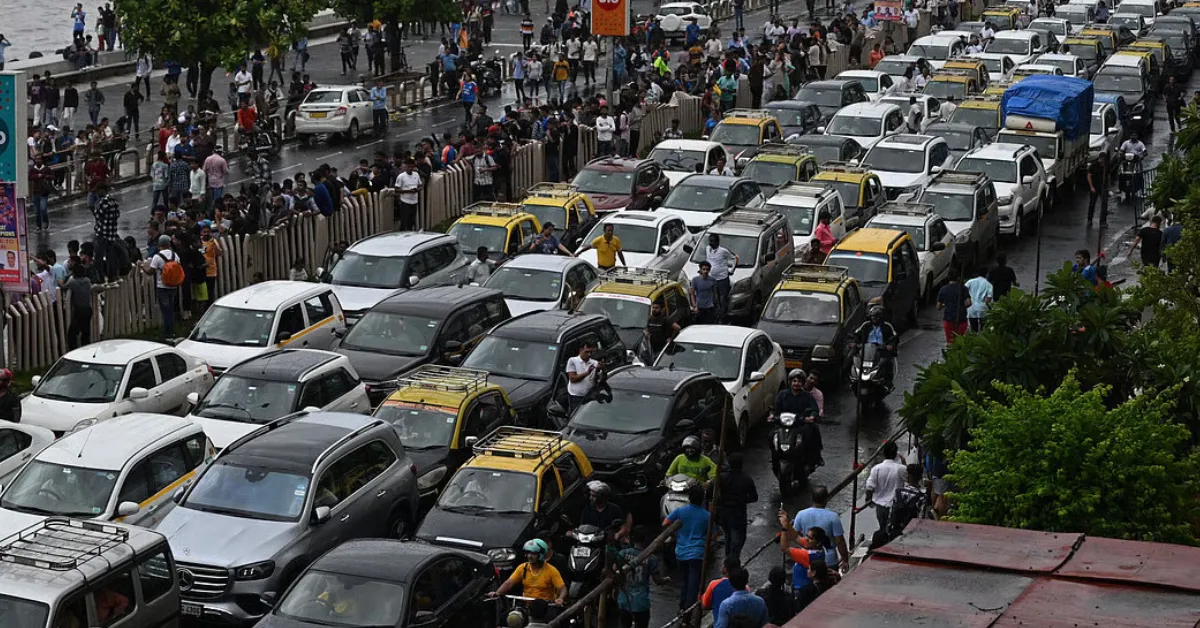
For years, Mumbai’s roads had lived under a permanent cloud of noise. The honking never stopped. Short bursts from impatient bikers, heavy blasts from buses, an orchestra of frustration rising and falling with every clogged junction. Most people had stopped hearing it consciously. It was the city’s heartbeat, loud and relentless. But one morning, without warning, the traffic lights decided they had had enough.
At first, everything looked normal. Commuters inched forward at a crowded junction, engines growling and tempers simmering. No one noticed the small sensors tucked neatly into the traffic lights.
Tiny devices were waiting for the inevitable. The moment the red light glowed, the familiar chorus began. A taxi tapped its horn. A motorcyclist added his own sharp note. A lorry, stuck too far behind to see the signal, bellowed its impatience.
Then something strange happened. The countdown timer, instead of dropping from ten to nine, flicked back up to ninety seconds. Drivers leaned forward to stare. Someone honked again, just a quick, irritated beep. The timer jumped back once more. The junction fell into a stunned hush.
The signal that had a sense of humour
The Mumbai Police had cooked up this clever bit of mischief after years of battling noise levels that regularly shot past 85 decibels. Their idea was simple enough. If people refused to stop honking, perhaps the traffic lights could teach them a lesson no officer ever could.
So they introduced smart lights fitted with noise sensors capable of detecting excessive honking in real time. Their rule was uncompromising. Each time the noise crossed the 85 decibel threshold, the red signal reset to a full 90 seconds, no matter how close it had been to turning green.
As the message dawned on commuters, an extraordinary scene unfolded. Rickshaw drivers leaned out to plead for quiet. Bikers gestured frantically at others to keep their hands off their horns. Even the most seasoned bus drivers, known for their thunderous honks, hesitated.
The sensors watched, unblinking. The timer ticked down peacefully until someone, out of habit, pressed their horn. Back up to ninety it went. A collective groan rose across the junction. Within minutes, the street grew quieter than anyone could remember. Cars idled in a strange, almost reverent silence as if the entire city had suddenly agreed to behave.
When silence became the shortcut
By afternoon, videos of startled drivers watching the timer jump had spread across the city. People laughed, teased each other, and marvelled at how quickly the honking had dropped. But beneath the humour was a small and important truth. Mumbai had just proved to itself that change was possible.
The brilliance of the system was not in the technology, but in the psychology behind it. Impatience had always been the fuel of honking, everyone hoping that noise would somehow move traffic faster. Now that same impatience made the wait longer. One quick blast could trap hundreds of people for an extra minute and a half. Suddenly, silence was not just polite, it was practical.
By evening, the roads felt different. Not quite exactly, but calmer. Drivers seemed to breathe a little slower. The city, for once, was not shouting. It was listening. At the core of it all stood those clever traffic lights, teaching the city a lesson no lecture ever could.
Disclaimer : This story is auto aggregated by a computer programme and has not been created or edited by DOWNTHENEWS. Publisher: thebetterindia.com