There has been a constant theme over the past week as it pertains to the testimony of senior NASCAR officials under examination from 23XI Racing and Front Row Motorsports lead attorney Jeffrey Kessler.
The official is asked a series of specific questions about their knowledge of something that should fall under their authority. The official then deflects with a ‘I don’t know’ or ‘I wasn’t there’ because the presumed answer would be legally disadvantageous.
Or, in the name of fairness, their memories are truly adversely affected by just how much is asked of them over the course of a season working at the highest levels.
Nevertheless, the response to this amnesia is Kessler asking an official how much he earns through salary and bonuses. His point is to illustrate just how unlikely it is that officials who draw over a million dollars a year wouldn’t have insight into how NASCAR operates.
This happened with president Steve O’Donnell and now it’s happened with commissioner Steve Phelps and CEO Jim France on Tuesday.
For much of the past week, Kessler has built a story on behalf of his clients that numerous NASCAR officials recognized that the race teams warranted more favorable terms during charter extension negotiations but were thwarted by France.
Even discovered emails that were clearly written by Phelps got a response of ‘I don’t remember this’ to so many questions that Kessler assured the executive that he would soon be cross-examined by his own attorney where his memory would likely improve.
To wit, Phelps remembered that the COVID shutdown began on March 13, 2020 and that NASCAR returned from it on May 18, 2020.
While O’Donnell came across as a ‘team guy,’ on Friday, which is also how he was labeled internally in the NASCAR front office, Phelps eventually got to the point where he fully needed to implement what France told him to do.
In an email with O’Donnell and Prime, Phelps eventually got to the point where he said there were ‘lots of options, but all have the same theme: Pick a date and they can sign or lose their charters. It is that simple.’ Prior to reaching that point, there were texts and emails where he was frustrated with France but by his testimony on Tuesday, he had forgotten a lot of the details around that.
Kessler has worked over the past week to paint France as unwavering in his commitment to not pay the teams more or give them permanent charters even as his top lieutenants suggested there were merits in doing so.
Phelps at one point emailed Rick Hendrick ‘we wish we could give you permanent charters but Jim doesn’t want that,’ but the now Commissioner doesn’t remember that either.
He was asked about why more extensive track exclusivity agreements were worked into Speedway Motorsports’ contracts around the time the Race Team Alliance started exploring running their own mid-week summer dirt racing series or the nascent SRX tour.
“No idea,” Phelps said.
But Phelps, who also had private texts unearthed from February 2, 2023 that suggested to O’Donnell and Prime that they ‘need to put a knife in this trash series.’
A series that is now dead, which Kessler points out is what happens when you stick a knife in something.
Phelps said he was just frustrated.
“Frustrated our owners were racing in a series using sponsors and colors and liveries that looked a lot like NASCAR,” Phelps said.
But it’s also true that he told then NASCAR president Brent Dewar that they would ‘fight to protect’ their space from any competitor when the Sanctioning Body first caught wind of the RTA’s plans.
The lead attorney for 23XI and FRM is trying to illustrate France as using his monopsony power to force unfavorable terms on the teams because they have nowhere else to compete at this level.
“Absolutely not,” Phelps said.
In the closing minutes of Steve Phelps’ re-examination, Kessler asked him if France was so opposed to giving the teams permanent charters because it would give them ‘more power’ in the sport’s political structure.
“He is not,” Phelps said.
Kessler said if teams had permanent charters, NASCAR couldn’t take them away or implement the ‘gold codes’ strategy of operating a series completely in-house.
“We couldn’t,” he said.
Phelps was asked by Kessler if teams should trust Jim France ‘to be a benevolent dictator,’ which solicited an objection by lead NASCAR attorney Chris Yates. Kessler withdrew the question but made his point nevertheless.
Jim France testifies
On the witness stand, the youngest son of NASCAR founder Bill France Sr. professes to have deep friendships with many of the most prolific owners in the Cup Series, but he denied each of them what they wanted most in the negotiations.
Permanent charters.
Rick Hendrick, Roger Penske, Joe Gibbs, Jack Roush and Richard Childress each wrote letters and/or personally spoke to France over the phone to express how transformative to their business ‘evergreen’ charters would be.
This is in addition to his top lieutenants expressing the same sentiment.
“They’re all telling you they need permanent charters and you said no,” Kessler said during examination.
In response, France said ‘We did not do evergreen or permanent charters, no,” but also said he doesn’t remember any of these owners ever expressing that sentiment to them. Kessler showed him the emails and France simply acknowledged that’s what the letters said.
How about the phone call Gibbs made on the deadline day, September 6, where daughter-in-law Heather Gibbs said Coach called France and pleaded ‘please don’t do this to us,’ with an offer he felt was unfair.
France says he couldn’t see himself telling the elder Gibbs ‘if I only get 20 charters back, I get 20 charters back,’ as Heather testified.
But did he deny it?
“I’m not sure I did.”
This was a theme of the France testimony as he couldn’t answer 90 percent of what Kessler asked.
One sequence read as follows:
JK: “Do you think NASCAR will have more or less revenue than last year?”
JF: “Not sure. I haven’t looked at it.”
JK: “How much in distribution money will you make this year?”
JF: “I’m not aware of that, I’m sorry.”
JK: “Does the France family own all the equity in NASCAR?”
JF: “I think so.”
JK: “Did Golman Sachs estimate NASCAR’s equity as $5 billion?”
JF: “I don’t recall.”
JF: Were you at the meeting on April 27, 2023 about acquiring Speedway Motorsports?”
JF: “I might have been. I don’t know.”
JK: “Do you have any reason to disagree with NASCAR’s equity being $5 billion?”
JF: “I’m not sure.”
Is deposition with Kessler went the same way as the lead attorney pointed out at one point in the conversation on the witness stand on Tuesday afternoon.
“I just don’t remember,” France said. “I’m sorry.”
As Kessler has done with every NASCAR executive who didn’t seem to know what he should commensurate to his job title, France was asked his salary and couldn’t even answer that question straight.
JF: “It’s around $3.5 million range.”
JK: “3.8.”
JF: “Pretty close. We’ll go with that.”
That’s just how it went between Kessler and France for the two hours they sparred.
There was also the matter of the emotional letter from Heather Gibbs that O’Donnell stated caused France to ‘swear’ out loud as he read it.
Kessler read every single word out loud back to France to see what could have drawn an emotional response. France said none of it made him upset. The CEO also said he didn’t remember reading this letter out loud at all.
O’Donnell said on Friday that he was exaggerating about France’s reaction but didn’t deny that it was read aloud in a meeting.
That wasn’t the only discrepancy that O’Donnell and France seemed to have as there was a 2021 meeting in which NASCAR senior leadership met to prepare for the upcoming charter negotiation process.
After that meeting, O’Donnell summarized the proceedings to his peers that France was not in favor of granting teams a ‘most favored nations’ clause, doing away with the three strikes (veto) rule and France’s desire to own charters.
These are all things NASCAR ultimately got ratified in the 2025-to-2031 agreement.
France says he didn’t remember being involved in this meeting. Then he was shown the O’Donnell email.
‘It appears that way,’ he said of his involvement.
Also in that email from O’Donnell to his peers: “Jim’s over-arching comment: WE ARE IN COMPETITION. WE ARE GOING TO WIN.”
Did France remember that?
“I don’t recall making those comments,” he said.
Childress blindsided
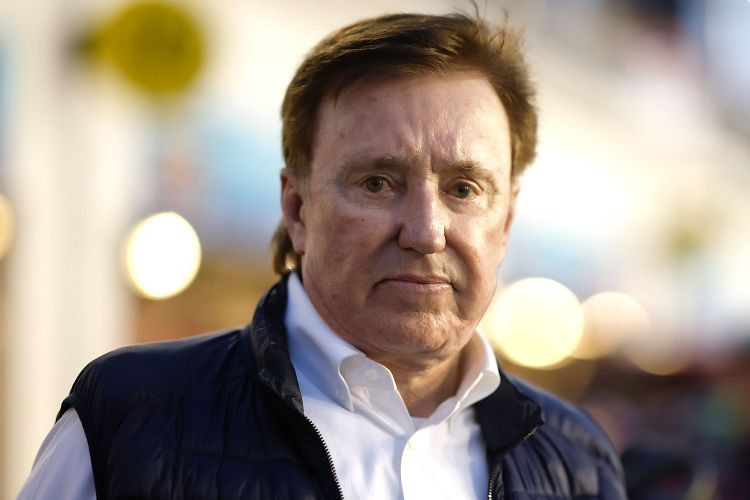
It was long-awaited that Richard Childress would make headlines if called to the witness stand during this trial, but instead, unexpected headlines were made about him.
Having testified earlier under questioning from friendly attorney Danielle Williams that he wanted permanent charters because he wanted to turn Richard Childress Racing over to grandsons Austin and Ty someday, Yates hit him with a surprise in cross-examination.
First, Childress was asked how much of the team he owns, and he didn’t want to answer that. Judge Kenneth D. Bell told him that he was required to under oath.
The answer is 60 percent and the other 40 is owned by private equity firm Chartwell Investments.
Yates asked him about the conversations Childress had with former NASCAR driver Bobby Hillin Jr. this summer about the latter exploring purchasing a part of the organization. The deal would have seen a group put together by Hill acquire shares owned by both Childress and his private equity partners.
“I don’t want to answer that,” Childress said with the same exact interjection from Bell that he was required to do so truthfully.
Childress said that Chartwell was looking to exit the sport and Hillin reached out with the inquiry. He also got agitated at NASCAR’s attorney for having that information and making it public in court.
“This isn’t what we are here for,” Childress said, noting that everyone involved in the discussions signed non-disclosure agreements.
The deal included, conceptually, a plan to purchase a third charter.
“He had talked about that,” Childress said. “I gave him a termination letter because because the way they wanted to do things, they didn’t have the money, period.”
Hillin’s group had also audited Richard Childress Racing financial statements that showed the team had turned a positive EBITA (Earnings before interest, taxes, depreciation and amortization) every year over its 55 years of existence.
That also agitated Childress because he also believed it protected by an NDA.
Yates asked if it was true about RCR’s constant profitability.
“I guess,” he said.
After Judge Bell had dismissed the jury for the remainder of the evening, the lawyers for 23XI and Front Row requested that NASCAR turn over the documents they have about Hillin’s claims and uncover the source who provided them.
Bell told both the plaintiffs and defendants to discuss the matter amongst themselves after court let out and present a solution to the court before 10 p.m. on Tuesday.
As for the company’s perpetual profit, Childress says all of the other businesses he operates out of the RCR campus subsidizes the race team.
“I have other businesses to pay our bills for NASCAR,” he said. “I’d be broke if I was just doing the Cup teams.”
Those entities include a manufacturing shop that does chassis work for Xfinity Series teams but also weapons and vehicles for the military. He owns ECR Engines which supplies powerplants for several teams across the industry. He also owns a successful vineyard off-site.
With all of that said, Childress said his other businesses shouldn’t exist to subsidize his NASCAR operations.
“That money should be going into my bank account (instead of) going to pay my NASCAR teams.”
We want your opinion!
What would you like to see on Motorsport.com?
– The Motorsport.com Team
Disclaimer : This story is auto aggregated by a computer programme and has not been created or edited by DOWNTHENEWS. Publisher: motorsport.com