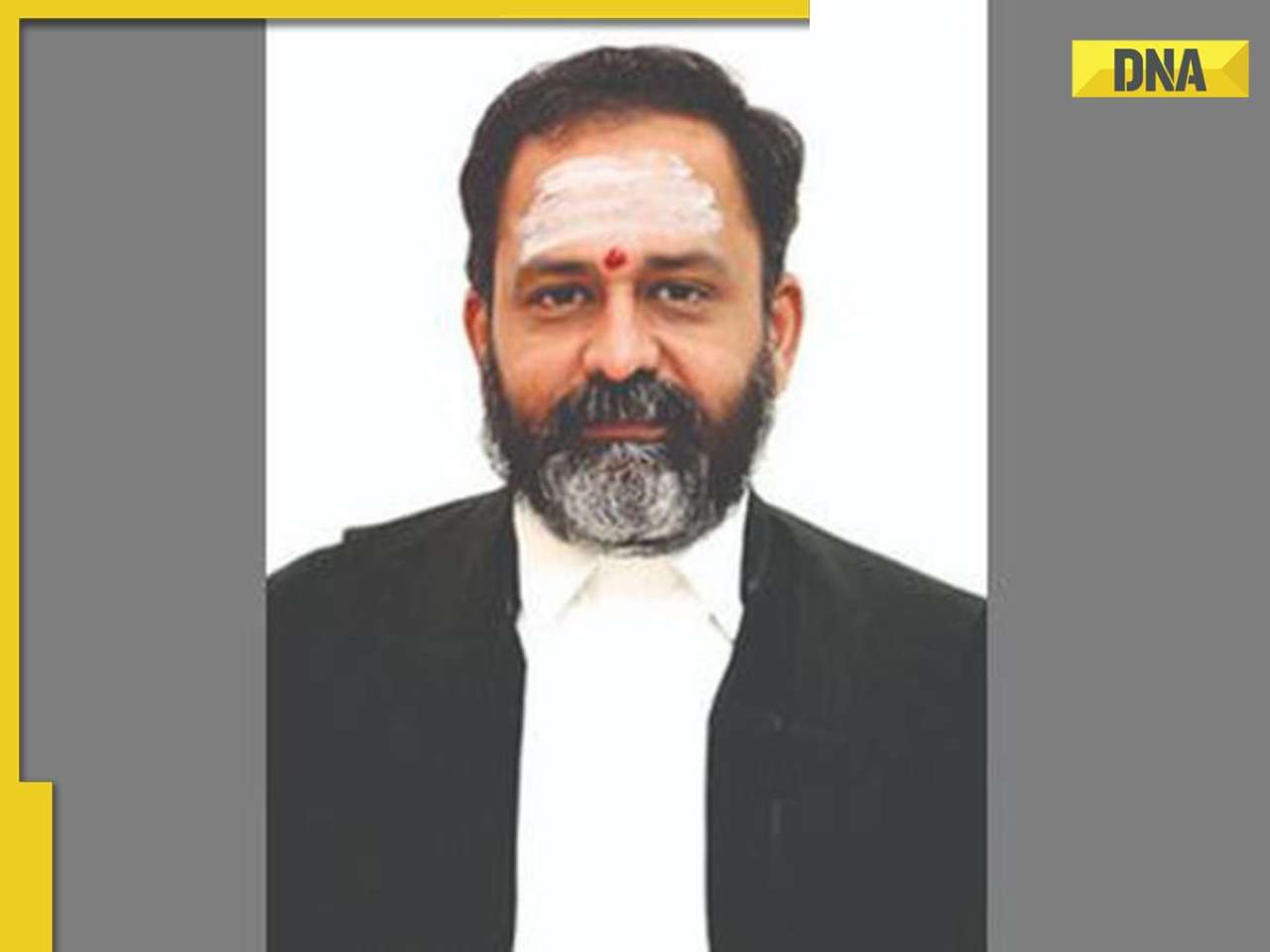
Over 100 Opposition MPs have submitted a notice to the Lok Sabha Speaker seeking the impeachment of Madras High Court judge Justice G.R. Swaminathan, citing allegations of misconduct, bias, and violation of secular principles.
On December 9, over 100 Opposition MPs submitted a formal notice to Lok Sabha Speaker Om Birla, requesting permission to initiate a motion for the impeachment of Justice G.R. Swaminathan, a judge of the Madras High Court. The notice, which was personally handed over by several key political figures, including DMK parliamentary leader Kanimozhi, TR Baalu, Samajwadi Party chief Akhilesh Yadav, and Congress leader Priyanka Gandhi Vadra, calls for the judge’s removal based on allegations of misconduct.
The MPs have raised concerns regarding Justice Swaminathan’s impartiality, transparency and adherence to secular values, citing several decisions that they argue appear to be influenced by political ideology. They have accused him of favouritism, particularly towards a senior lawyer and members of a specific community, suggesting that these actions undermine the neutrality expected of a High Court judge. The notice also claims that some of his judicial rulings run counter to the secular foundations of the Indian Constitution.
Who Is Justice G.R. Swaminathan?
Born in 1968, Justice G.R. Swaminathan began his career as a first-generation lawyer in Chennai and later in Madurai. He served as an Assistant Solicitor General before being appointed to the Madras High Court in 2017. Over the years, Justice Swaminathan has gained a reputation for his landmark rulings on issues related to free speech, prisoners’ rights, and animal rights. To date, he has delivered more than 52,000 judgments and orders, making a significant contribution to the judicial landscape.
Controversial Ruling Sparks Row
The recent controversy surrounding Justice Swaminathan erupted after his 1 December 2025 order directing the Subramaniya Swamy temple in Tamil Nadu to ensure that a lamp be lit at the deepathoon in Madurai, located on the Thiruparankundram hillock. The area has long been a source of tension between the temple administration and an adjoining dargah. Justice Swaminathan ruled that the lighting of the lamp would not infringe on the rights of the nearby Muslim community.
However, when the temple authorities failed to implement the directive, the judge issued a second order on 3 December, permitting devotees to light the lamp themselves and ordering CISF to provide security. This escalation prompted the DMK-led state government to approach the Supreme Court, seeking intervention.
The opposition parties have seized upon the issue, with the MPs alleging that the judge’s actions reflect a political and religious bias, thus compromising his role as a neutral arbiter of the law. The ongoing controversy has put the spotlight on Justice Swaminathan’s conduct, with many calling for a broader review of his judicial impartiality.
As the situation develops, the matter of Justice Swaminathan’s impeachment is set to generate further debate in Indian politics, raising questions about the balance between judicial independence and the public’s expectations of a secular and impartial judiciary.
Disclaimer : This story is auto aggregated by a computer programme and has not been created or edited by DOWNTHENEWS. Publisher: dnaindia.com