
Fiona Lamdin,West of England home and social affairs correspondentand
Bea Swallow,Bristol
The daughter of the man believed to be the most prolific serial abuser to be associated with the Church of England (CofE) says finally learning the truth about his attacks on 130 boys was shocking and horrifying.
Fiona Rugg, 47, is the youngest daughter of barrister and Christian charity chairman John Smyth QC, who died before he was ever brought to justice.
In the late 1970s and early 1980s, Smyth subjected about 130 boys and young men to extreme physical and sexual abuse under the guise of spiritual discipline.
In the years since, Ms Rugg, who now lives in Bristol, has slowly come to terms with the disturbing truth but has often grappled with feelings of “shame by association”.
“I can rationally understand that I’m in no way to blame, but you feel guilty that my father could do this to someone, and of course, he was unrepentant,” she said.
“So much of my dad’s story and how he got away was cover-up and deception, but I want to fly in the face of that and bring things into the light.”
The Makin Review, published in 2024, found the church’s handling of the allegations against Smyth amounted to a cover-up, with one cleric admitting: “I thought it would do the work of God immense damage if this were public.”
Speaking openly to the BBC for the first time, Ms Rugg said learning the truth about the extent of her father’s “shocking” abuse has helped her to heal.
“I have forgiven him, but it doesn’t take away the pain or make it OK. I don’t feel in the grip of it or feel so ashamed, but it doesn’t diminish the horror of what he did,” she said.
“There was nothing in his camp coming from him about being sorry. I’m sorry on behalf of my father for what he’s done to these boys.”
Warning – this story contains distressing content and references to child abuse
Ms Rugg recalls an oppressive childhood plagued by “hypervigilance” of her father’s unpredictable moods.
“I think the overriding feeling is actually fear, as long as I can remember,” she recalled.
“I felt afraid around dad, who was very volatile.
“He was very angry, and so there was a sense of fragile moods, walking on eggshells, wondering what dad’s mood was like. A feeling of guilt as a young child I didn’t like dad and sometimes I hated him.”
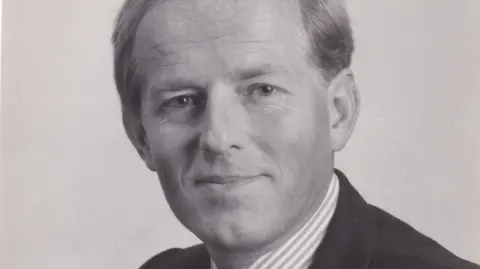 Passion Pictures
Ms Rugg said her father “completely disregarded” her as a child, to the extent she questioned her own judgement of his “volatile” character.
“What I saw was confusing to me,” she said. “He was so frightening, so angry and unkind, so hard to stand up to. I wanted to get as far away from him as possible, but what I saw was people who adored him.”
While Smyth laughed and played outside with boys and young men in the sun, she would watch from the window, having been told to stay away as an “unwanted distraction”.
“We were experiencing a completely different John Smyth to the reputation he presented to the world,” she explained.
“The natural conclusion you draw when you are young is ‘he must be right and I must be the problem. I’m the one who is not seeing this correctly here’.”

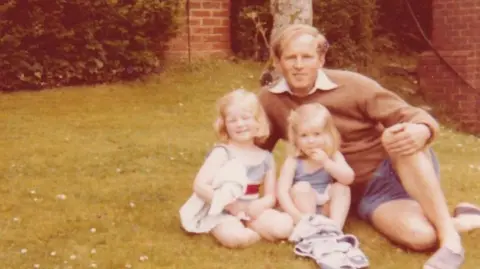 Passion Pictures
Smyth gained access to Winchester College in 1973 through the school’s Christian union and began abusing pupils after inviting them to his family home for Sunday lunch.
He forced his victims to strip naked and endure violent canings in a soundproofed shed at his family home, where he beat them so badly they bled.
Smyth, an evangelical Christian, would frame the abuse as a form of punishment and repentance for “sins” such as pride or masturbation.
An internal review by the Iwerne Trust uncovered the scandal in 1982, describing the attacks as “prolific, brutal and horrific”, detailing how eight of the boys had suffered a total of 14,000 lashes.
But rather than alerting authorities, senior evangelical figures in the CoE facilitated Smyth’s silent departure from the UK, allowing him to evade justice for decades.
When their family were ushered to Zimbabwe in 1984, Ms Rugg said it was framed by her father as “noble work”, sacrificing his “glittering career” to become a missionary.
But his wake of destruction followed them across the globe, and he soon opened Christian camps where he would enforce nudity and beat young boys.
The following year, tragedy unfolded when a 16-year-old boy named Guide Nyachuru was found dead at one of Smyth’s camps within 12 hours of arrival, resulting in a manslaughter charge, but the case collapsed.
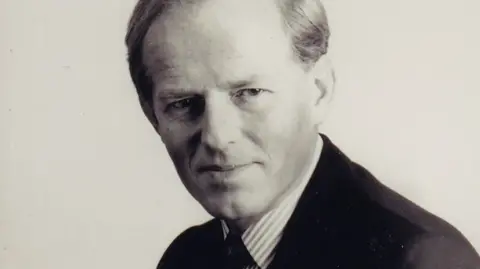 Passion Pictures
When Ms Rugg moved back to England aged 18, she started to have more and more questions about her father.
“It would come up that I’m dad’s daughter and I would see a shadow pass across someone’s face,” she recalled.
“People didn’t react like ‘oh what a great guy’, it was the opposite of that. It was a stony silence. There seemed to be so little connection with the UK, which struck me as odd.”
She confronted her father with the rumours on Christmas Eve, and he burst into a blind rage, accusing her of being “disloyal” to their family by daring to question his integrity.
“His reaction was so powerfully extreme, I remember thinking ‘well now I know for sure’. There’s never that much smoke without a fire,” she said.
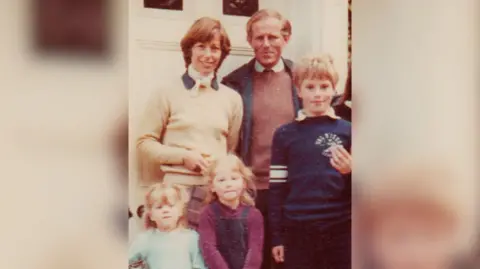 Passion Pictures
Reports of Smyth’s abuse were first made public through an investigation by Channel 4 in February 2017.
Ms Smyth switched on the news one evening to see her father’s face staring back at her, his name plastered across the screen against a backdrop of horrendous crimes.
“These were people’s young, vulnerable sons whose lives were ruined. I have a son,” she added.
“As cruel as I’d seen him to be, I had no idea he had committed this extensive criminal abuse. It was horrifying and so shocking, but it made sense.
“His whole life was about doing ‘the Lord’s work’. Everything was backed up with his Christian faith, and I found the hypocrisy of that really abhorrent.”
In August 2018, Smyth received a summons from Hampshire Police to return to England for questioning, under the threat of extradition.
He died from heart failure just eight days later at the age of 77, and was never brought to justice for the trauma he inflicted upon young boys in his care.
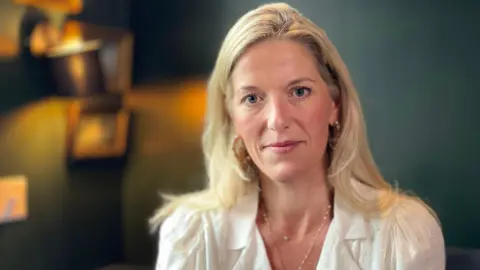
Ms Rugg said she can now speak about her father “without bitterness or hatred” and finally feels at peace.
“In my experience, if you face what dad’s done you can heal from it and you can forgive it,” she explained.
“There are moments of upset but I no longer feel that knot when I think about my dad, and that is progress. It’s not mine to carry and not mine to be controlled by.
“It’s changed from something that was imposed on me, to ‘I’m choosing what I do with that’.”
- If you would like to learn more about John Smyth’s history of abuse, head to Channel 4’s two-part documentary titled See No Evil.
Disclaimer : This story is auto aggregated by a computer programme and has not been created or edited by DOWNTHENEWS. Publisher: BBC