
Thinking about getting a Christmas tree this year? Here’s what to know about which type of tree to choose, how much you should expect to spend and how to decorate your ‘Weihnachtsbaum’ in true German style.
Christmas trees remain an essential part of the festive season in Germany.
According to the Association of Natural Christmas Trees, 37 percent of Germans bought a real Christmas tree in 2024, making natural trees the top choice in German living rooms.
Artificial and plastic trees – as well as rental and alternative options – followed in popularity according to the same survey, while 29 percent of people surveyed didn’t put up a tree at all.
This enduring tradition translates into big numbers. Each year, between 23 and 25 million Christmas trees are sold in Germany. Most are grown domestically, with 3,310 farms maintaining plantations across 19,100 hectares in 2024, according to Germany’s statistics office (Destatis).
But local production can’t fully meet demand, which meant that 1.8 million were also imported last year, with the majority coming from Denmark, as well as smaller numbers from Poland and the Netherlands.
What kind of tree should you buy?
The Nordmann fir is by far the most popular choice in Germany, accounting for around 80 percent of sales. Its soft needles and symmetrical shape tend make it ideal for family homes.
READ ALSO: Seven German Christmas markets with a unique twist
By the way, if you’re planning to buy a Christmas tree in 2025, be prepared for higher prices. A Nordmann fir will set you back somewhere between €23 and €30 per metre this year – up by one or two euros per metre compared to 2024.
Blue spruce and Norway spruce are alternatives, with the latter growing faster and thus costing less.
Blue spruce is priced at €15 – €19 per metre and Norway spruce is the most affordable at €12 – €16 per metre.
These figures are recommendations from the Federal Association of Christmas Tree and Cut Greenery Producers (BVWS), but many sellers are charging even more.
The hike in prices is attributed to rising production and logistics costs, especially labour. Cultivating Christmas trees is highly labour-intensive, and wages for seasonal workers have reportedly increased in recent years.
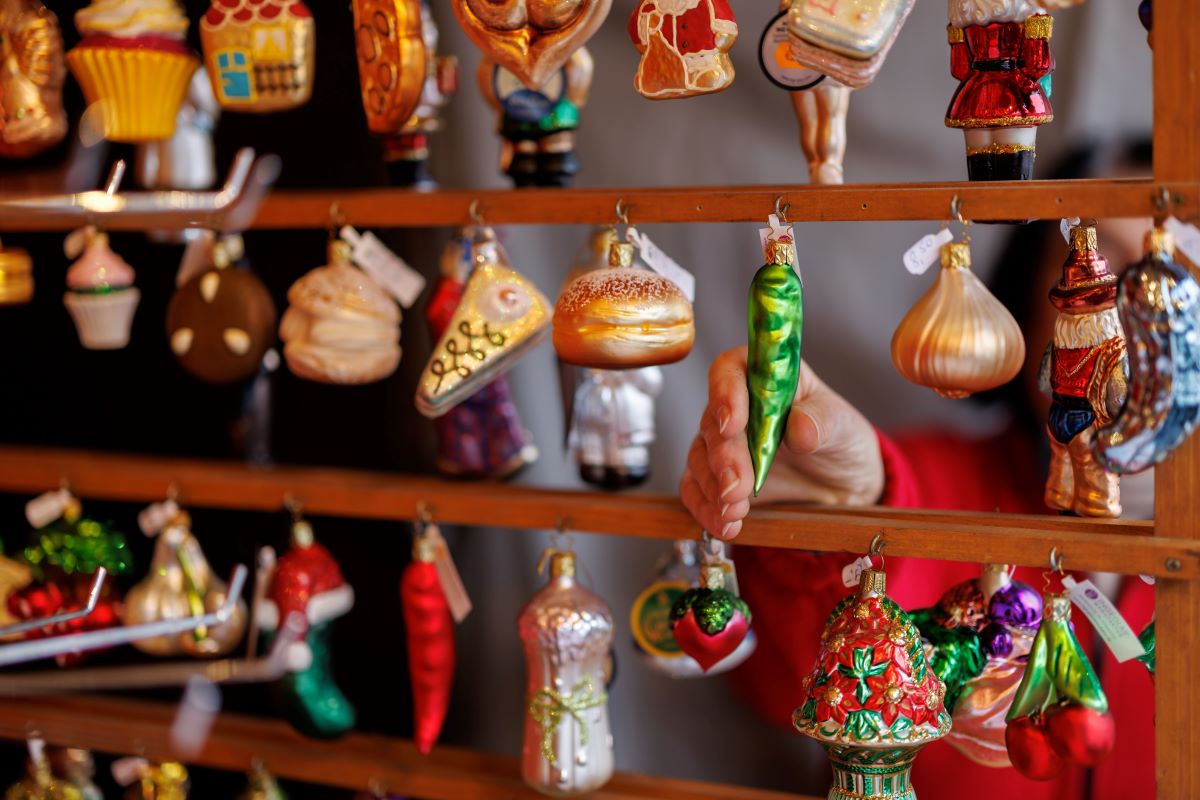
Pie slices, chili peppers, nutcrackers – the choice is huge when it comes to Christmas tree decorations. Photo: picture alliance/dpa | Daniel Karmann
Most trees are grown on plantations. It’s also possible to opt for ecologically certified trees, which are grown without pesticides or mineral fertilisers – though these currently make up less than one percent of the market.
If you prefer a potted tree, make sure it was grown in a pot from the start as recently potted trees often suffer root damage and may not survive. And remember, potted trees require ongoing care.
How to decorate your tree like a German
Christmas trees in Germany are traditionally decorated on Christmas Eve and left up until Epiphany on January 6th.
Decorating traditions in the country often reflect regional customs and family heritage. Classic ornaments include intricate glass baubles (especially from the town of Lauscha in Thuringia), wooden angels and miners (especially from the Ore Mountains) and straw stars.
READ ALSO: Why a new German nutcracker is flipping the bird
Tinsel (Lamette) is sometimes used, but it’s less common than in the UK or US.
Many families personalise their trees with items which have been passed down from generation to generation, and some still decorate their trees with real candles – which is a pretty clear fire hazard but creates an undeniably warm and Christmassy glow in any living room.
Sometimes a candle also goes at the very top of the tree, symbolising the star of Bethlehem. Alternatives include star-shaped decorations or representations of angels or the Christkind (in southern Germany).
Unsurprisingly, regional differences abound. Trees in Bavaria may feature gingerbread hearts, Saxon trees are fond of nutcracker figurines, southern German trees hold gilded apples and marzipan, and trees in the north are said to have a weakness for dried orange slices and pinecones.
Baking cookies in Christmassy shapes including stars, angels and snowmen, which are then used as tree decorations, also remains a cherished tradition. Favourites include aniseed-flavoured biscuits, lebkuchen and cinnamon stars.
READ ALSO: 10 German Christmas cookies you have to bake this winter
Disclaimer : This story is auto aggregated by a computer programme and has not been created or edited by DOWNTHENEWS. Publisher: thelocal.de





