Anthony Albanese likes to be in control and comfortable, but this national crisis transcends the normal way of doing things and demands a proper shock-and-awe response. Normal political tactics only go so far when something more profound is required.
He has not been able to be the mourner in chief since the Bondi Beach attack unfolded on his watch; instead he has been the target of grieving families’ anger, despairing that they had been warning this would happen for over two years.
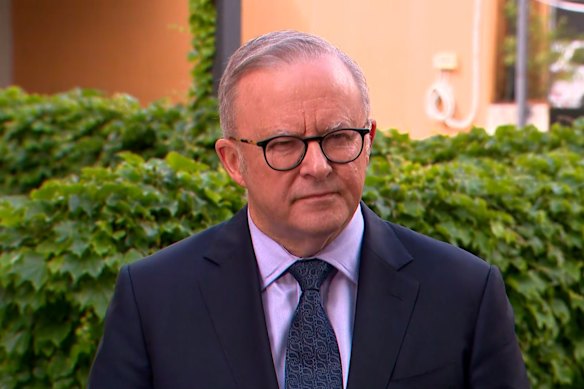
Prime Minister Anthony Albanese on Wednesday morning.
He did not go to the funerals on Wednesday; he wasn’t invited. He has not returned to the Bondi Beach memorial since Monday; he may not be welcome. Those in his cabinet who have turned up, such as Tony Burke, have been booed.
Can this Labor government shift into a higher gear? Tightening gun laws and condemning of antisemitism might have been an acceptable agenda on day one of mourning, but not after day four.
Albanese says he “stands ready” to do more. It’s on him and his cabinet to lay out a plan to restore confidence in multicultural Australia and give Jews peace of mind.
He’s also repeatedly said the nation can’t let the terrorists win by dividing the public. Sadly, the deadliest attack on Jews anywhere since October 7 is the only win the Islamist extremists were seeking.
Many Australians would not all blame the government for Bondi, as some in the Jewish community are. That narrative can’t be allowed to take hold for Labor, however. It makes some sense to give the grieving Jewish community a bit of distance, but the absence of Labor figures at Bondi is conspicuous.
It’s worth recalling the damage Albanese sustained during last summer’s burst of antisemitic violence, which Peter Dutton used to raise questions about the prime minister’s authority.
Dutton’s disastrous election campaign wiped that from the memory of voters but the framing of the prime minister as a ditherer caught on last year and can easily do so again.
Iran-backed firebombings and graffiti of last summer were just warning signals of the horror of Sunday’s act of terror.
It might spawn a royal commission. It will definitely create an uncomfortable debate about who is allowed into Australia. More generally, it will dominate the way political events are viewed for some time. There is no running away.
So what can Albanese do? His ministers are angered by what they deem to be opportunistic attacks from Liberal figures such as John Howard and Josh Frydenberg.
Labor’s usual move of avoiding any action that would give their opponents a win should be discarded.
First, the government could recall parliament to push through new laws, which could be an important symbolic moment. A summer of laid-back Ashes cricket won’t feel right if the government leaves this hanging.
Labor thought it could sit on the antisemitism envoy’s report, which outlines contentious recommendations that clash with free speech. Still, the government could move swiftly on some recommendations, such as visa scanning for hostility towards Jews.
Second, Albanese could pick a fight with universities to demand a tougher definition of antisemitism and show he is willing to take on his own side of politics as Howard did over gun reform.
Third and most importantly, Labor can finally take on the preachers who have for too long manipulated young men in Australia’s suburbs, preaching hostility towards anyone Jewish, gay or simply infidel. It’s a national scandal that a small group of radicals has been allowed to spew hatred in such a brazen manner.
These firebrands did more to set the scene for the Bondi attack than the broader pro-Palestine movement, which contained many well-meaning people shocked by the war in Gaza as well as antisemitic elements.
The hate-preacher problem is diabolical for governments. Most are citizens who cannot be deported, and incitement laws have, to date, not captured the words coming out of the jihadists’ mouths.
But authorities could be directed to push for prosecutions under newly enhanced hate speech and incitement laws; government grants should be examined to ensure they are not funding terror; AUSTRAC should investigate if funds are coming from terror sponsors, or if Australian donations are going to terror groups. The crossover between these groups and organised crime is significant and should be explored.
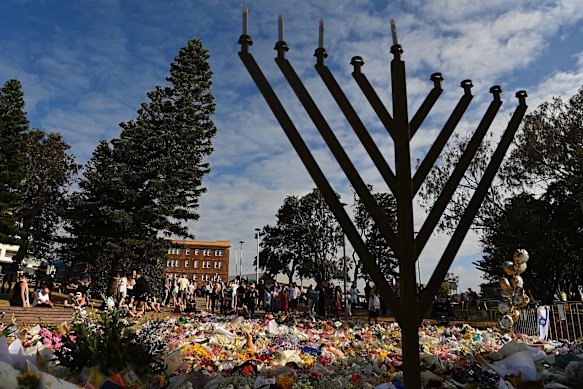
The memorial in front of the Bondi Pavilion on Wednesday.Credit: Kate Geraghty
Labor’s record on security is poor. Intelligence services the world over are describing a more precarious society fuelled by online radicalisation and more hostile foreign enemies, including a resurgent Islamic State.
But Labor’s first moves when it won power in 2022 was to appoint two first-time ministers to the high-stakes home affairs and immigration portfolios.
O’Neil’s home affairs department was cut in half, with intelligence services placed under the watch of attorney-general Mark Dreyfus, a lawyer who views the security establishment with scepticism. ASIO was dropped as a permanent member of the cabinet. All of this was eventually reversed, but its legacy lives on.
Agencies controlled by these ministers were slow to probe the repeated displays of terror insignia at protests, which led to a tacit acknowledgement of failure when new federal police commissioner Krissy Barrett announced a shift to focus on extremism in October, two years after the Hamas attacks.
When antisemitic chants were heard outside the Opera House right after the October 7 attack, even before Israel launched its brutal counterattack, authorities should have taken more seriously the anti-Jewish sentiment. Federal and state police pointed the finger at one another when questions were asked about how to monitor the radical fringe of the anti-Israel movement.
The problem has been staring the Albanese government in the face since day one.
More Bondi terror coverage
Cut through the noise of federal politics with news, views and expert analysis. Subscribers can sign up to our weekly Inside Politics newsletter.
Most Viewed in Politics
Disclaimer : This story is auto aggregated by a computer programme and has not been created or edited by DOWNTHENEWS. Publisher: www.smh.com.au