

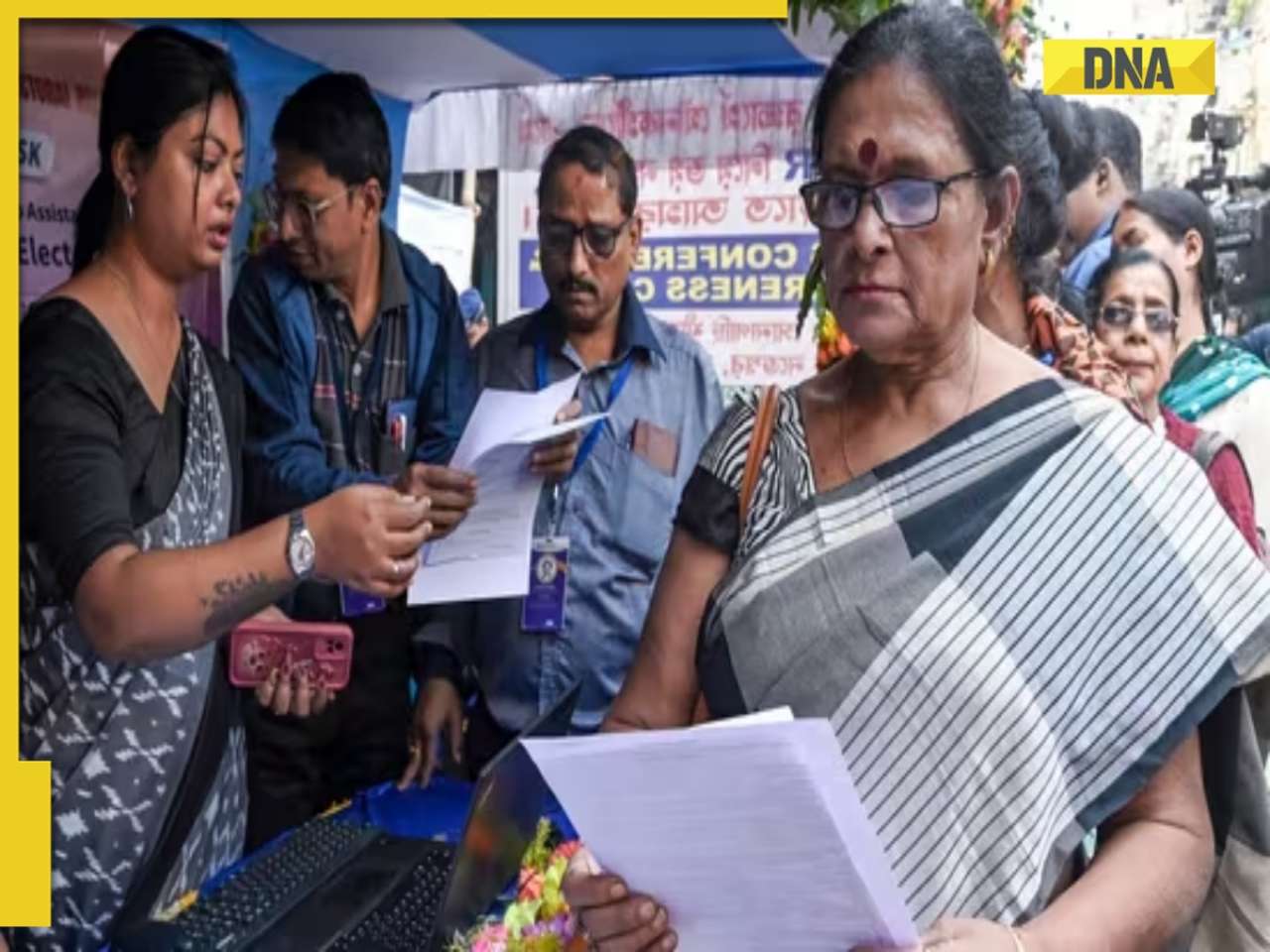
The SIR of West Bengal’s voter list exposes a twist—unmapped voters are concentrated in Matua-dominated seats, not Muslim areas, denting BJP’s migrant narrative.
As the Election Commission of India (ECI) published the draft electoral rolls of West Bengal after the Special Intensive Review (SIR), it appears that the exercise of identifying the “fake” voters may backfire on the BJP. Before the SIR in West Bengal was launched, BJP leader Suvendu Adhikari claimed that there were “one crore Rohingyas and Bangladeshis” in the state, who would be identified and disenfranchised. However, when the draft rolls were released on Tuesday after the month-long exercise of enumeration, verification and scrutiny, the ECI could identify 1,83,328 voters as ‘fake’ or ‘ghost’ ones.
West Bengal SIR
The SIR in West Bengal also debunked the theory that the Muslim illegal migrants dominate the voters’ list by the number of unmapped voters. The ECI asked the voters to “map” or link their presence in the current roll to a legacy anchor to the 2002 electoral roll functioning as the main historical database. Those who could not map their presence in the 2002 electoral rolls would be put in the “No Mapping” category. They will be called for compulsory hearings by the ECI, which would ask them to submit higher documents to establish their eligibility. Here lies the problem for the BJP, which raked up the issue of illegal migrants or “anupraveshkari” (in Bengali) or “ghupathiye” (in Hindi).
No Mapping Voters in West Bengal
A critical analysis of the draft electoral rolls shows that the highest concentration of the “No Mapping” category of voters was found in the constituencies, dominated by the Matua community. These are Dalit Hindu refugees who migrated from Bangladesh under religious persecution. The BJP brought the Citizenship Amendment Act (CAA), keeping these people in mind. In 17 assembly seats spread over the districts of Nadia and North 24 Parganas and dominated by the Matuas, the “No Mapping” category of voters were as high as 9.47%. It is more than double the state average of 4.05%. About 36.38% of the people living in these areas belong to the SC community, while 13.66% are minority Muslims.
Special Intensive Review West Bengal
There are 38,490 or 14.51% of “No Mapping” category of voters in Gaighata, the spiritual headquarters of the Matua community. Muslims constitute only 7.61% of the voters here. In the neighbouring assembly seat of Bagda, the unmapped voters number 12.69% despite the minority share of 11.97%. Matua Mahasangha General Secretary Mahitosh Baidya claimed that 20-30% of the Matua voters in Gaighata are unmapped. He expressed apprehension that a similar condition exists in Ranaghat of North 24 Parganas and the Canning constituency of South 24 Parganas.
In contrast to this, the Muslim-dominated district of Murshidabad has negligible unmapped voters. In Domkal, with 77.67% Muslim voters, the “No Mapping” category voters constitute 0.42%, in Raninagar with 75.40% Muslim population, the unmapped voters number just 0.91%, and Hariharpara with 74.96% Muslim voters, the people in the “No Mapping” category number 0.60%.
BJP illegal migrant claim Bengal
Contrary to what the saffron party might have thought earlier, the linkage to the 2002 voters’ list under the SIR may act as a virtual “citizenship trap” for Matua refugees. It goes against the BJP’s “CAA-protection” messaging in these critically sensitive areas. It also demolishes the narrative of illegal migrants or “anupraveshkari”.
Slamming the BJP, TMC spokesperson Krishanu Mitra said, “In the draft rolls, around 58 lakh voters have been deleted. As per BSF data, around 4,000 people have crossed back into Bangladesh through the Hakimpur border.” Getting the saffron party on the wrong footing, he said, “What we are hearing is that in nearly 80% Muslim-dominated constituencies, the average deletion rate is 0.6%, while in Matua-dominated regions the average deletion rate is around 9%.”
Matua community voters
Earlier, Leader of the Opposition in the West Bengal Assembly, Suvendu Adhikari, publicly urged the EC to take decisive action to purge these alleged illegal voters. After the publication of the draft electoral rolls, he avoided the press and said that he would speak after the final electoral rolls are published. He said, “This is just the beginning. Breakfast has just begun. Lunch, tea and then dinner will follow.” Adhikari said. He said further that the BJP would respond in detail after the final voter list is published on February 14.
Disclaimer : This story is auto aggregated by a computer programme and has not been created or edited by DOWNTHENEWS. Publisher: dnaindia.com







